Know How to Apply Makeup But Don’t Know What to Do? Start Here
You can know how to apply makeup and still not know what to do with it.
You understand the basics.
You know where blush goes, how to apply eyeliner, and how to even out your skin.
But when you sit down in front of the mirror, there’s still that pause.
You’re not sure what kind of look you’re actually trying to create.
The confusion isn’t about technique.
It’s about direction.
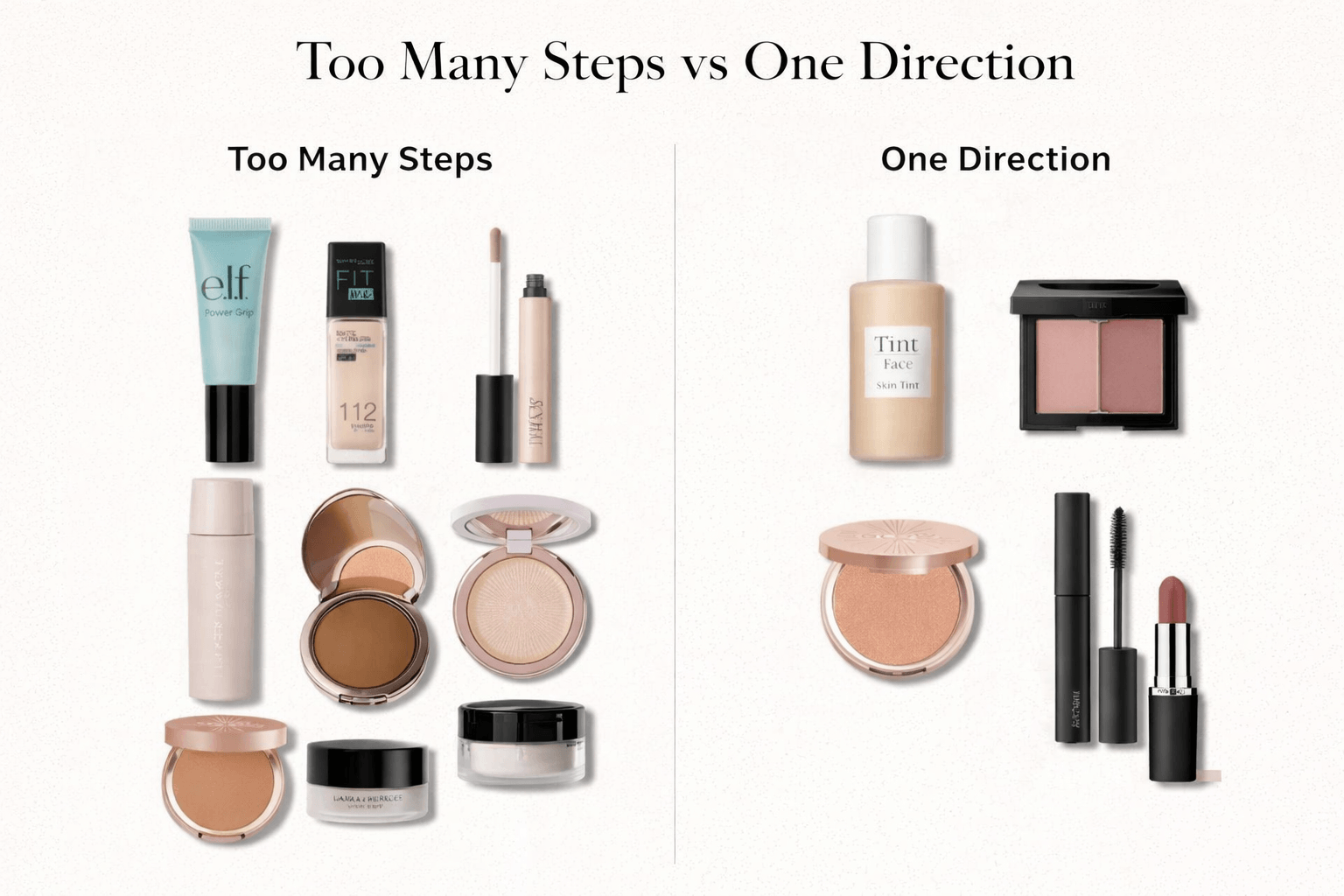
Without a clear starting point, makeup turns into a series of disconnected steps instead of one cohesive look.
Once you shift from applying products to building a look, everything becomes easier to repeat, adjust, and make your own.
Why Makeup Feels Confusing Even When You Know the Steps
Many beginner guides focus on order. Primer, foundation, concealer, bronzer, blush, powder, setting spray.
But long step by step routines often make makeup feel more complicated than it needs to be.
Some people start with eyes. Others start with skin. Some skip half the steps entirely.
The order changes depending on the person, which makes it harder to know what actually matters.
When every guide looks different, it’s easy to feel like you're doing it wrong, even when you're not.
The real issue isn’t the order. It’s not knowing what kind of look you're trying to create in the first place.
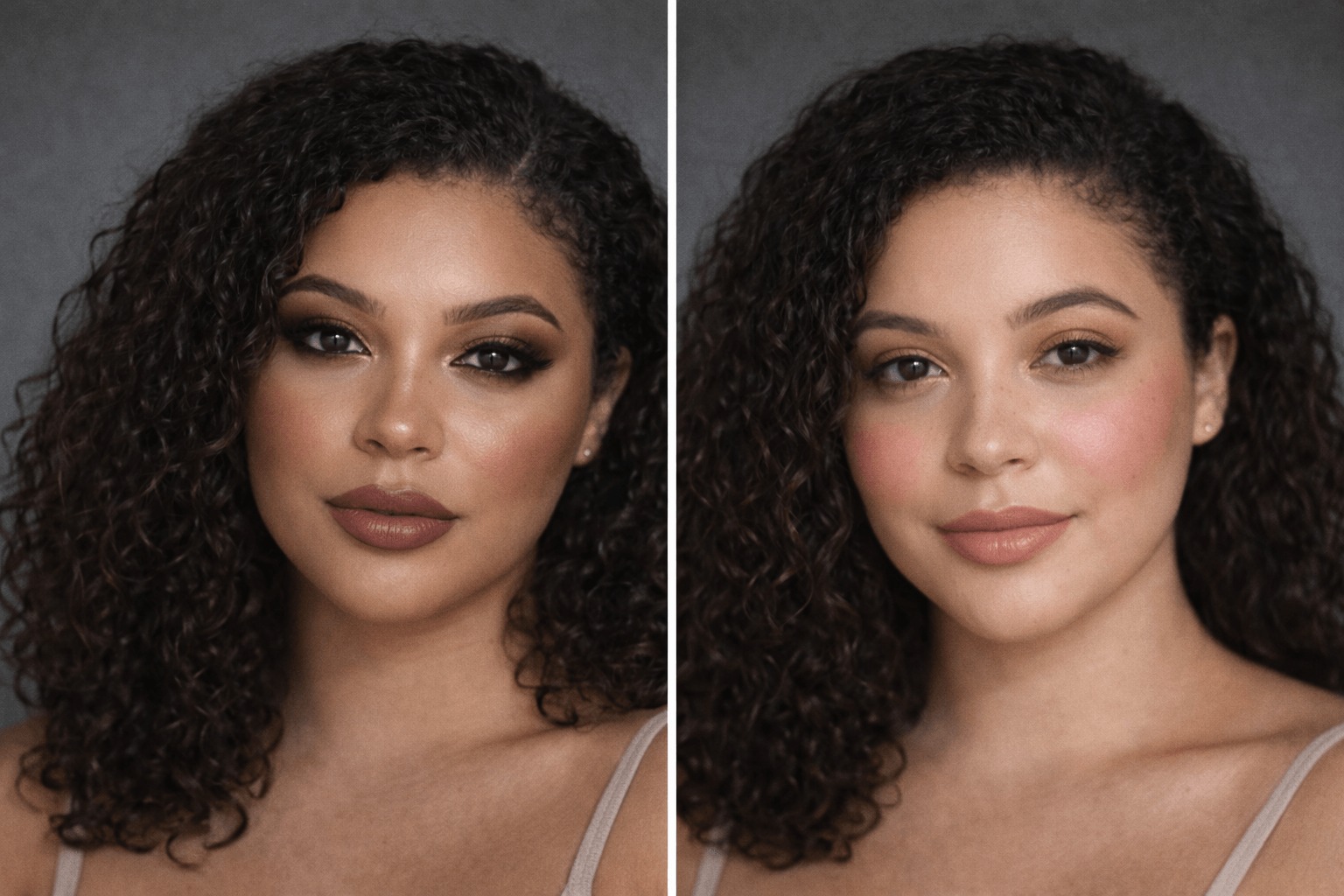
Choosing one focus creates a more intentional look than emphasizing everything at once.
The Real Problem: You're Applying Products Instead of Building a Look
When makeup feels confusing, it’s usually because you're applying products individually instead of building around one idea.
Most cohesive makeup looks start with a single focus:
Soft glowy skin
Flushed blush
Bold lips
Bronzed warmth
Minimal natural makeup
Everything else supports that choice. Without that anchor, makeup can quickly feel random.
Start With One Anchor, Then Build Around It
Instead of thinking about your entire face, start with one decision.
That could be:
A lip color
A blush tone
Natural skin vs. fuller coverage
Soft eyes vs. defined eyes
Minimal vs. polished
Once that’s decided, the rest becomes easier. A bold lip naturally pairs with softer eyes. Glowy skin works best with lighter color. A blush focused look doesn’t need heavy contour.
Lighter base products like skin tints or tinted moisturizers also make this easier. They create structure without making makeup feel heavy, especially when paired with brows, blush, and mascara.
A Simple Formula That Always Works
If you're unsure where to start, this structure keeps things balanced:
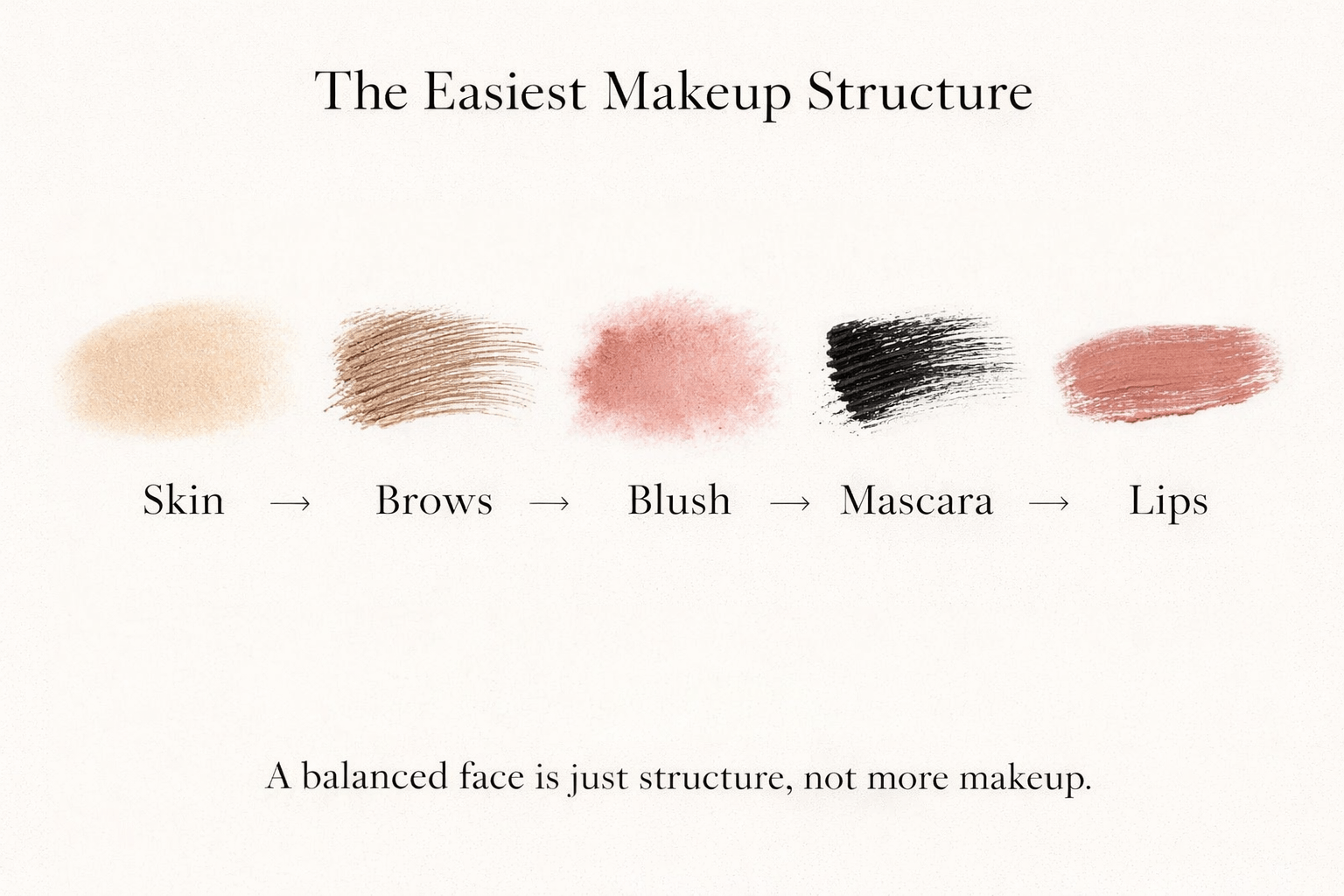
This combination enhances your features without feeling overdone. It also leaves room to add more later, like eyeshadow, bronzer, or liner, depending on the look you want.
The goal isn’t to include every step. It’s to create a foundation that feels intentional.
Why Most Beginner Makeup Guides Feel Overwhelming
Many routines layer multiple steps. Primer, foundation, concealer, contour, bronzer, blush, powder, highlight, setting spray, and more.
But most everyday makeup doesn’t require all of that.
A simple combination, even skin, blush, mascara, and lips, already creates a polished look. Everything else is optional depending on the mood or occasion.
There isn’t one correct routine. The number of steps changes depending on what you're trying to create.
Think of Makeup Like Styling an Outfit
Makeup works the same way outfits do. You don’t wear every statement piece at once. You choose one focus, then build around it.
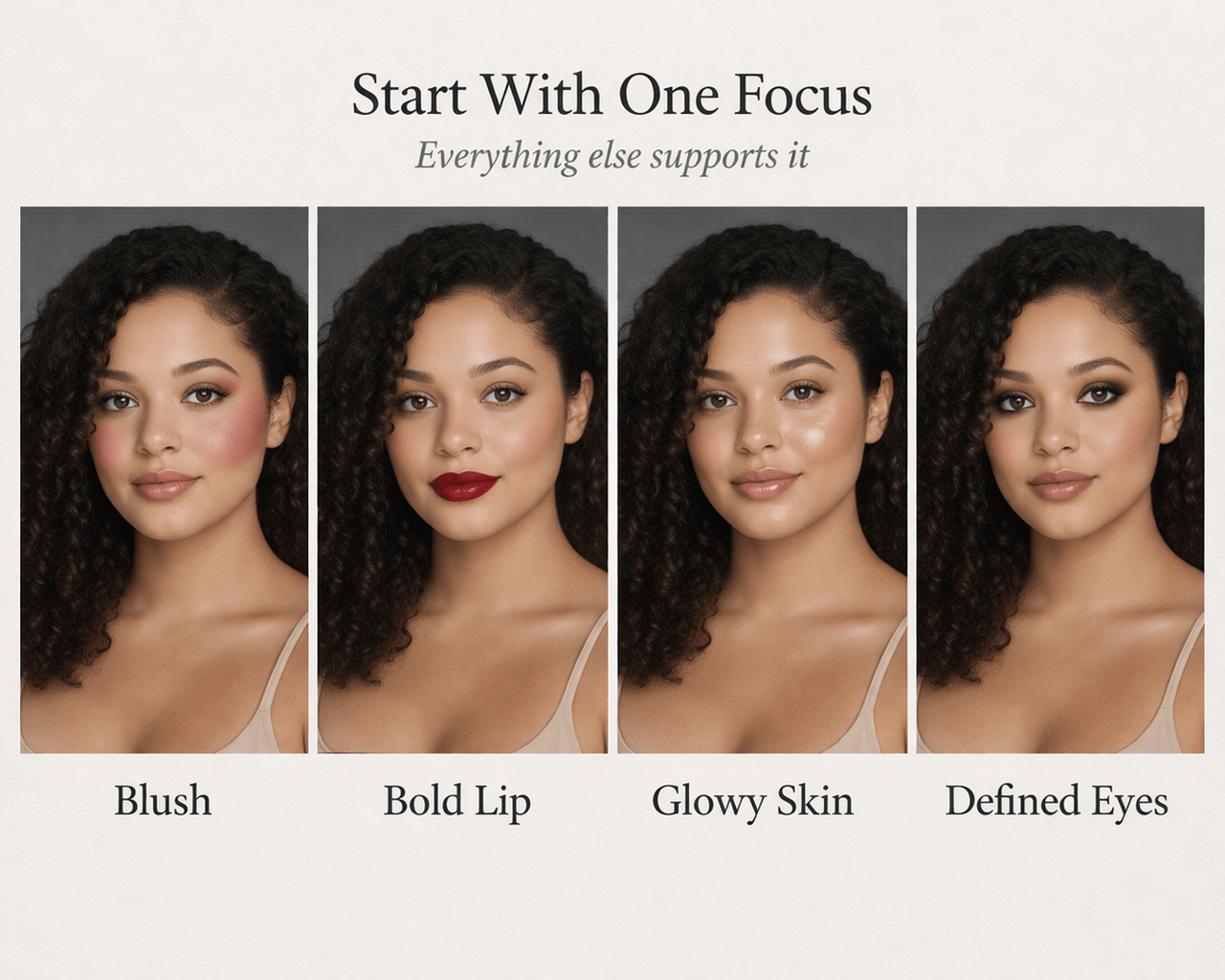
Bold lip pairs with softer eyes
Glowy skin works with minimal color
Defined eyes look balanced with neutral lips
Blush focused looks work best with a lighter base
When everything competes for attention, the look feels confusing. When one element leads, everything feels more intentional.
The Easiest Way to Decide What Makeup To Do
If you're unsure, start with one question.
Do I want this look to feel:
natural or polished
glowy or matte
soft or defined
minimal or more done
Once you answer that, choose one feature to match. Then keep the rest simple.
You don’t need more products. You just need a starting point.
