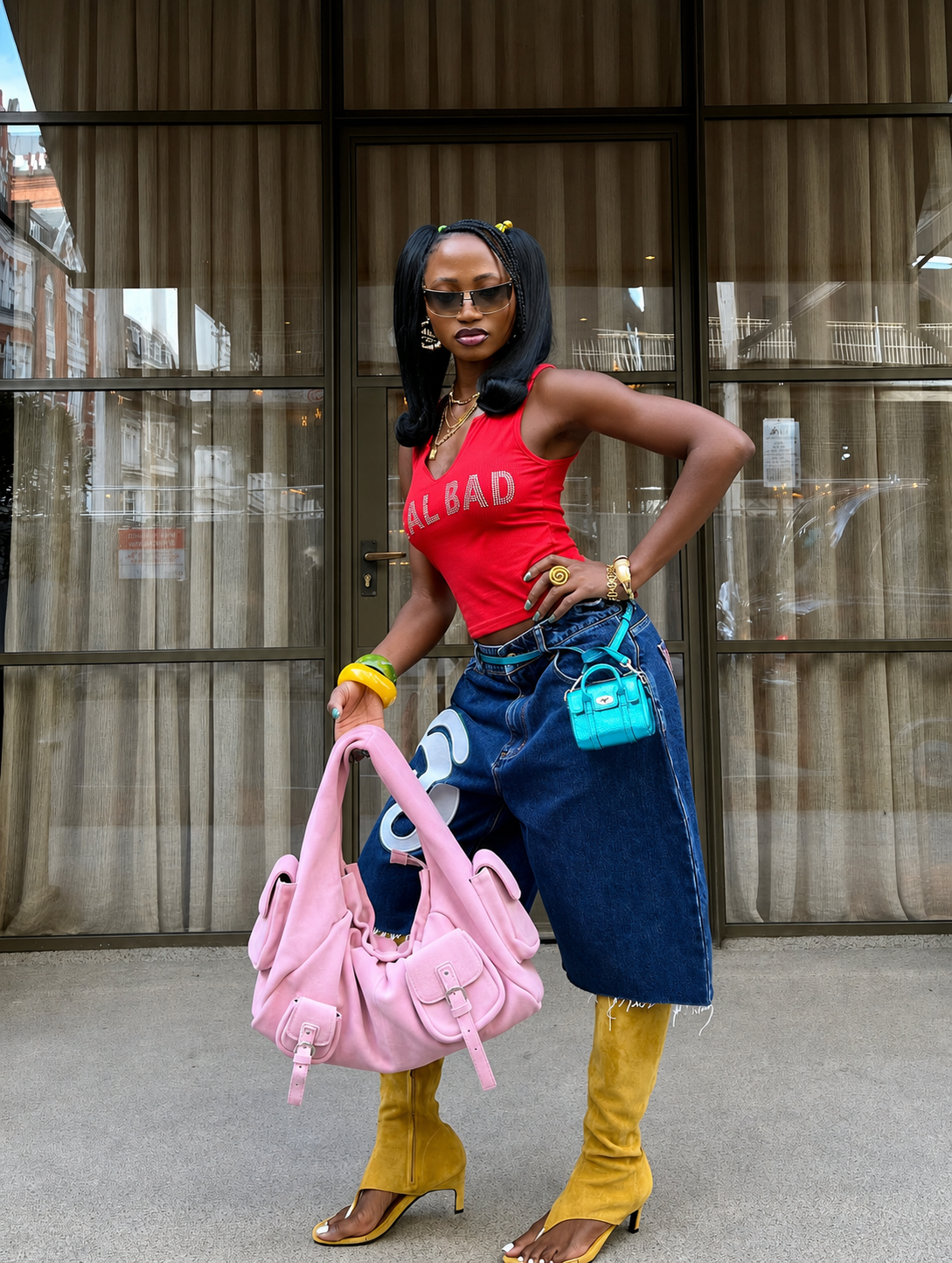
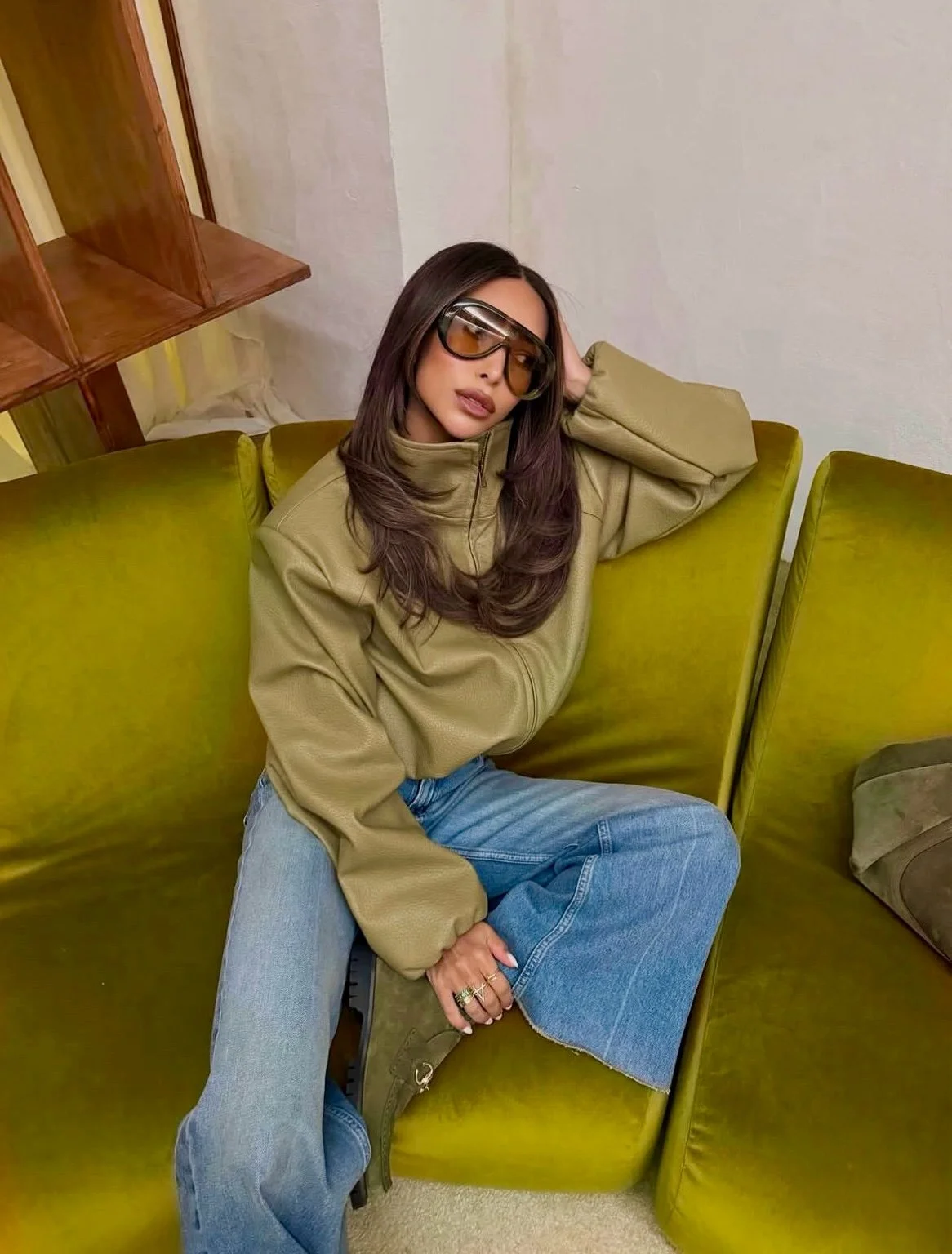
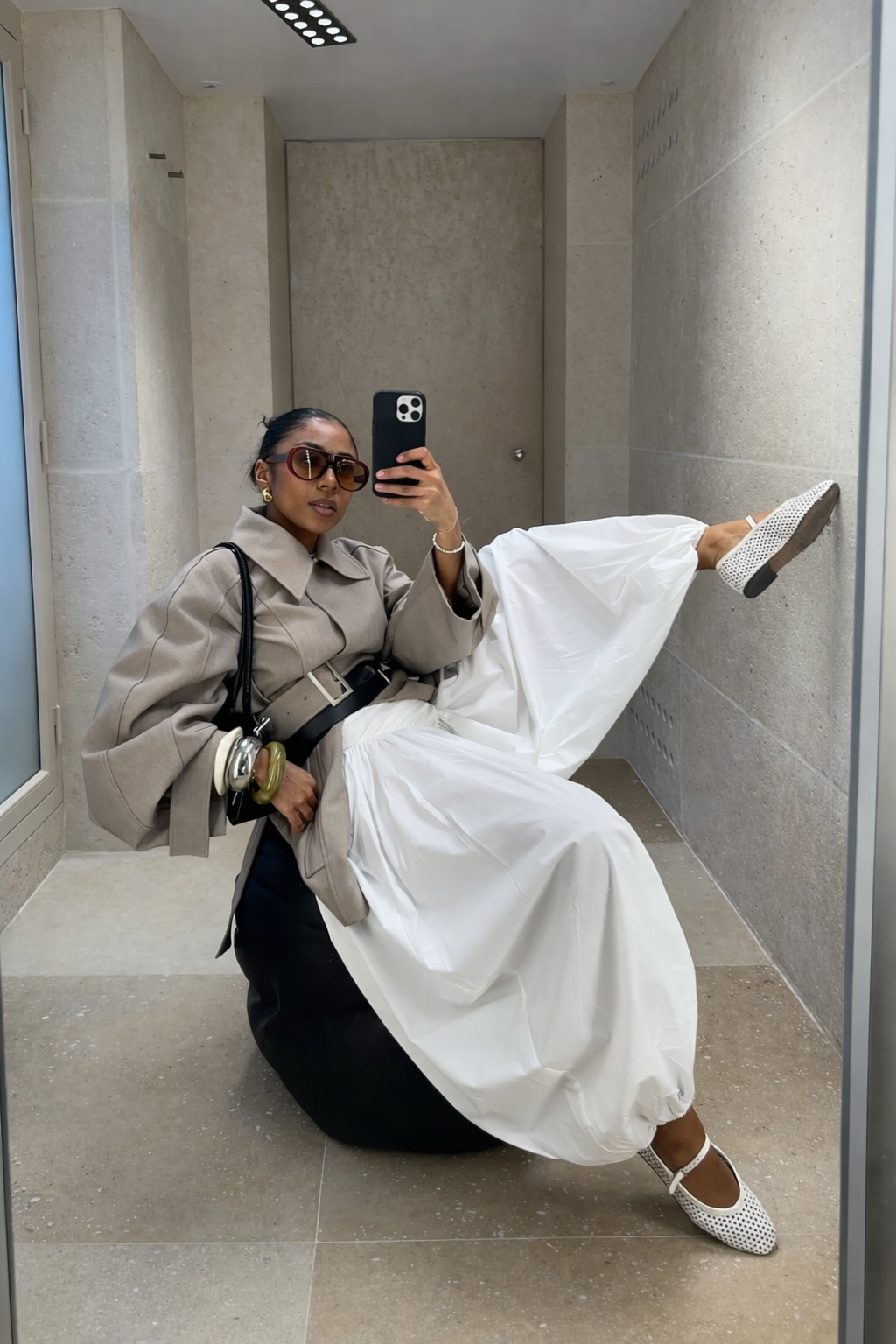
Doechii’s Style Explained: How She Uses Structure to Command Attention
Table of Contents
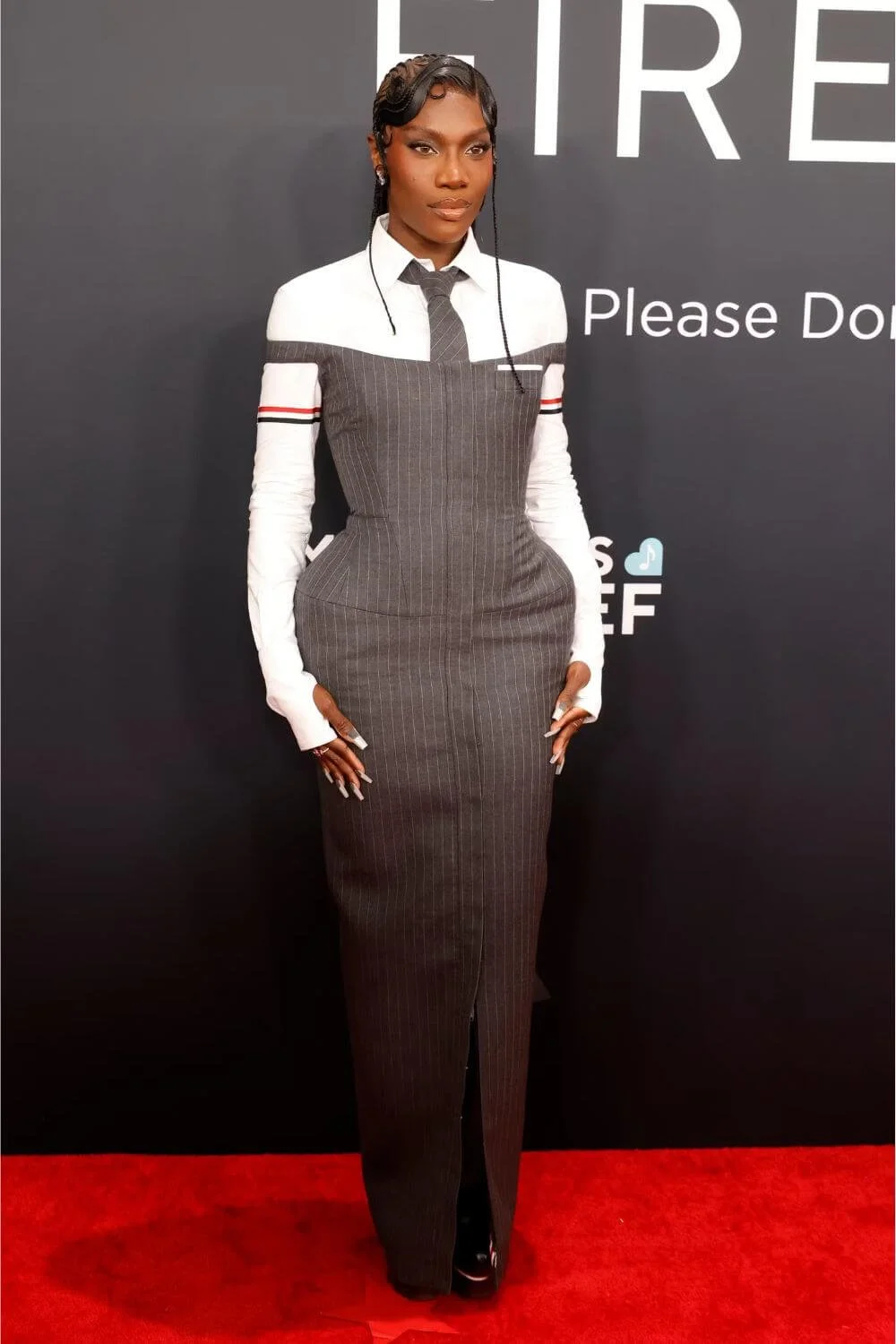
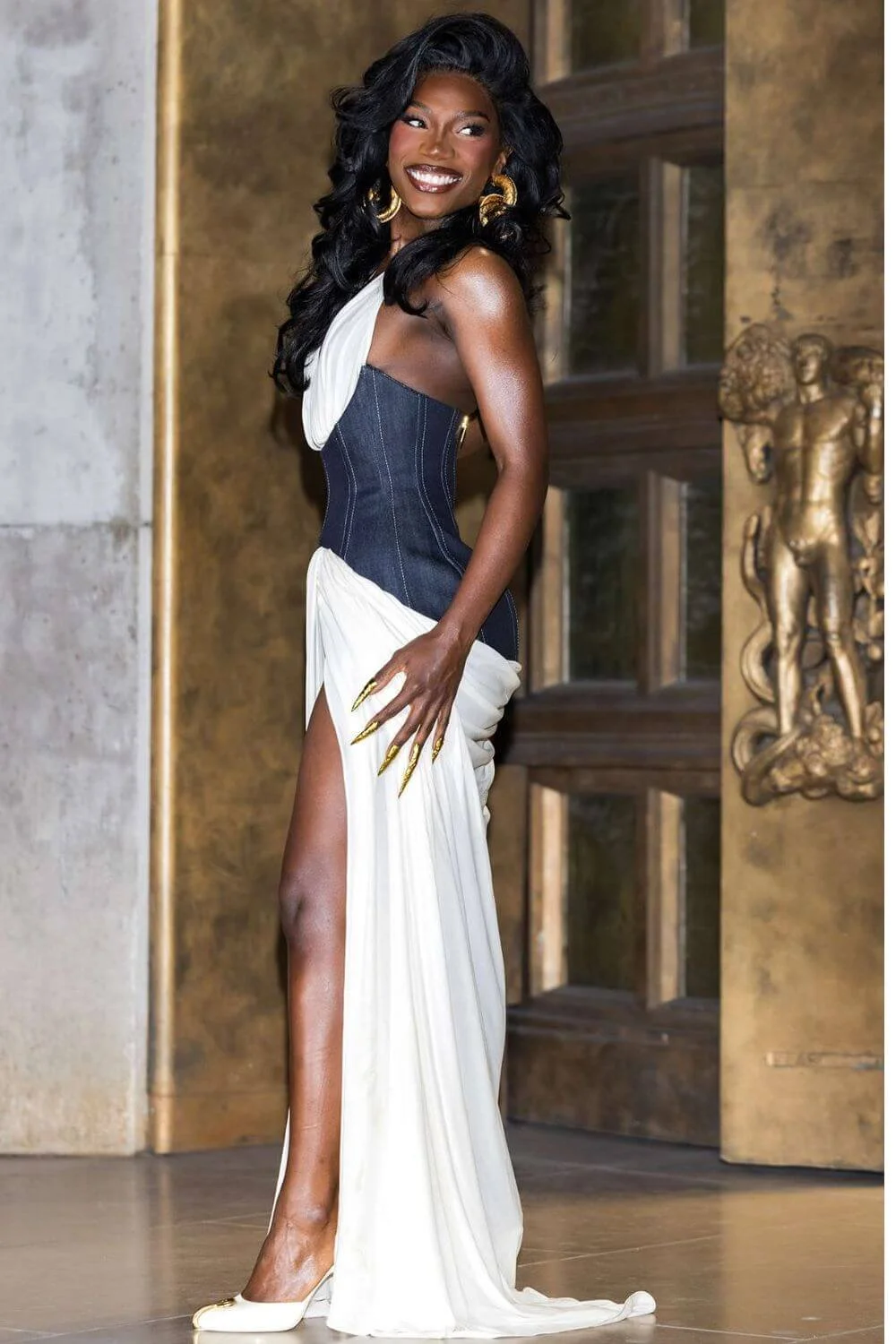
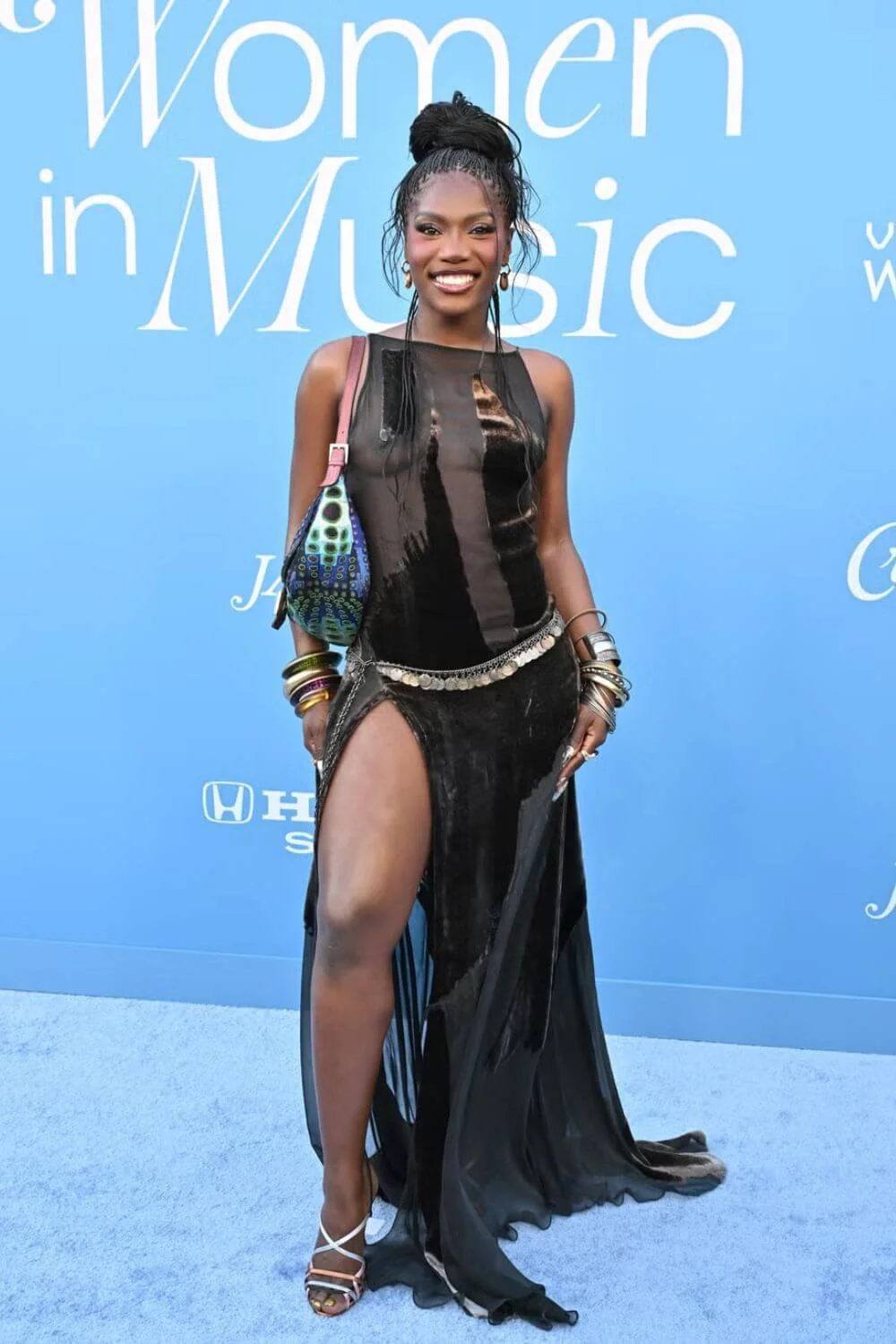
image source: press
If you’ve ever scrolled through Doechii’s outfits and thought, “Why does this work?” it’s a fair question.
At first glance, her looks feel bold, experimental, even exaggerated. But the more you pay attention, the more you realize something else is happening beneath the surface.
What looks bold on the surface is actually intentional.
Doechii doesn’t just dress to stand out. She dresses with intention. Every silhouette, every proportion, every detail is placed with purpose. What looks like chaos at first is actually structure doing the work behind the scenes.
And that’s exactly why her style commands attention.
Before Her Style Became Intentional
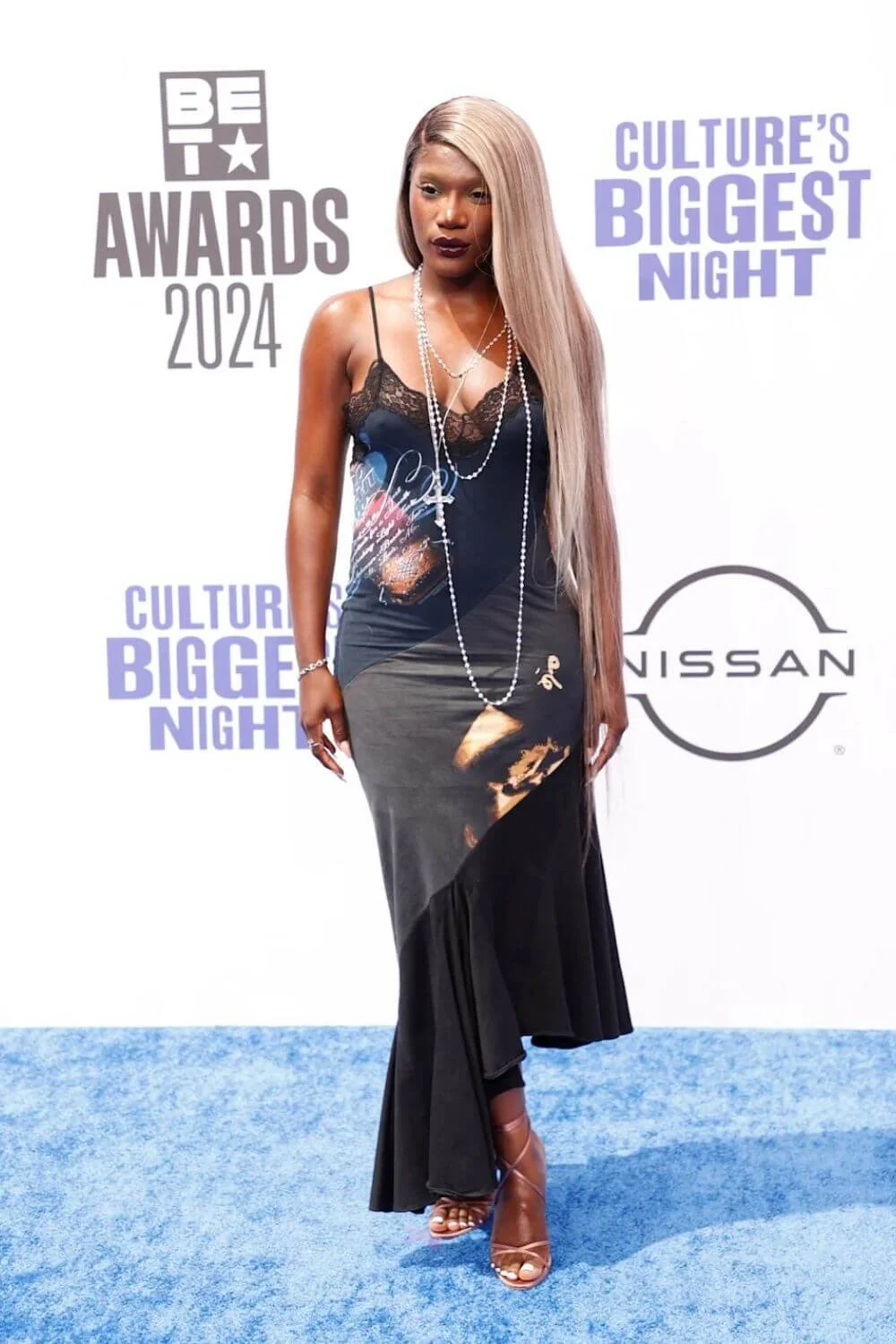
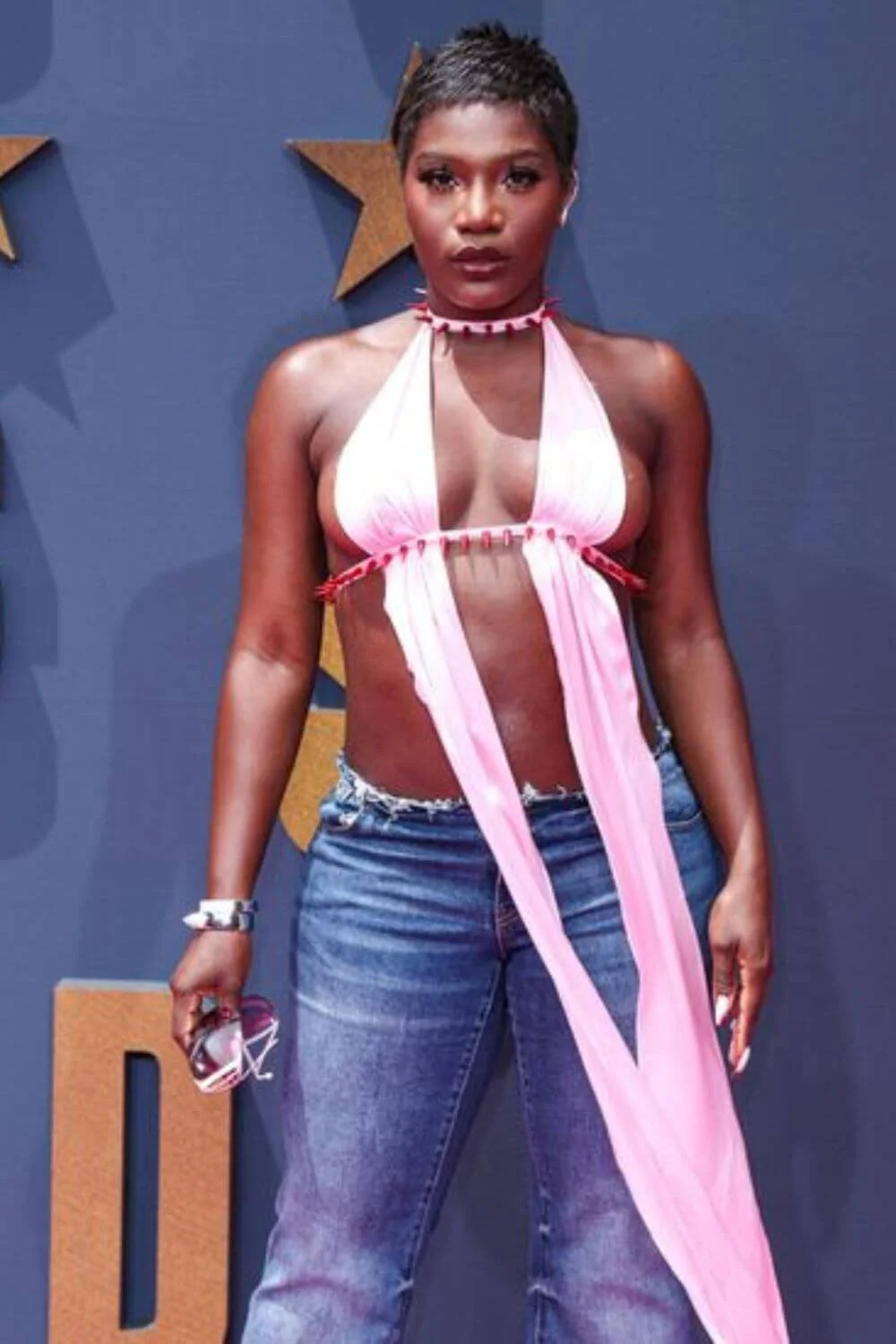
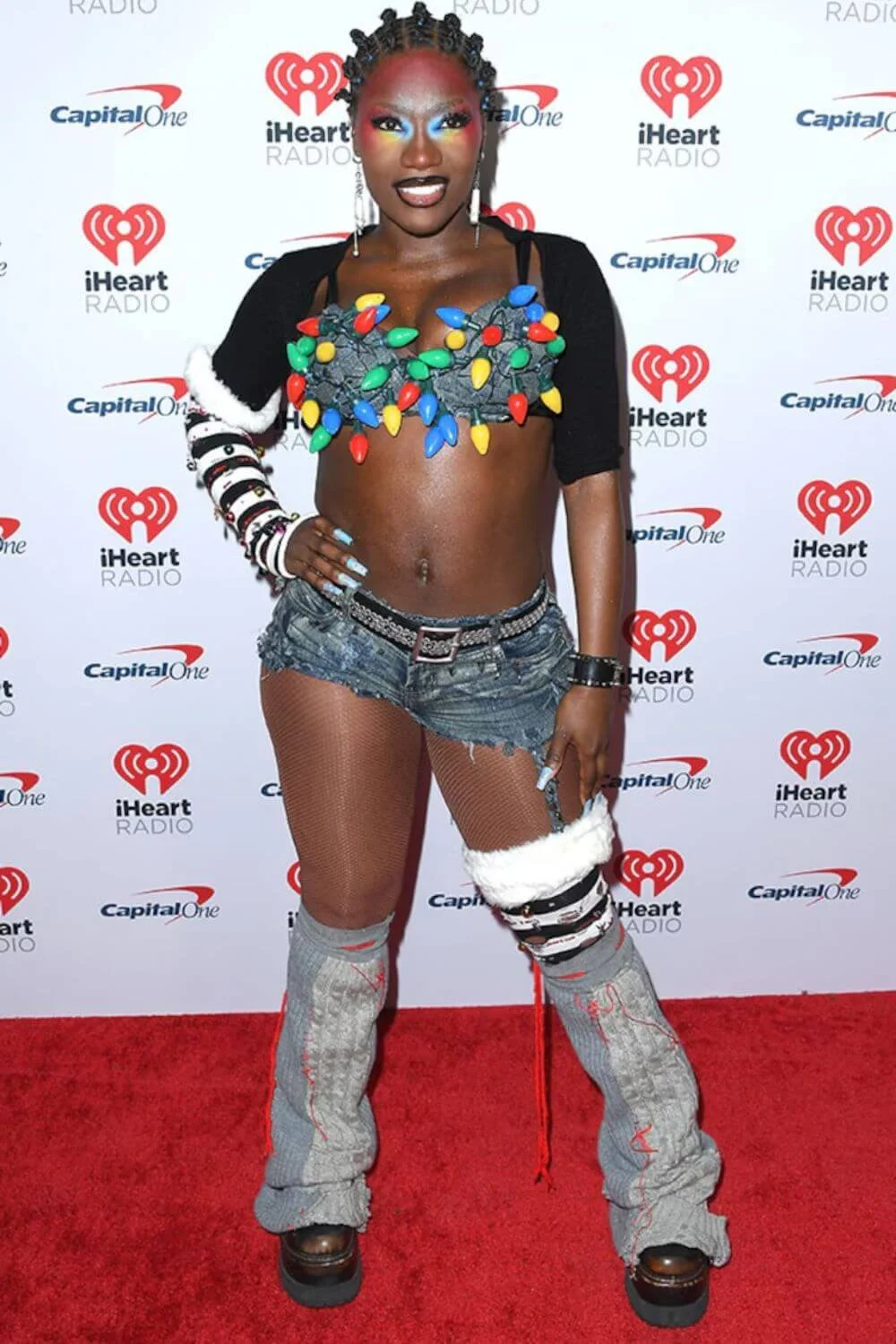
image source: BET
Like many artists early in their careers, Doechii’s initial looks leaned heavily into expression.
There was creativity. There was personality. There was range.
But visually, the outfits didn’t always feel anchored.
Silhouettes shifted. Proportions weren’t always defined. The looks were interesting, but not always cohesive.
And that’s the difference.
It wasn’t that her early style lacked boldness, it lacked precision.
As her visibility grew, so did her access. More designers, more options, and stronger styling support naturally come with that level of exposure.
But access alone doesn’t create a recognizable style.
As her career evolved, so did her approach to fashion. The experimentation didn’t go away. It just became more intentional.
The shift wasn’t about becoming more bold, it was about becoming more controlled.
How Doechii Uses Structure to Command Attention
Doechii’s style works because it’s built on structure first, and expression second.
Everything starts with the silhouette. Before color, before styling, before trend, the shape is already doing the work.
That’s why her outfits don’t just look interesting. They hold your attention.
Exaggerated Proportions
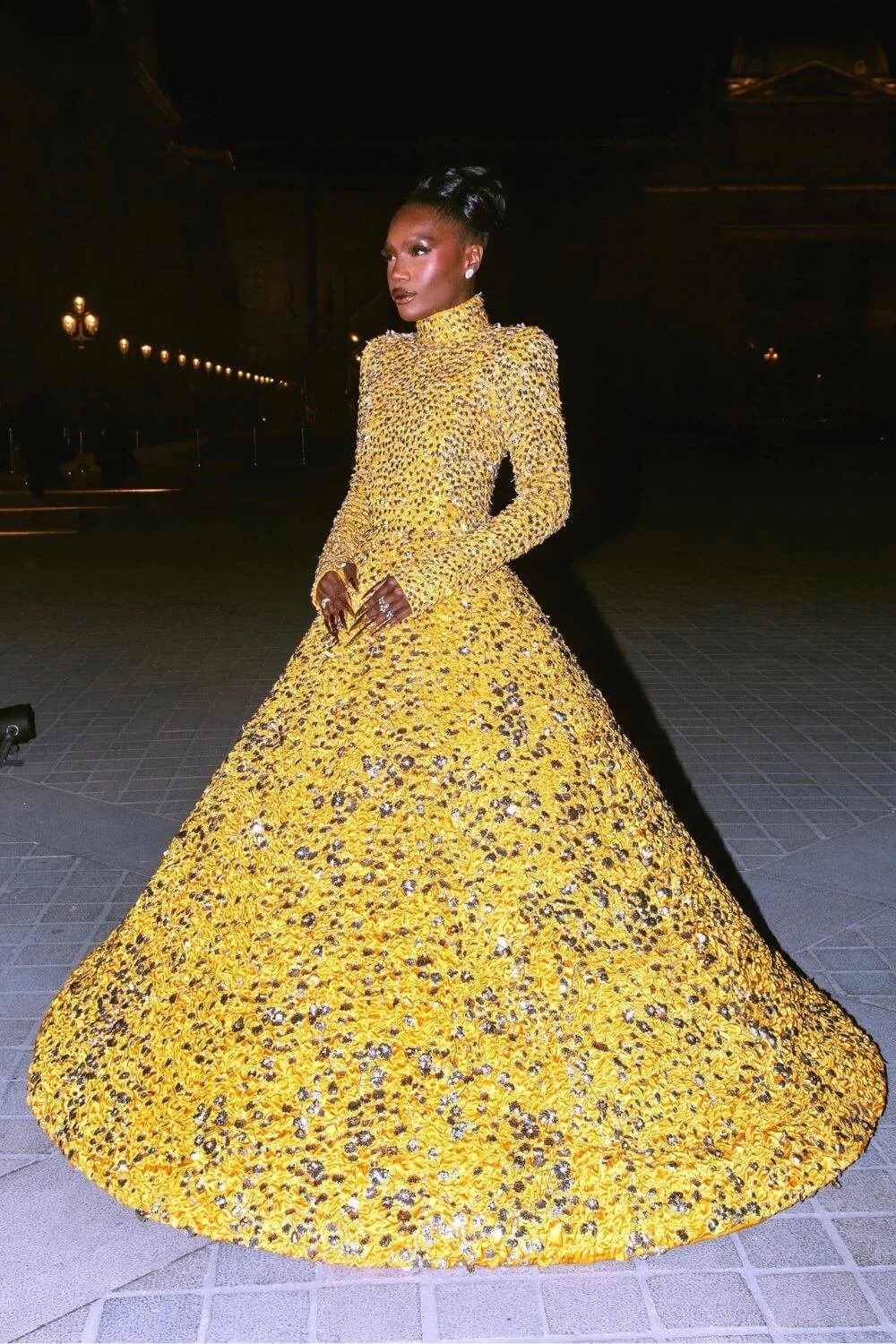
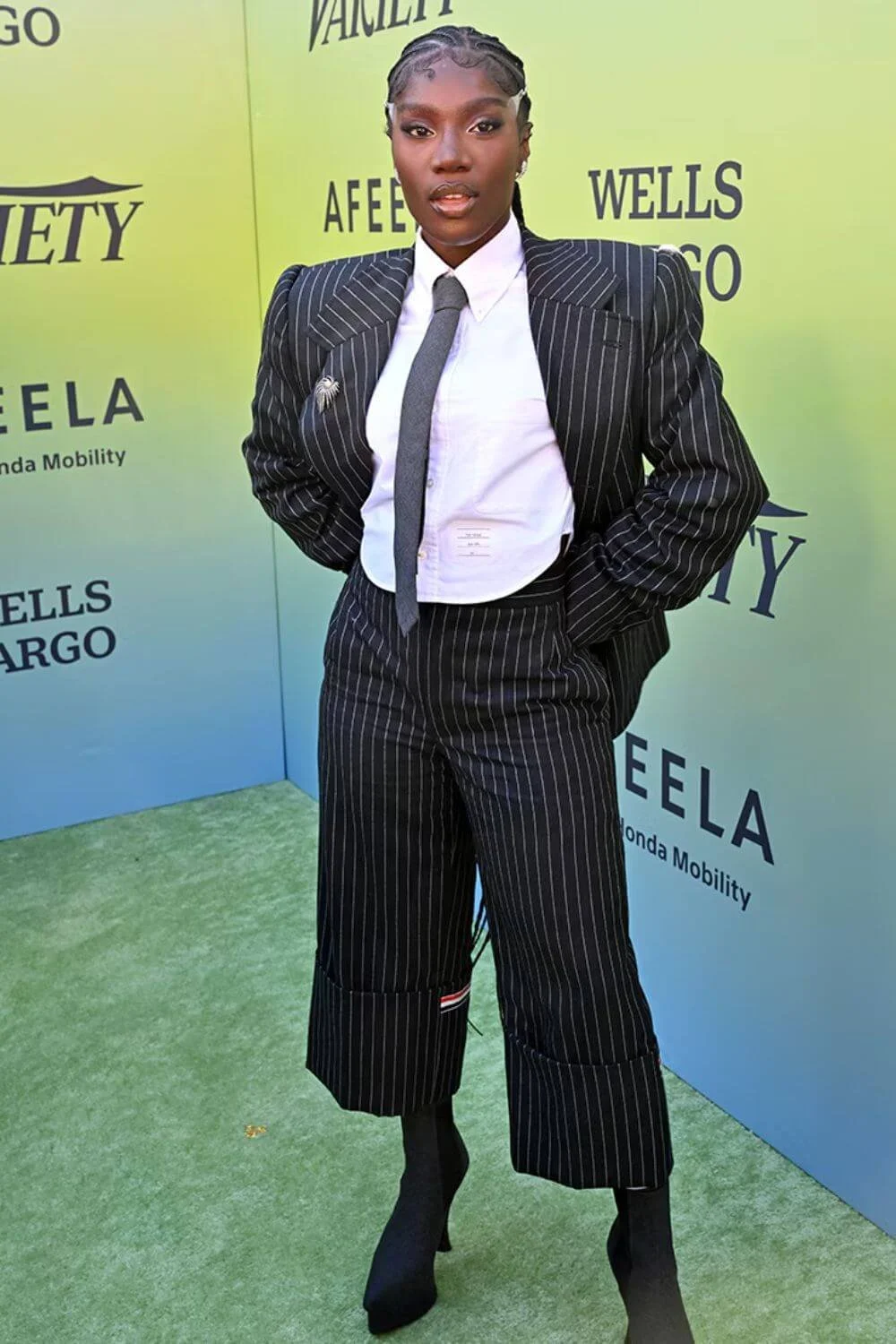
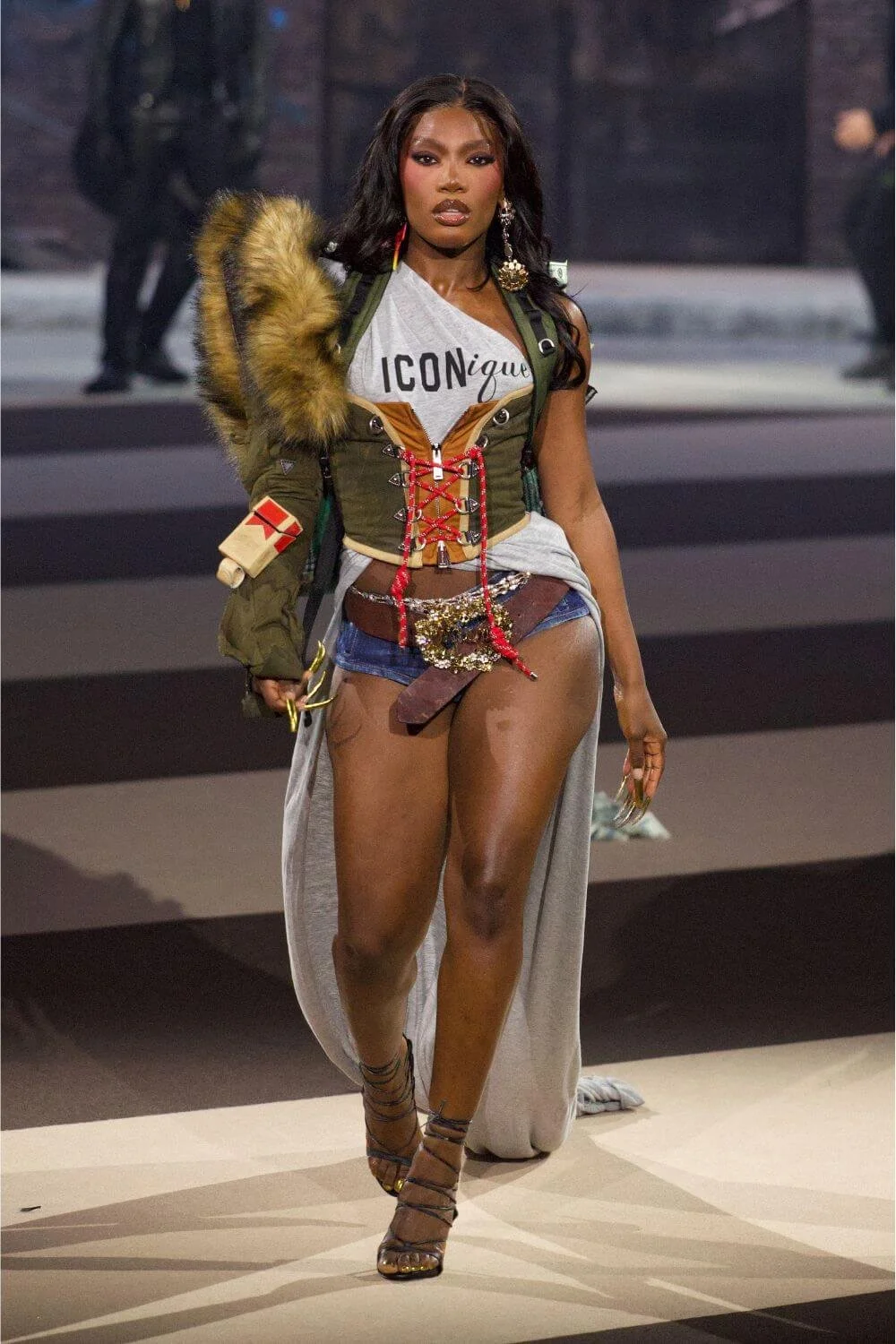
image source: press
One of the most defining elements of her style is how she plays with proportion, and more importantly, where she places it.
In some looks, the waist is pulled in tightly while the hips expand outward. In others, the shoulders carry the structure while everything else softens around it.
You’re not just seeing an outfit. You’re seeing direction.
Take a look at her more tailored or sculpted pieces. The volume is never everywhere at once. It’s controlled. Focused. Intentional.
That’s why even her boldest looks don’t feel overwhelming. Your eye lands exactly where it’s supposed to.
Corsetry & Shape Definition
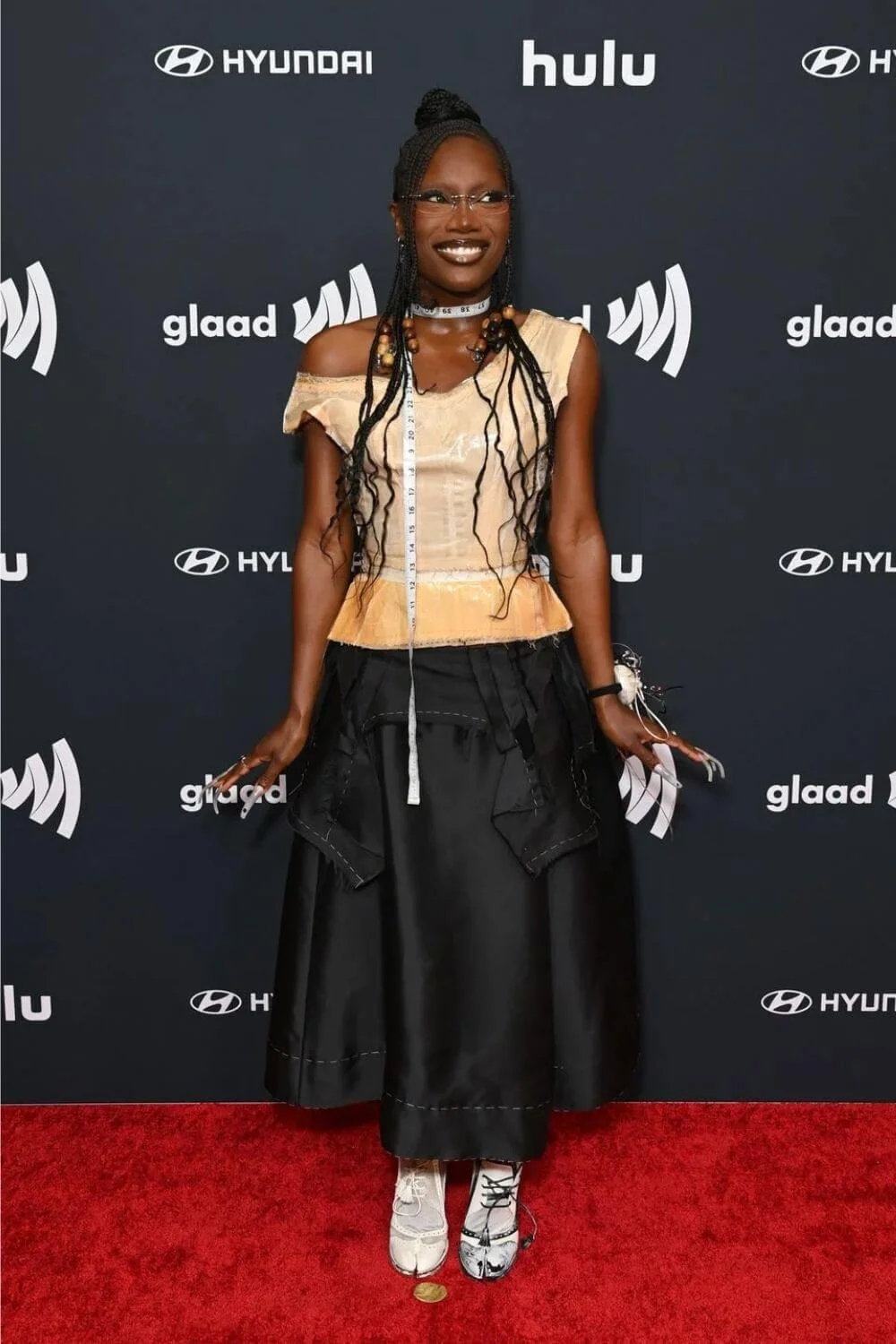
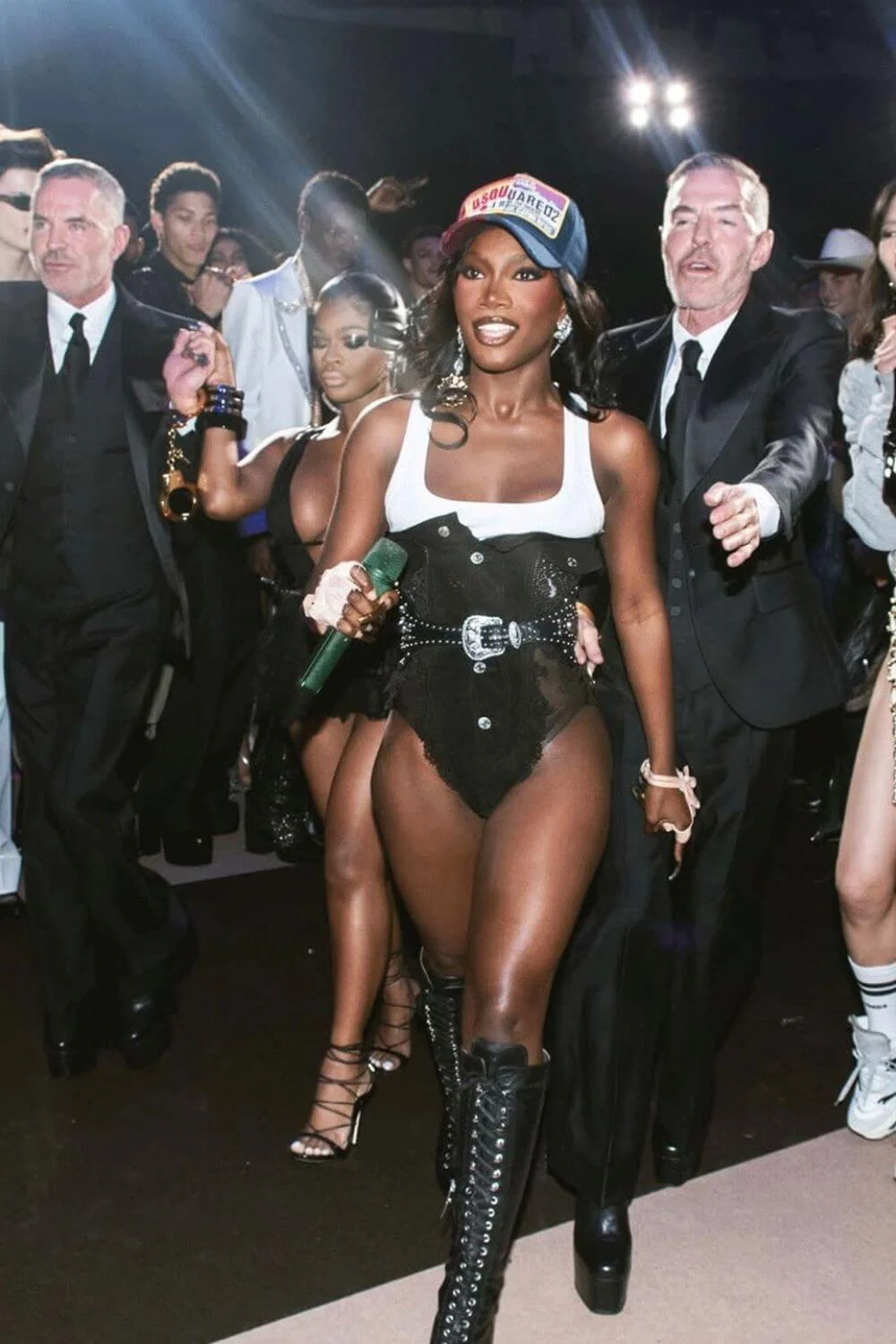
image source: getty images
Corsetry shows up often in her styling, but not in a predictable way.
It’s not just there to be “sexy” or trend-driven. It’s there to create order.
In looks where fabric drapes or moves, the corset anchors everything. It gives the outfit a center. A point of control.
Without it, the look could feel loose or undefined.
With it, everything snaps into place.
That’s the difference between something that feels styled and something that feels constructed.
Tension Between Soft and Structured
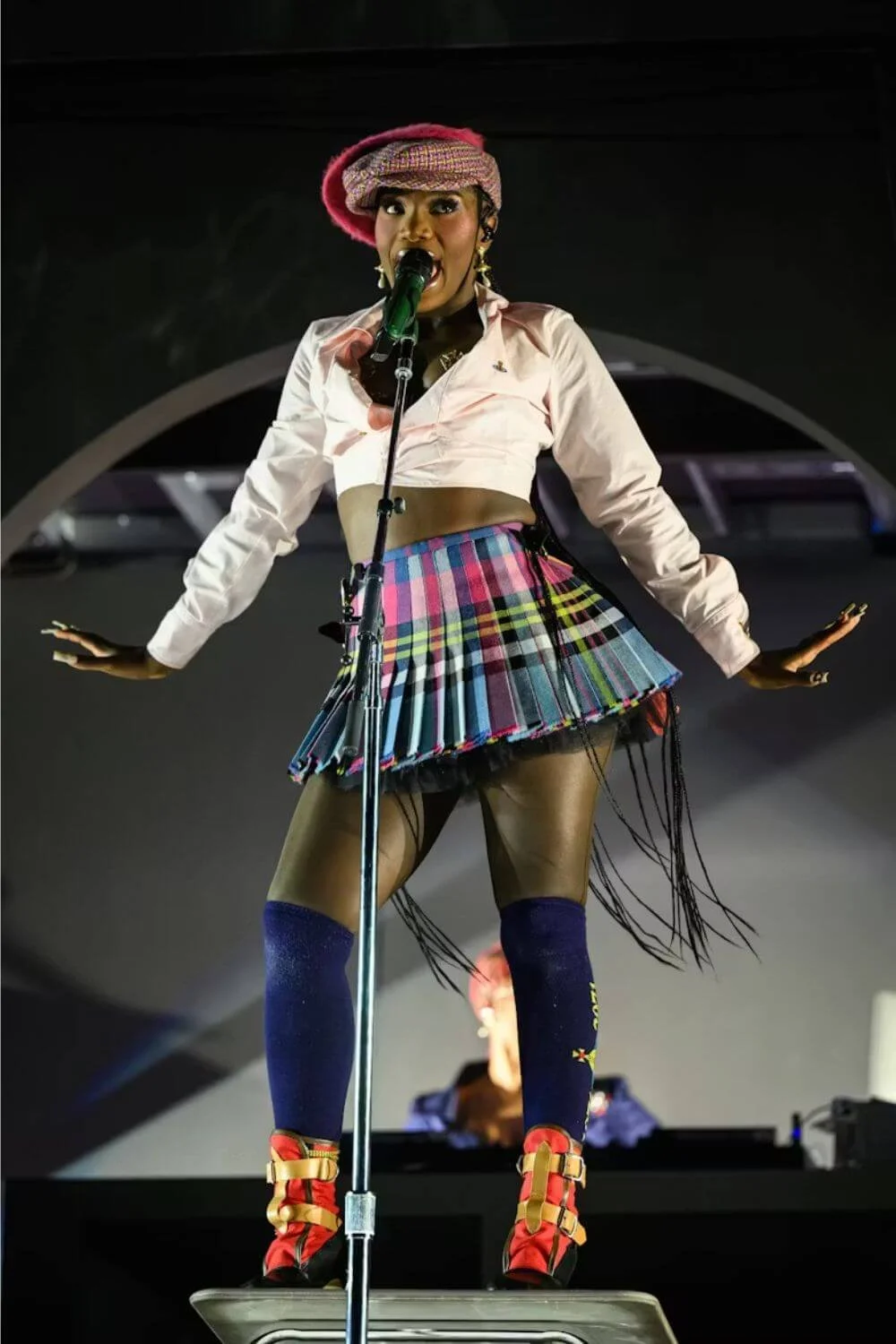
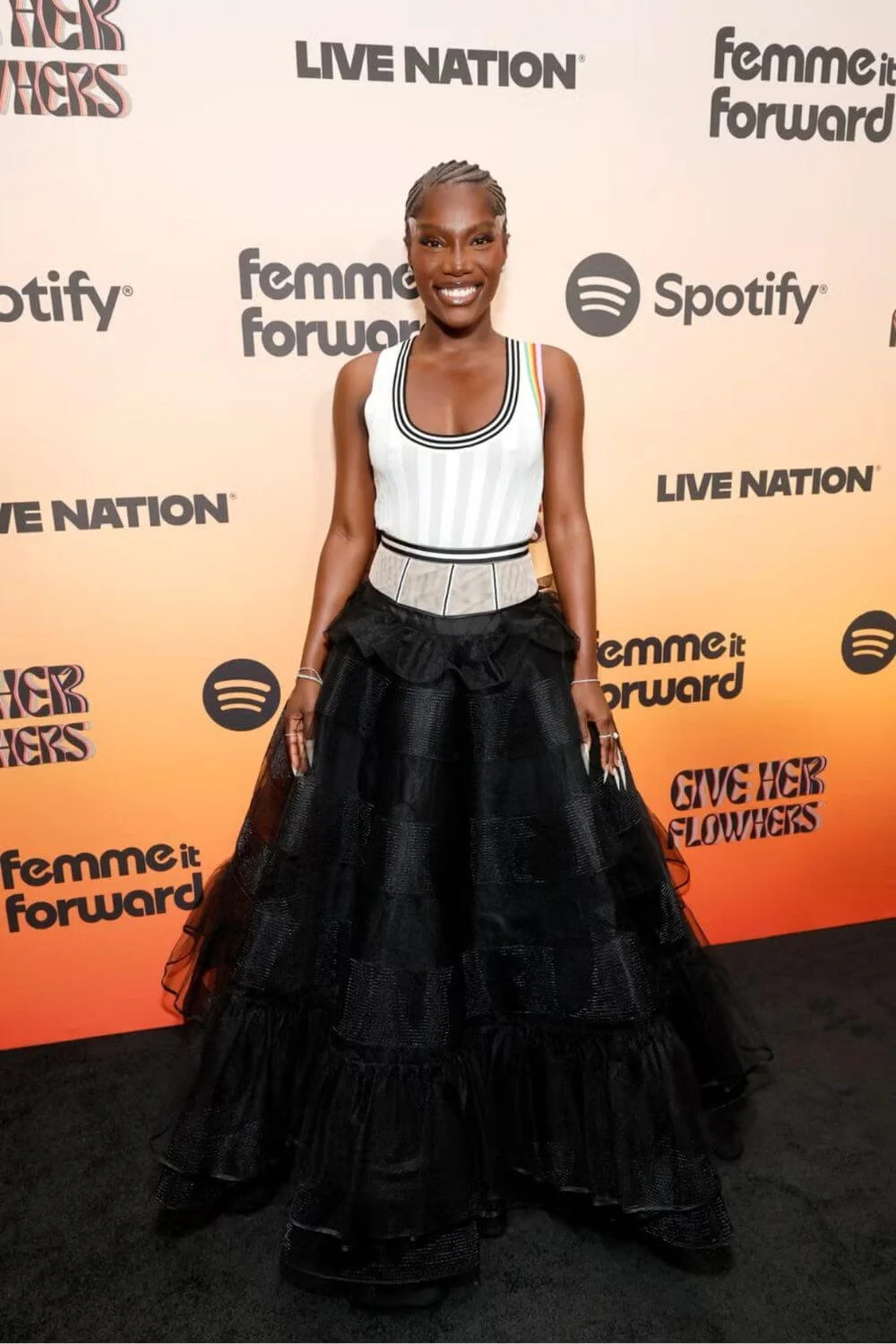
image source: press
This is where her styling starts to feel layered.
There’s almost always a push and pull happening.
A structured bodice paired with soft draping.
An oversized silhouette balanced by something sharply tailored.
A fluid fabric grounded by a defined shape underneath.
That contrast is what keeps the outfit from feeling one-note.
It moves, but it doesn’t fall apart.
It’s expressive, but it’s still held together.
And that balance is what makes the look feel intentional instead of excessive.
Your eye follows the structure, even when the fabric moves.
The Architect Behind the Image
Unlike many artists who rely heavily on a single stylist’s vision, Doechii’s image feels self-directed.
There’s consistency in how she approaches shape, proportion, and presence, even when the looks themselves change.
That consistency is what signals intention.
You start to recognize the patterns. The defined waist. The controlled volume. The way structure shows up in different forms.
And once you see it, it becomes hard to unsee.
This isn’t just about wearing interesting clothes.
It’s about understanding how to use them.
That level of clarity doesn’t come from access alone. It comes from knowing exactly how you want to be seen.
And building every look around that idea.
A Breakdown of Doechii’s Style and Outfit Choices
At a glance, Doechii’s outfits can feel unpredictable. But once you slow down and really look, the patterns start to reveal themselves.
1. Hair & Makeup as Extension
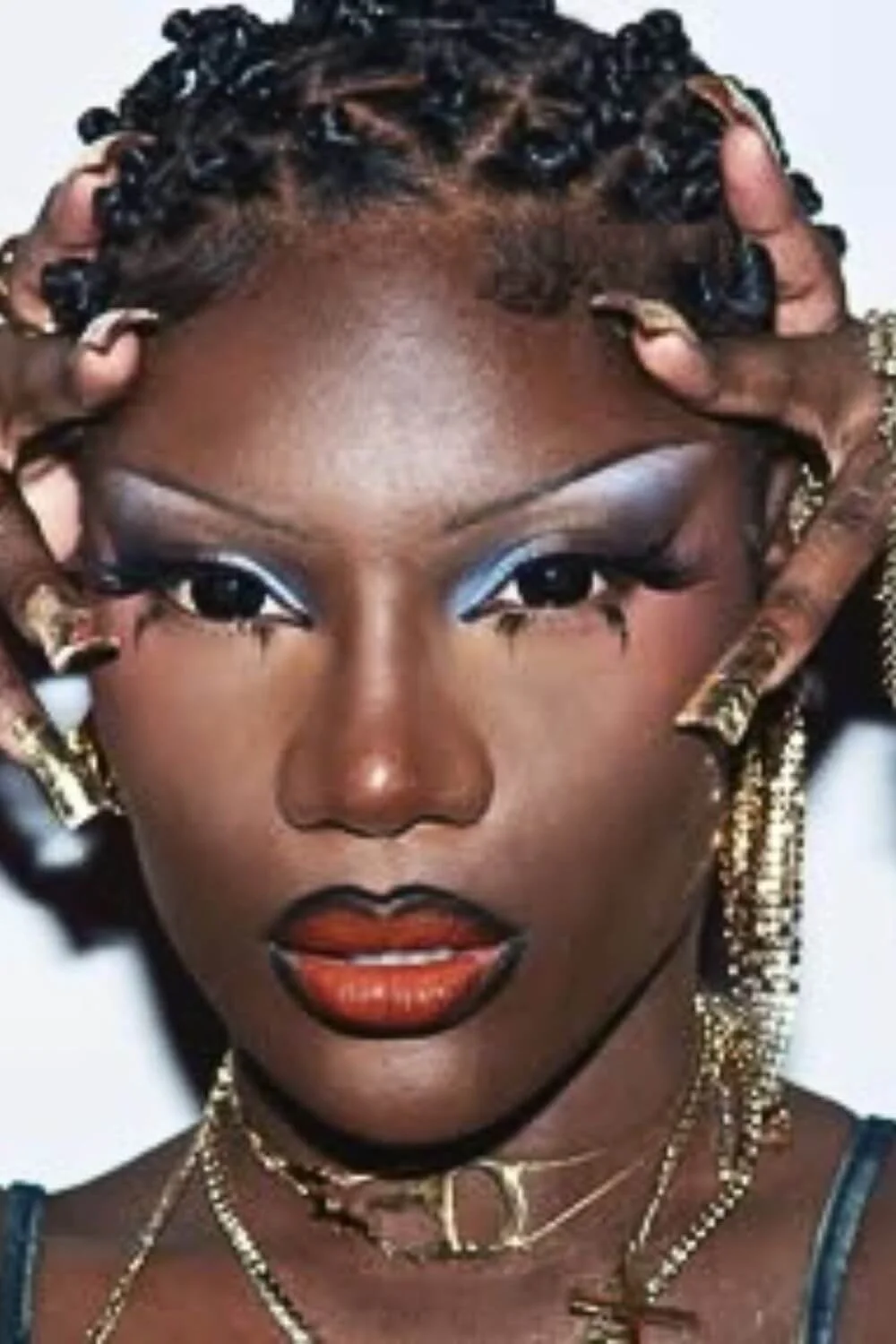
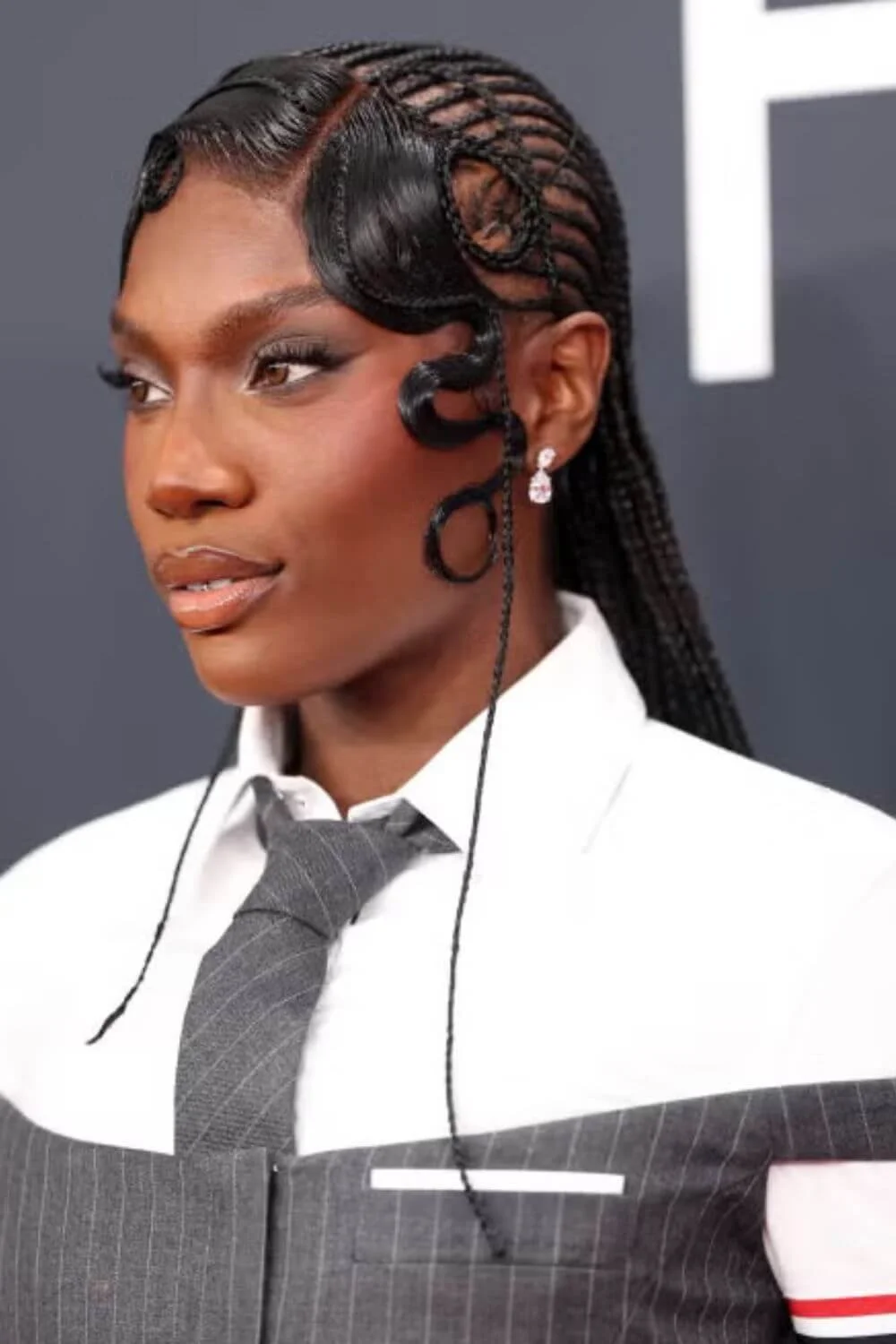
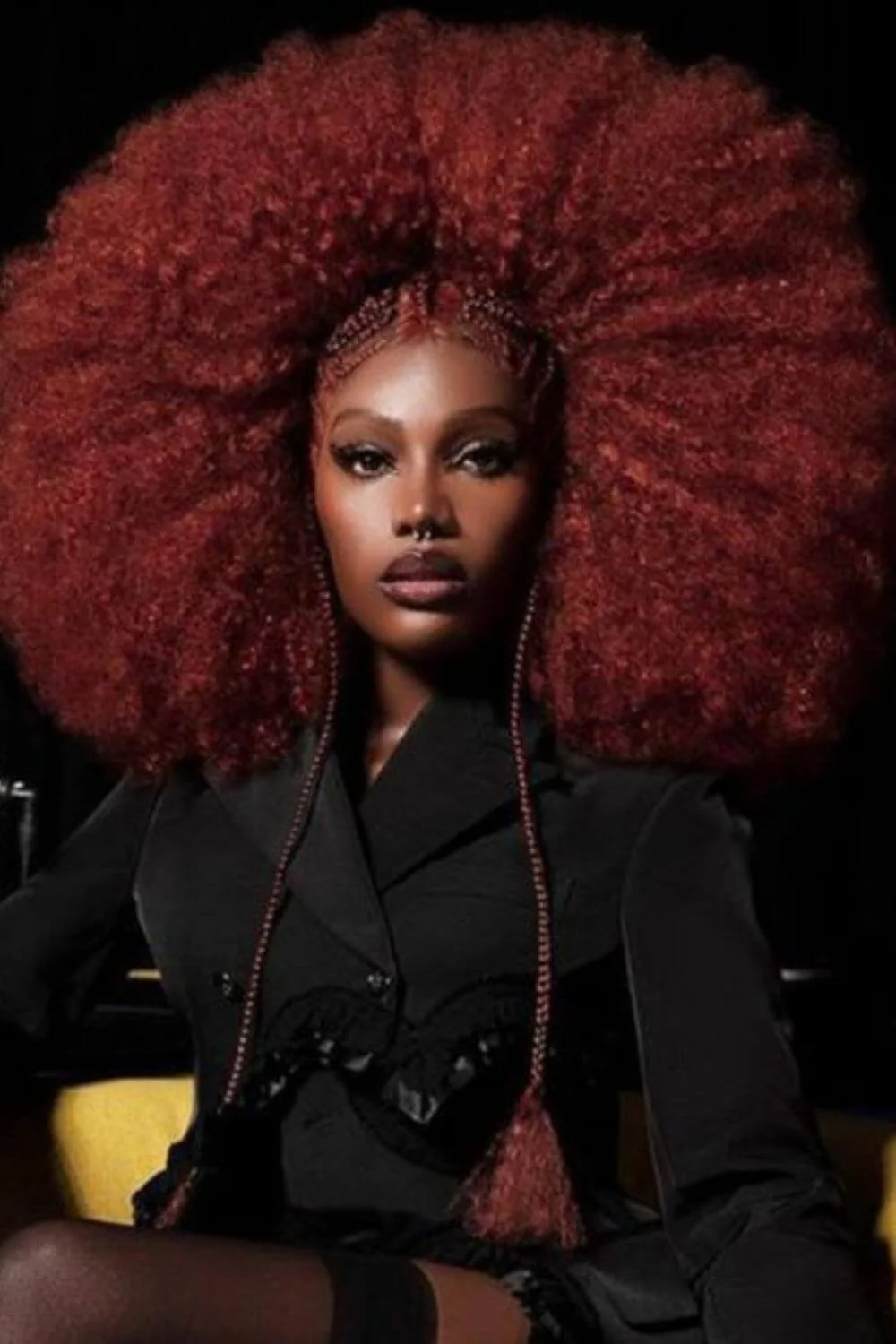
Her hair and makeup aren’t separate from the outfit, they complete it.
They reinforce the silhouette. They support the mood. They often echo the same level of intention as the clothing itself.
Nothing feels like an afterthought.
Everything is working toward the same visual direction.
If you’ve looked at how SZA approaches softer, more fluid styling, the contrast makes this even clearer. Structure isn’t always necessary, but when it’s used like this, it creates a completely different kind of presence.
2. Silhouette Control
Nothing just “ happened” to work.
Every outfit starts with a defined shape, whether that’s a sculpted waist, exaggerated hip, or sharp shoulder line. Before you notice the details, your eye registers the outline.
That’s what grounds the look.
Even her most experimental outfits don’t feel scattered, because the silhouette gives them structure to sit within.
3. Focal Point Strategy
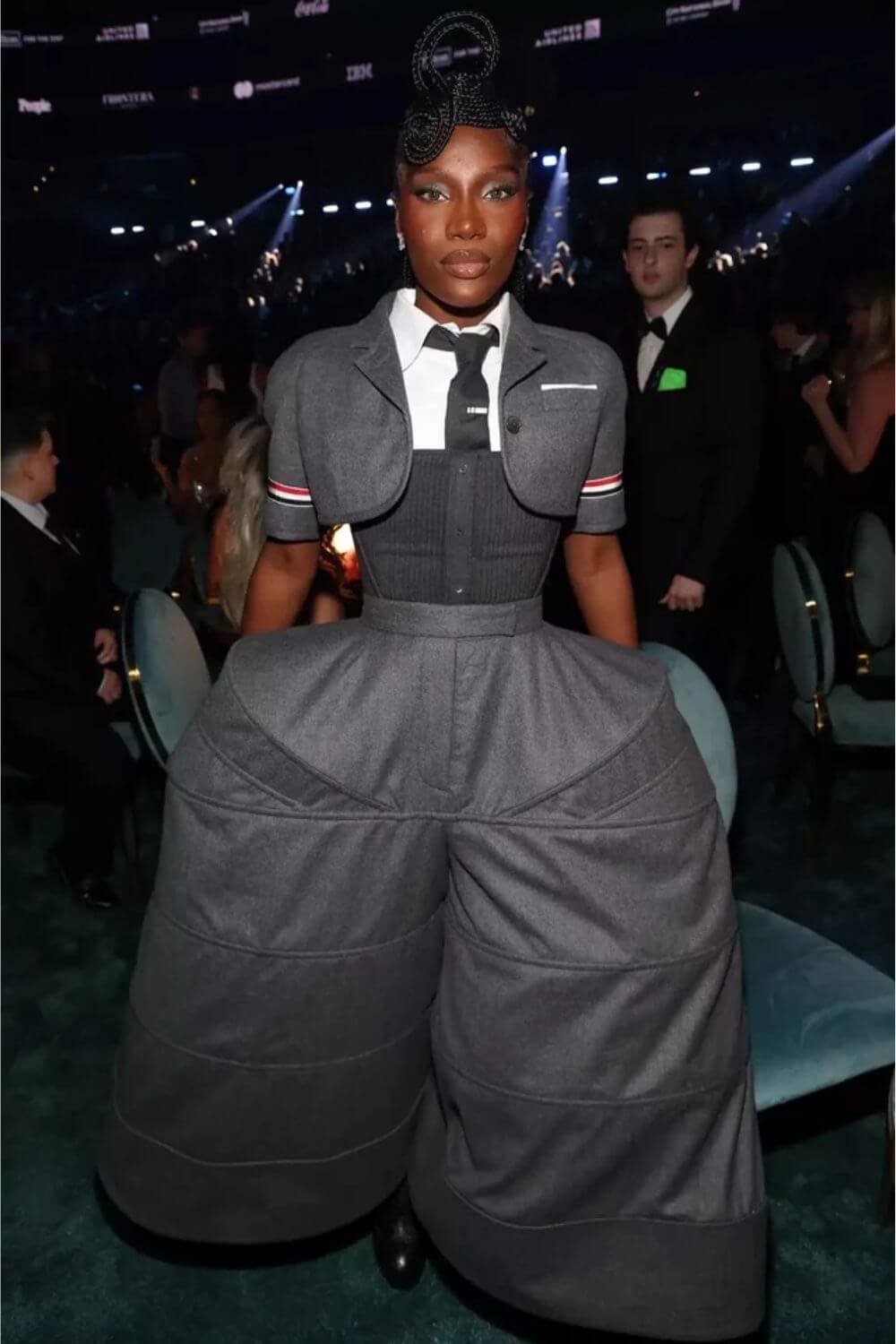
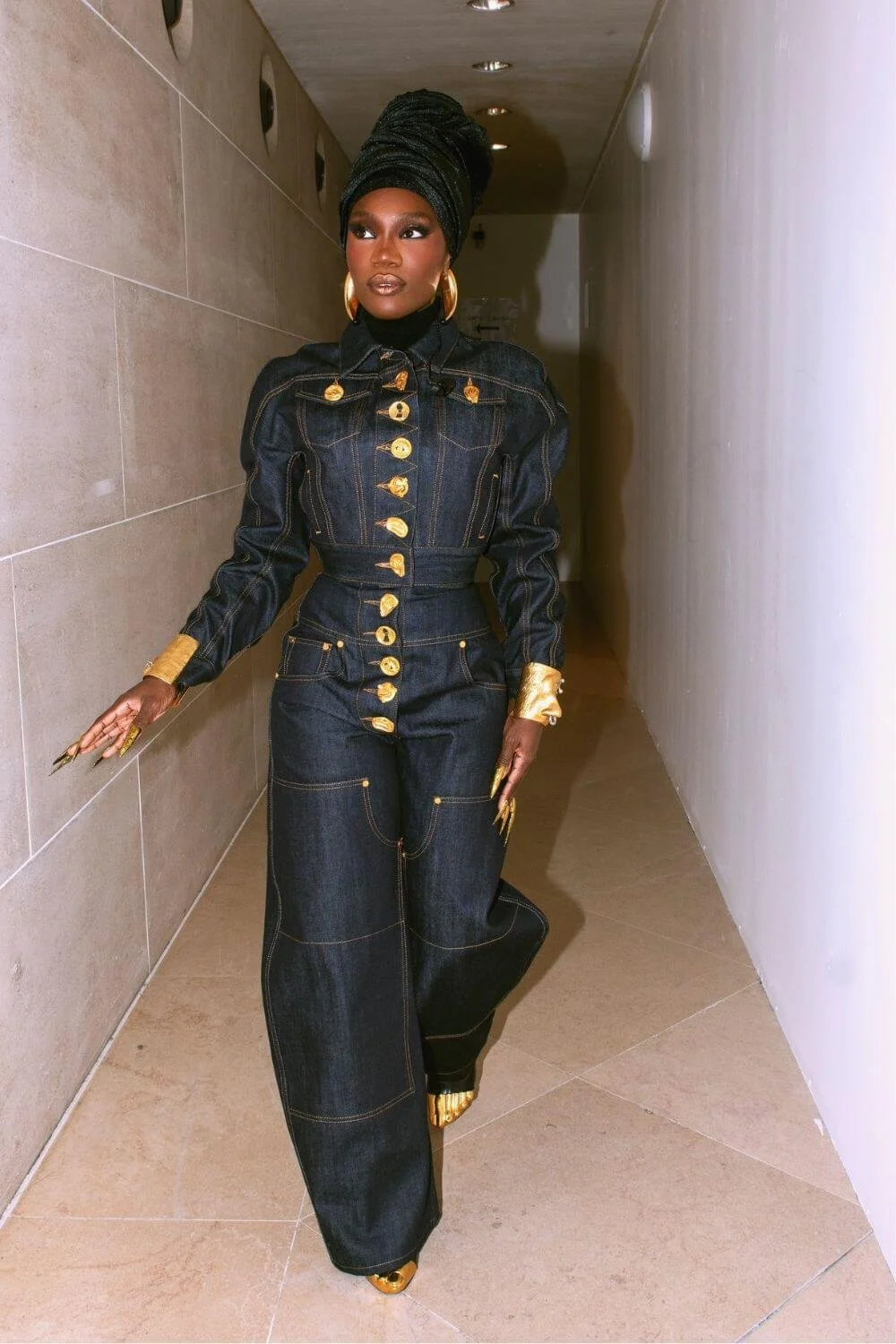
image source: press
There’s always one main visual anchor.
It might be the hips. The chest. The shoulders. The waist.
But it’s never everything at once.
Your eye has somewhere to land, and that’s what makes the look feel clear instead of overwhelming. The rest of the outfit supports that focal point rather than competing with it.
That’s restraint, and it’s what keeps the outfit from feeling overdone.
4. Structure vs Movement
Doechii balances control with fluidity.
There’s usually a structured base, something tailored, corseted, or sculpted, paired with elements that move. Fabric that drapes. Pieces that shift as she walks or performs.
That contrast is what keeps the look alive.
Without movement, it could feel stiff. Without structure, it could feel undefined.
Together, it feels intentional.
How Doechii’s Style Shows Up in Performances and Major Moments
In performances like her Tiny Desk set, where every detail is visible up close, her use of structure becomes even more apparent.
There’s no distance to soften the look. No distraction. The silhouette has to hold on its own.
And it does.
You can see where the shape begins and where it’s meant to land. The structure isn’t just supporting the outfit, it is the outfit.
During major moments like the Grammys, that same approach becomes sharper.
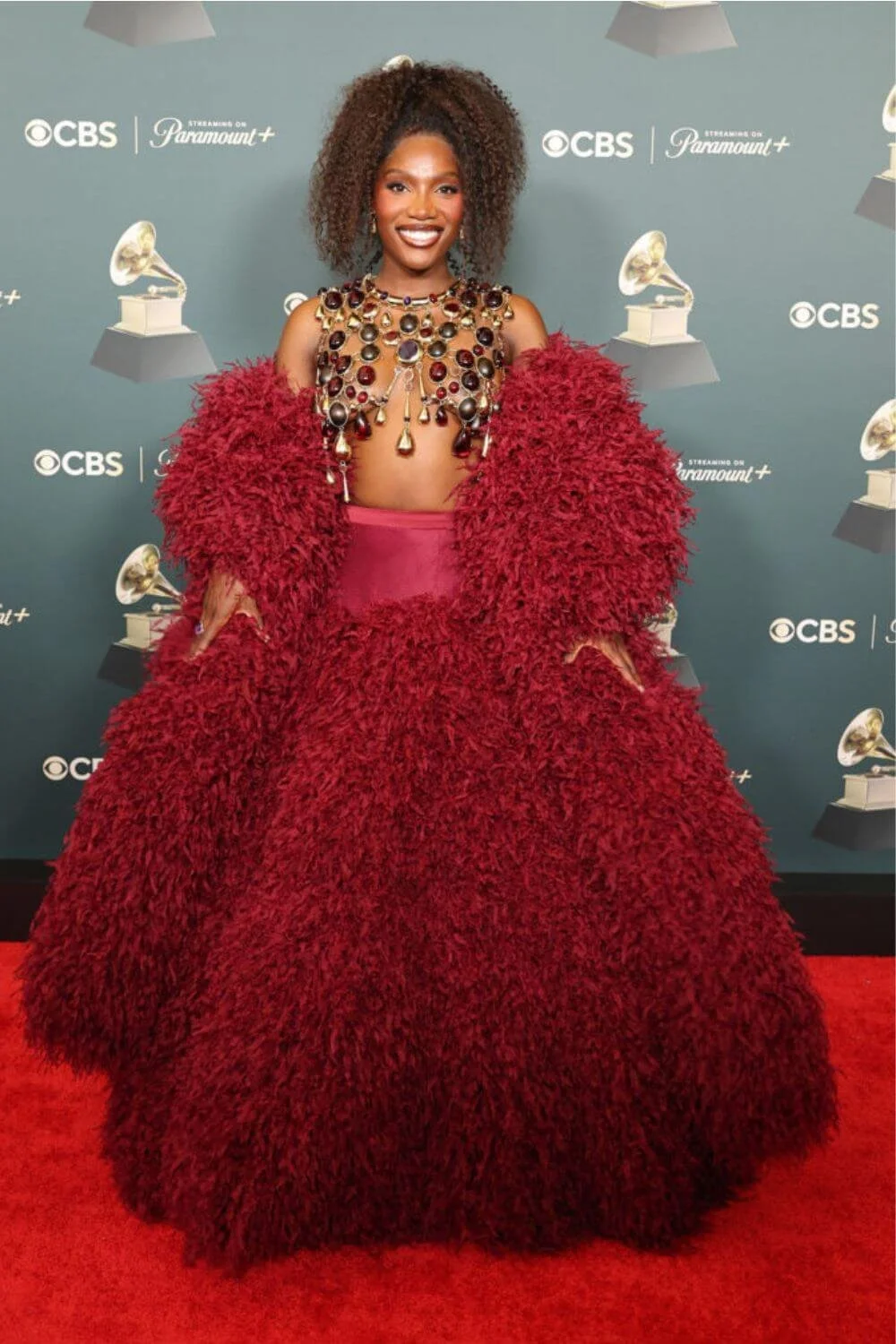
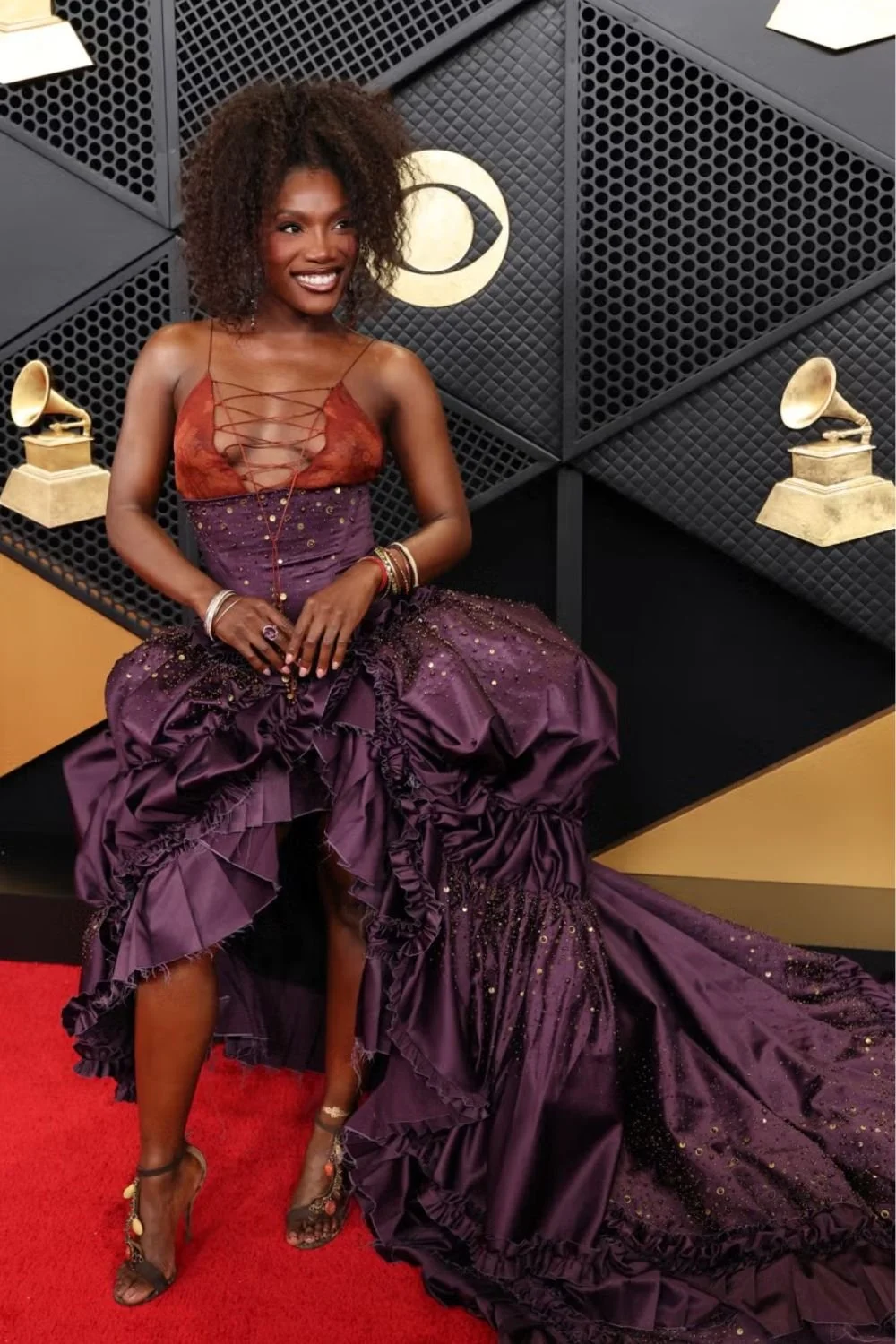
image source: press
The proportions feel more defined. The silhouettes feel more deliberate. Nothing is left loose or unresolved.
From concert stages to high-visibility appearances, the intention doesn’t change. It becomes more precise.
Even in moments tied to specific songs or eras, like What It Is, her styling doesn’t feel like a costume.
It feels aligned.
The outfit doesn’t overpower the moment. It moves with it.
Whether she’s wearing a sculptural dress or a sharply tailored look, the intention stays consistent.
The outfit supports the moment—but it never loses control.
Similar to how Zendaya uses fashion to align with film narratives, Doechii’s looks often reflect the energy of her music and performances rather than existing separately from them.
Why Doechii’s Style Feels So Impactful
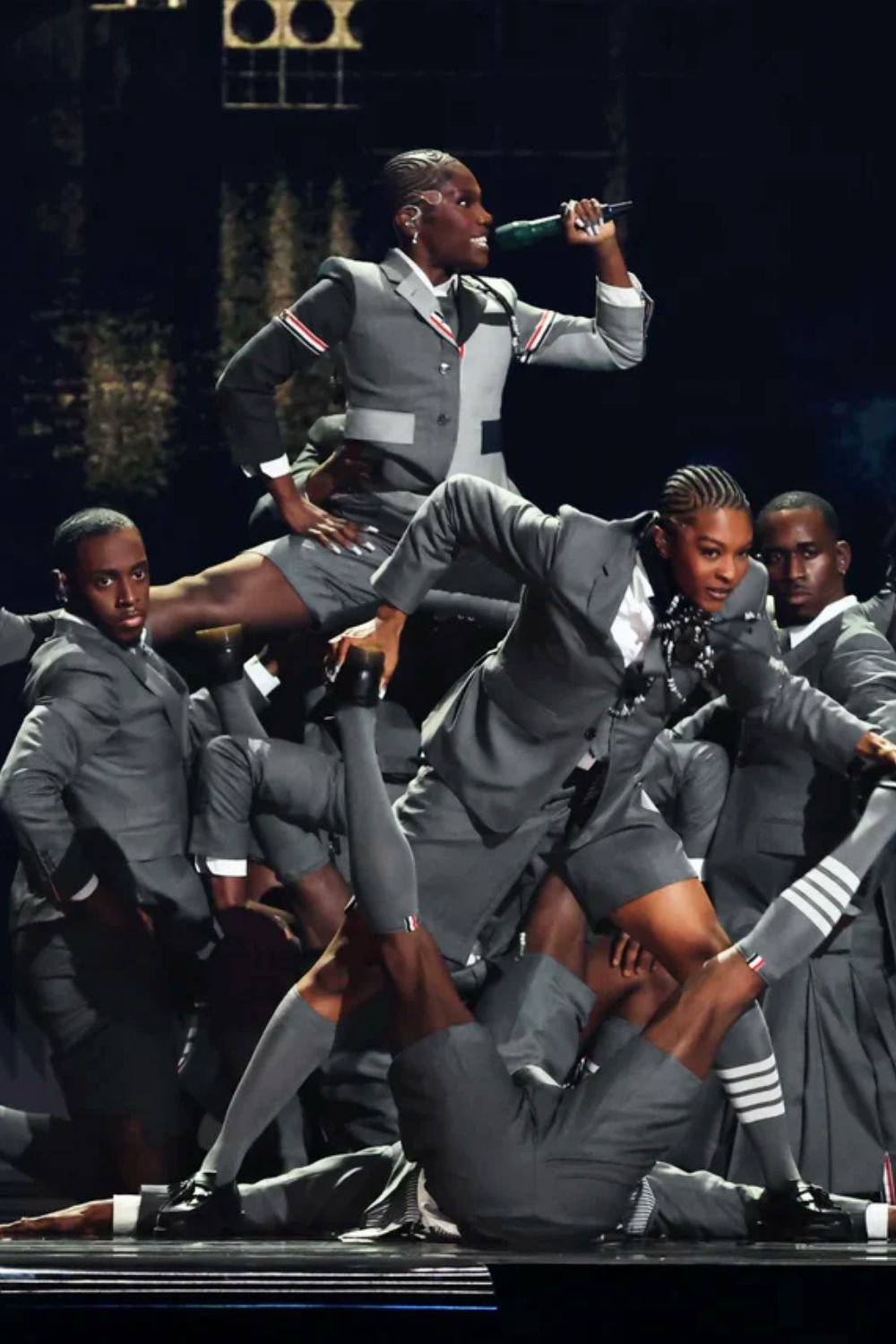
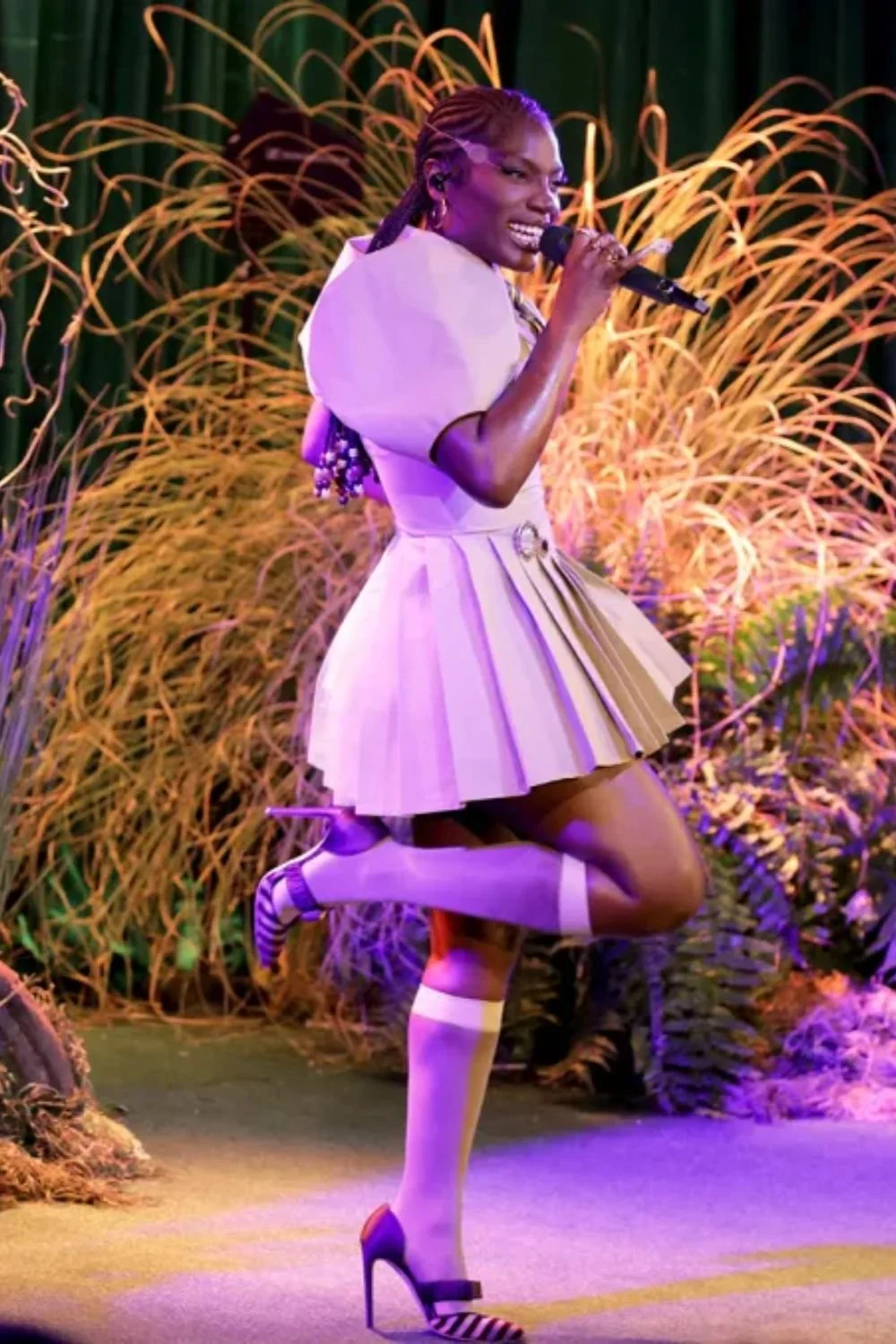
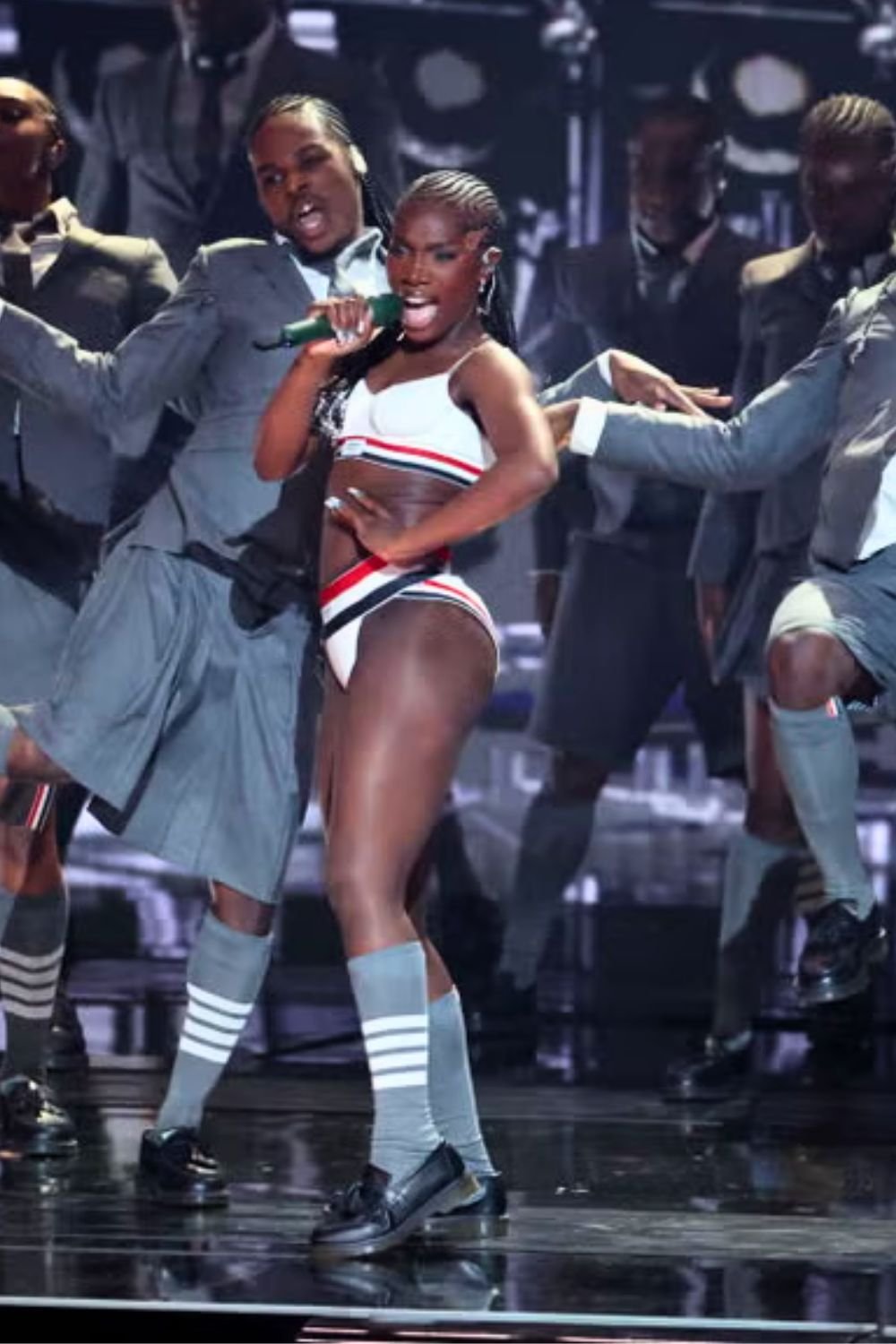
image source: press
Doechii’s style stands out because it follows a clear logic, even when the outfits themselves feel unconventional.
Not everything is loud. Not everything is exaggerated.
But everything is intentional.
Structure = Authority
Structure gives the look presence before anything else even registers.
It holds the outfit in place. It defines the shape. It makes the look feel grounded instead of thrown together.
You don’t question it. You register it.
Exaggeration = Attention
The proportions are what pull you in first.
The widened hip. The sharp shoulder. The contrast in volume.
But because that exaggeration is controlled, it doesn’t overwhelm the look. It guides your eye instead of competing for it.
Control = Credibility
This is what separates her from overstyled looks.
Nothing feels accidental. Nothing feels excessive for the sake of it.
Everything has a purpose.
The difference between “too much” and “intentional” is control.
Where artists like Harry Styles use bold color and playfulness to stand out, Doechii relies on structure to create that same level of impact.
Style as Performance and Artist Identity
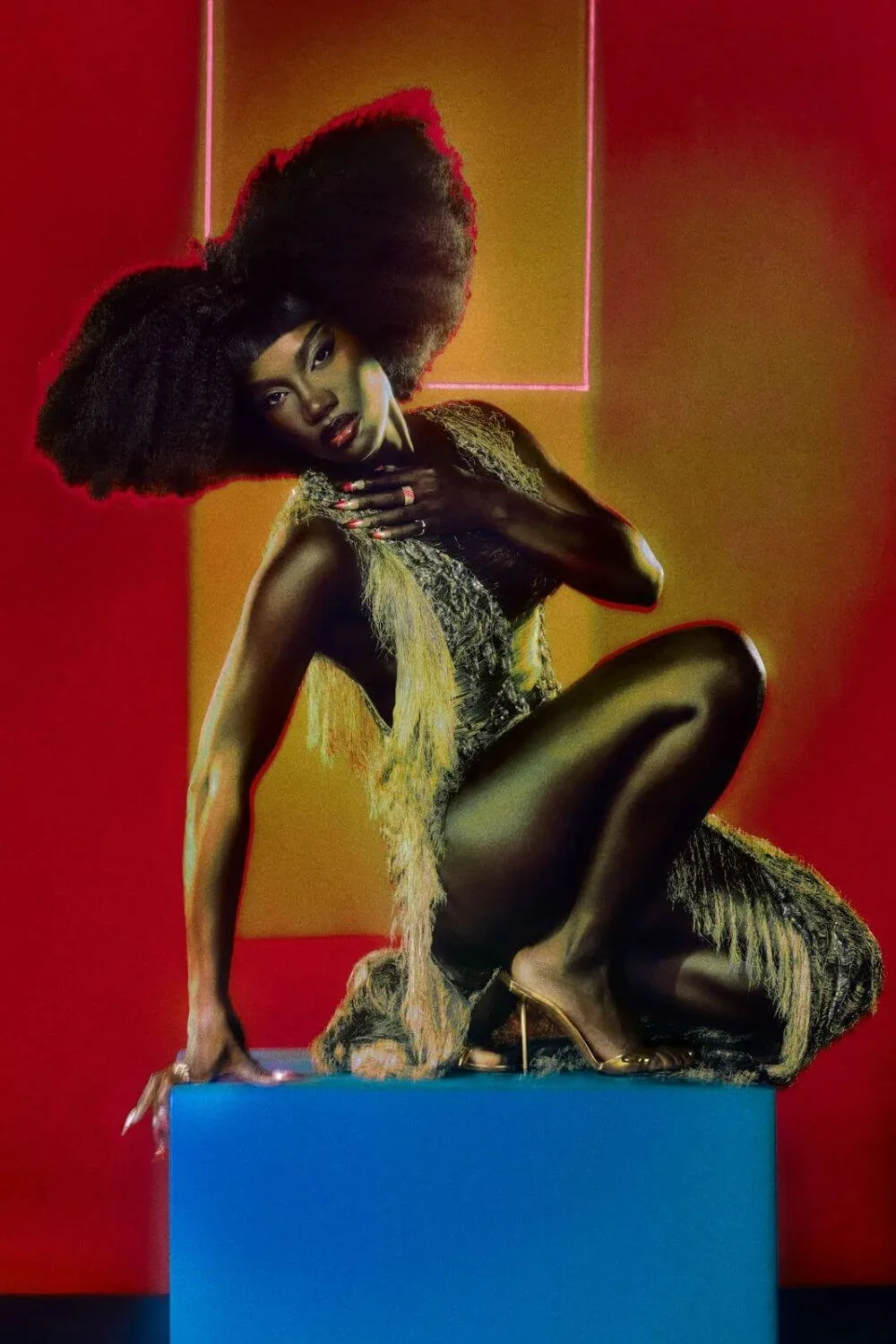
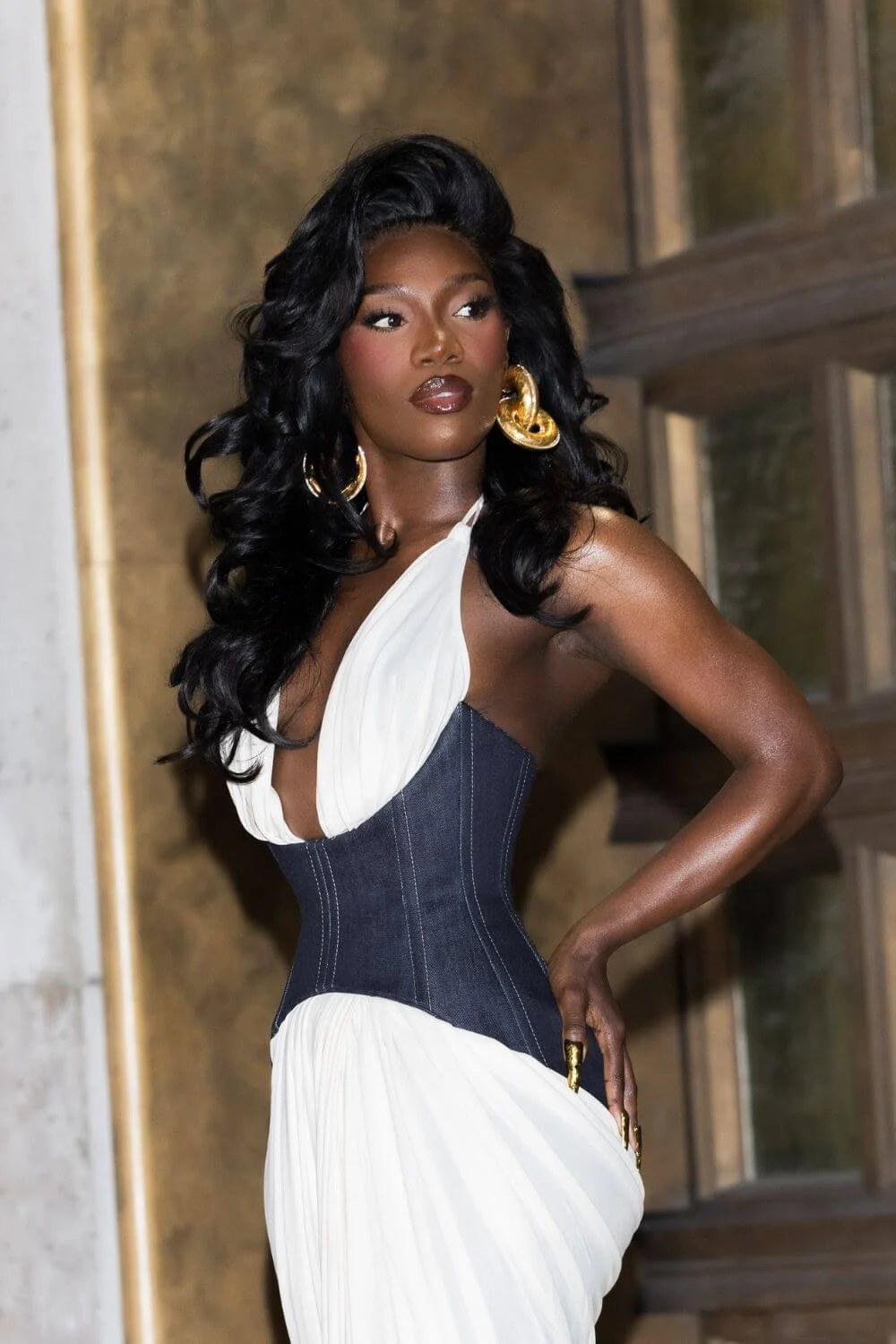
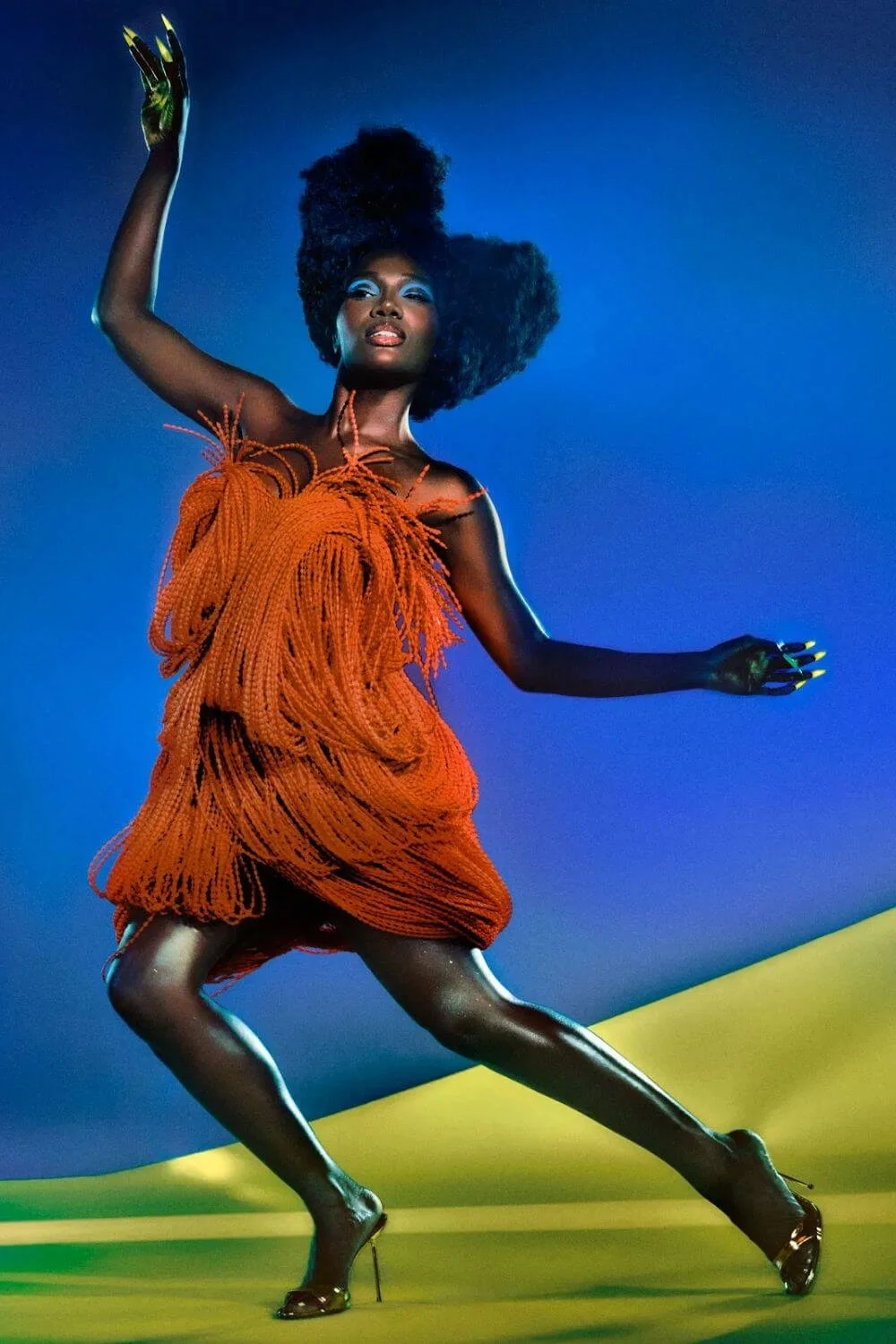
image source: press
Doechii’s fashion isn’t just about what she wears, it’s about how she presents herself.
Her style shifts with her music, her performances, and her visual storytelling. Each look feels connected to something larger than the outfit itself.
That’s what makes it memorable.
You start to recognize the patterns. The defined shape. The controlled volume. The way structure shows up, even when the style changes.
And once you recognize it, the image becomes consistent.
In a landscape where many artists rely on shock value or constant reinvention, Doechii’s approach feels more grounded.
The structure behind her style creates continuity, even when the looks themselves evolve.
That continuity is what builds recognition.
And recognition is what turns style into identity.
Once you start noticing the structure behind Doechii’s outfits, they stop feeling unpredictable, and start feeling intentional.
And that’s when you realize the look was never random to begin with.
Understanding Doechii’s Style
-
Doechii’s style blends structured tailoring with avant-garde experimentation. It combines exaggerated proportions, corsetry, and strong silhouette control to create looks that feel bold but intentional.
-
Her fashion is defined by clear silhouettes, controlled focal points, and a balance between structure and movement. Even her most dramatic outfits feel precise rather than chaotic.
-
Her outfits stand out because they use exaggeration strategically. Volume, shape, and proportion are placed intentionally, which draws attention without overwhelming the look.
-
Doechii’s aesthetic is expressive but controlled. It mixes experimental fashion with strong structure, allowing her to push boundaries while maintaining a clear visual identity.