You’re Overthinking Your Interview Outfit—And It’s Not for the Reason You Think
You don’t need to play it safe to get it right, especially when you’re figuring out what to wear to a job interview.
I used to think you did. That the safest option was automatically the right one. A black blazer, a white shirt, something that felt “professional” enough to not get questioned.
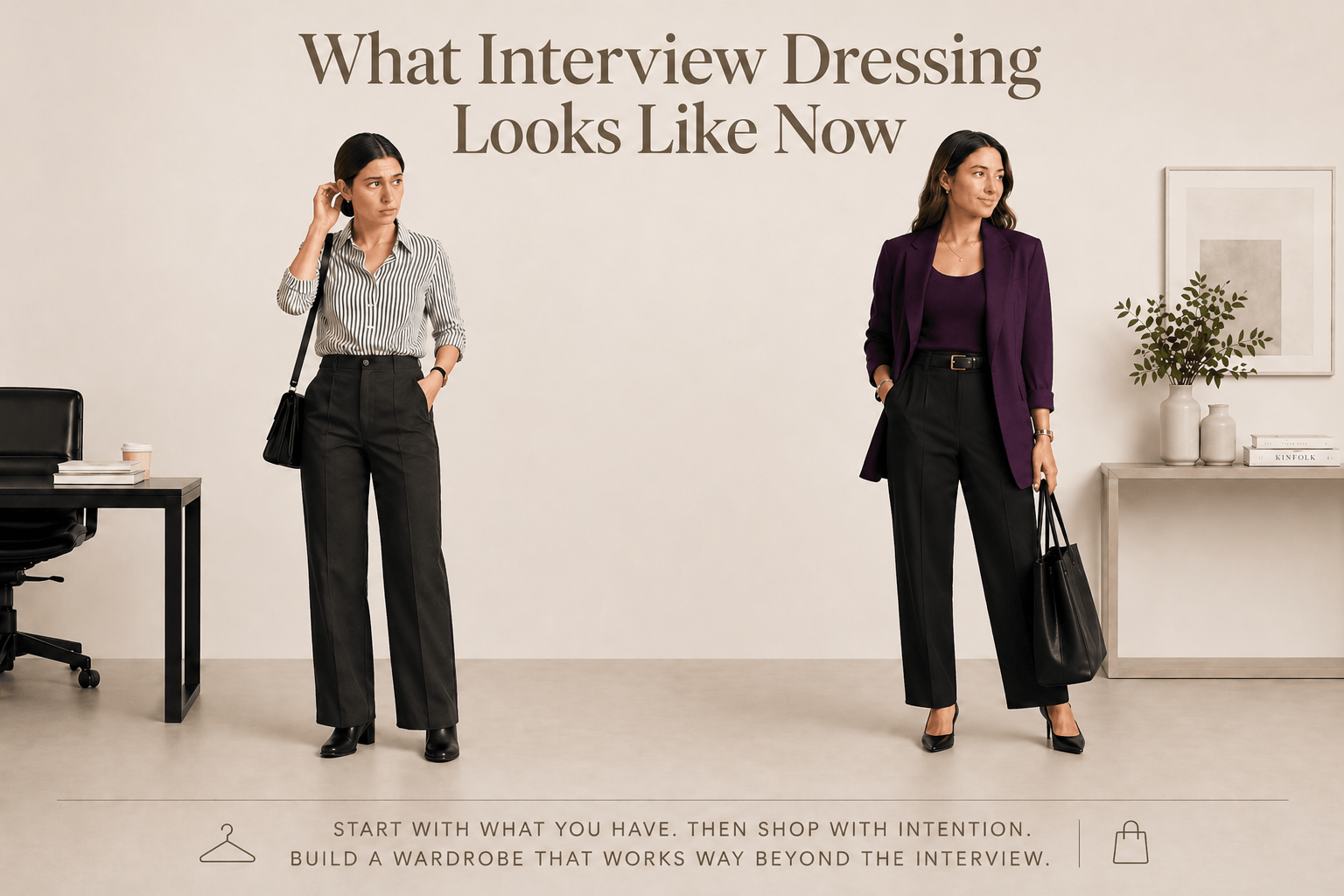
But the more I paid attention, the more I realized that wasn’t actually the part that mattered.
The outfits that work aren’t the ones that feel the most “correct.” They’re the ones that already make sense on you.
When you shop with intention, you’re not starting from scratch every time. You already know what fits, what feels right, and what goes together.
So instead of trying to figure it out the morning of, you’re pulling from pieces you already trust.
And that’s usually the difference.
Don’t Buy an “Interview Outfit”
Most people go wrong before the outfit even comes together.
They buy something just for the interview, and it shows.
A blazer they don’t love.
Trousers that are fine, but not quite right.
A shirt that feels “professional,” but not really like them.
It works for the moment, but not beyond it.
And then it never gets worn again.
That’s usually where things go wrong.
When you’re shopping, don’t think:
Is this good for the interview?
Think:
Would I wear this once I get the job?
Because those are the pieces that actually work.
A pair of trousers that fits right, you’ll reach for them again.
A blouse that feels easy, you won’t second-guess it.
A blazer that isn’t stiff, you’ll keep it on.
That’s how your workwear starts to come together without forcing it.
How to Know If Your Outfit Choice Is Pushing It
If you’re standing there wondering,
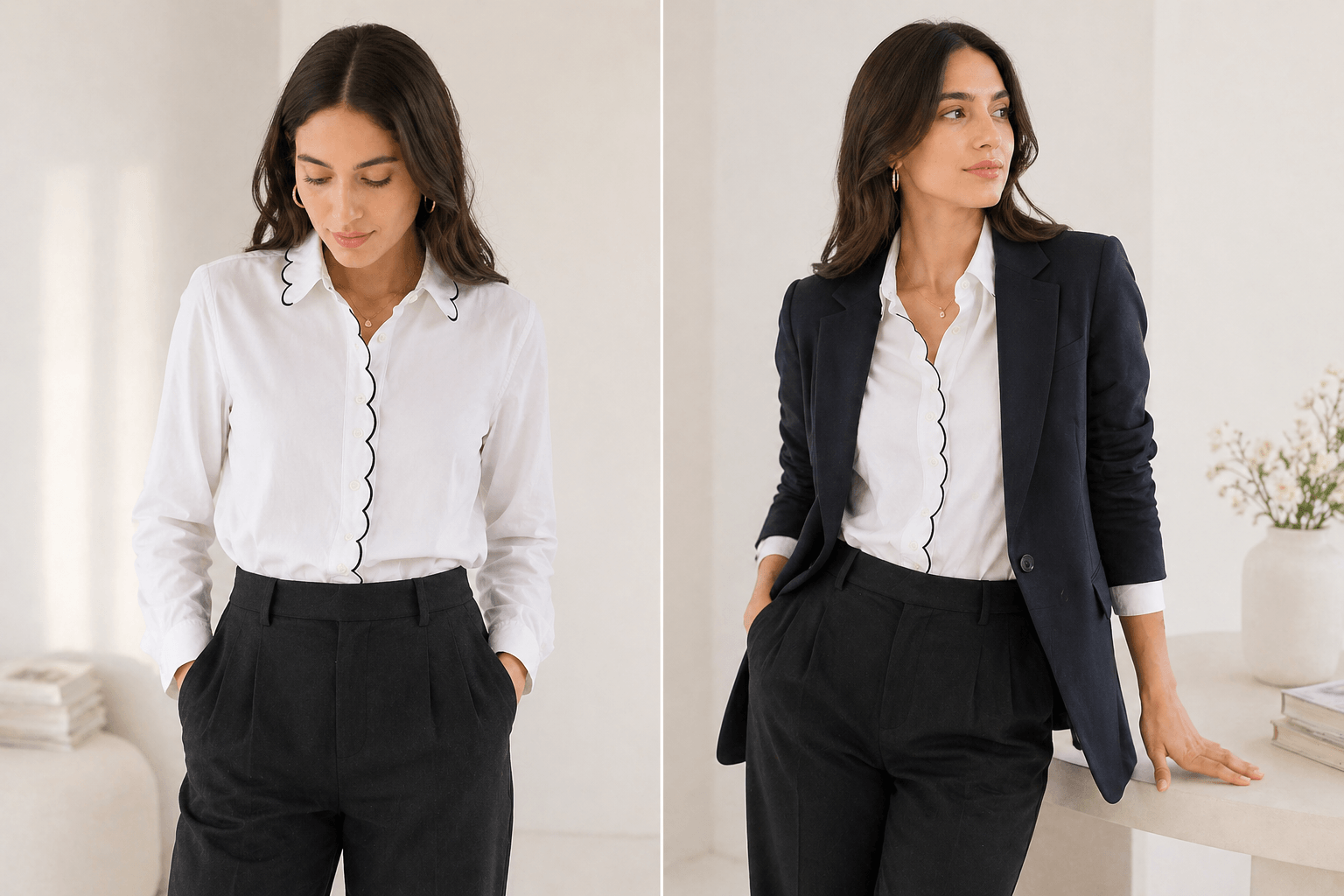
is a navy blazer safer than a deep purple one?
does the small gold detail on your heels matter?
should your shirt be all white?
That’s normal.
Even I’ve sent photos asking my sister,
does this go together?
do the colors actually work?
But here’s the shift.
If you’re choosing between a classic piece and one with a small detail, you’re already in the right place.
Both work.
That’s not the part that makes or breaks your outfit.
The difference isn’t the detail.
It’s whether the outfit feels finished.
Adding a structured layer, like a blazer or a clean cardigan, is usually what pulls everything together.
So instead of overthinking what might be “too much,” focus on whether everything works as a whole.
How to Build An Interview Outfit
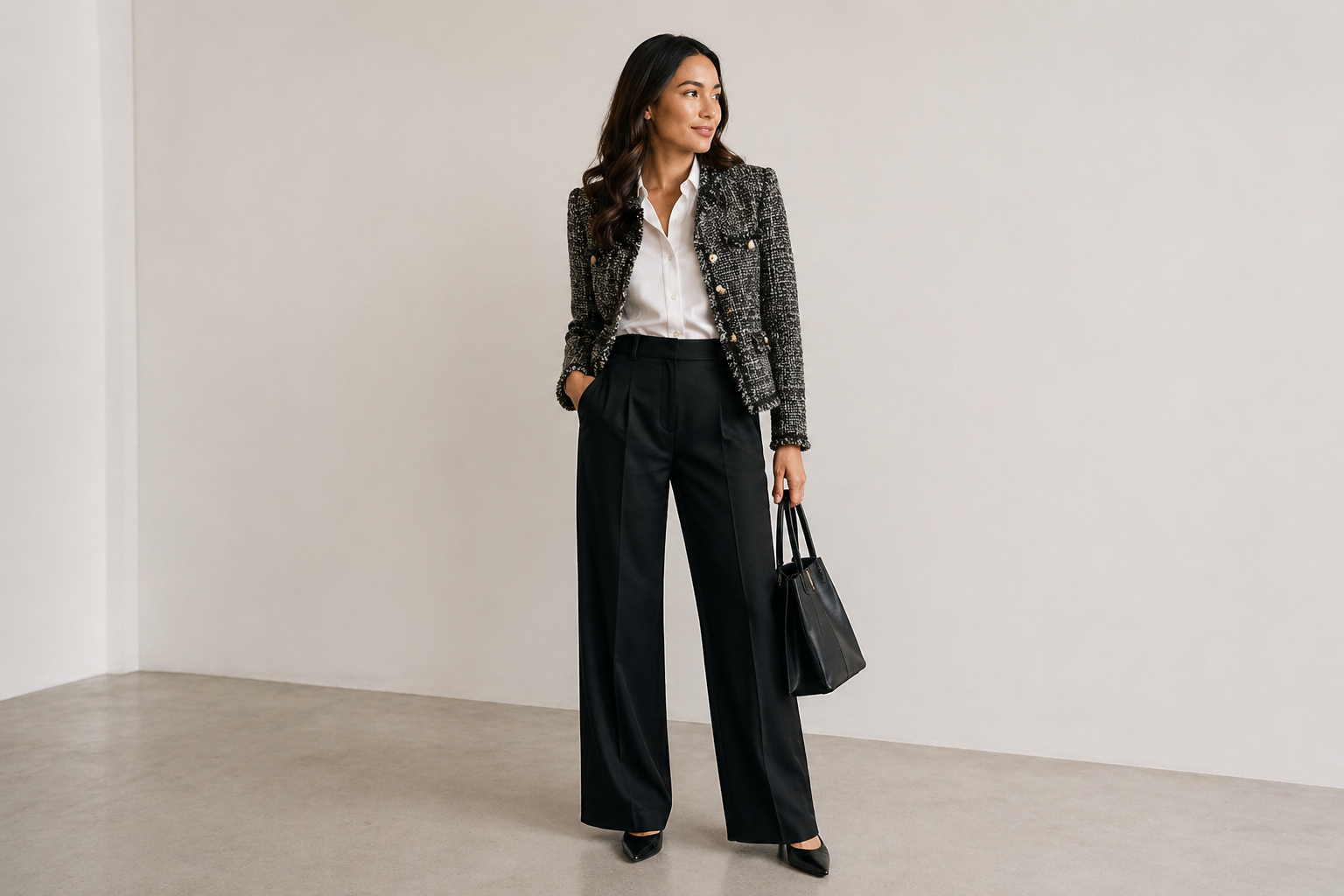
Start With Your Good Trousers
If you have one solid pair of trousers, you’re already halfway there.
Not the ones you’re unsure about.
The ones that fit without adjusting.
Start there.
Add a simple top, something you already know works.
Then layer a blazer if it makes sense. If it doesn’t, don’t force it.
That’s it.
You’re not building a full office outfit from scratch. You’re working with pieces that already do their job.
Why Matching Sets Make It Easier
This is, honestly, the easiest way to get dressed.
When the pieces already go together, you’re not figuring anything out. There’s no second-guessing, no adjusting.
It’s done.
A matching skirt and jacket.
A clean trouser set.
Even a dress with a cropped jacket.
You put it on and move on.
For interview outfits and everyday office style, staying in a consistent color palette makes everything easier. Black, white, navy. If you want something deeper, a rich purple works without feeling loud.
Nothing you have to explain. Just pieces that make sense together.
And you’ll wear them again, just styled differently.
Because the only thing that really matters here is fit. Once that’s right, everything else follows.If You Don’t Want a Blazer, Don’t Force It
If You Don’t Want a Blazer, Don’t Force It
A structured knit, a clean cardigan, anything that holds its shape works just as well.
It still reads polished. Just a little more relaxed.
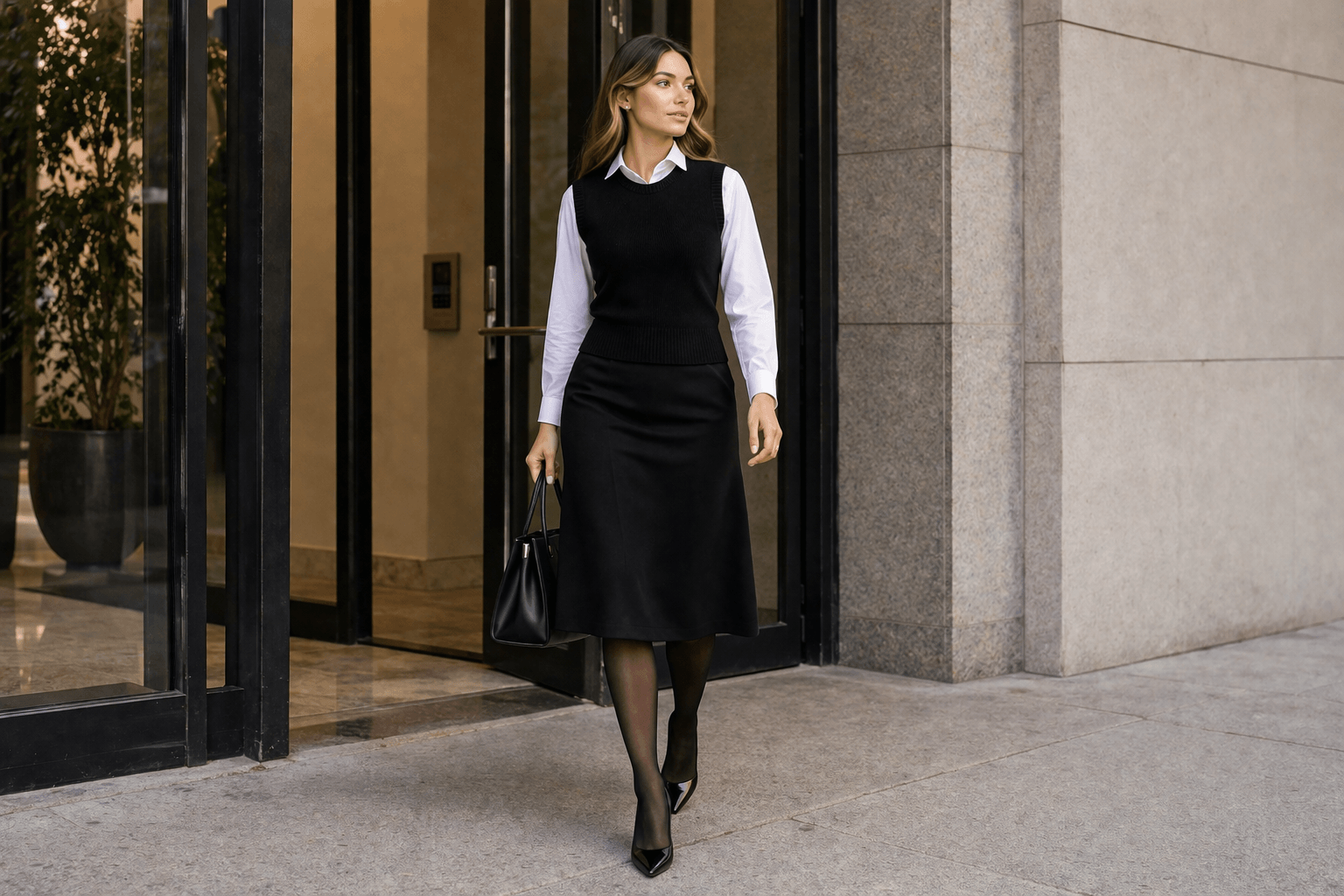
That alone saves you from trying to find the “perfect” blazer at the last minute, which rarely works out the way you want it to.
You’re not completing an outfit. You’re wearing pieces that already work together.
And it still feels like you.
Shoes That Just Make Sense
Shoes are usually the last thing you figure out, and somehow the easiest thing to overthink.
Keep it simple.
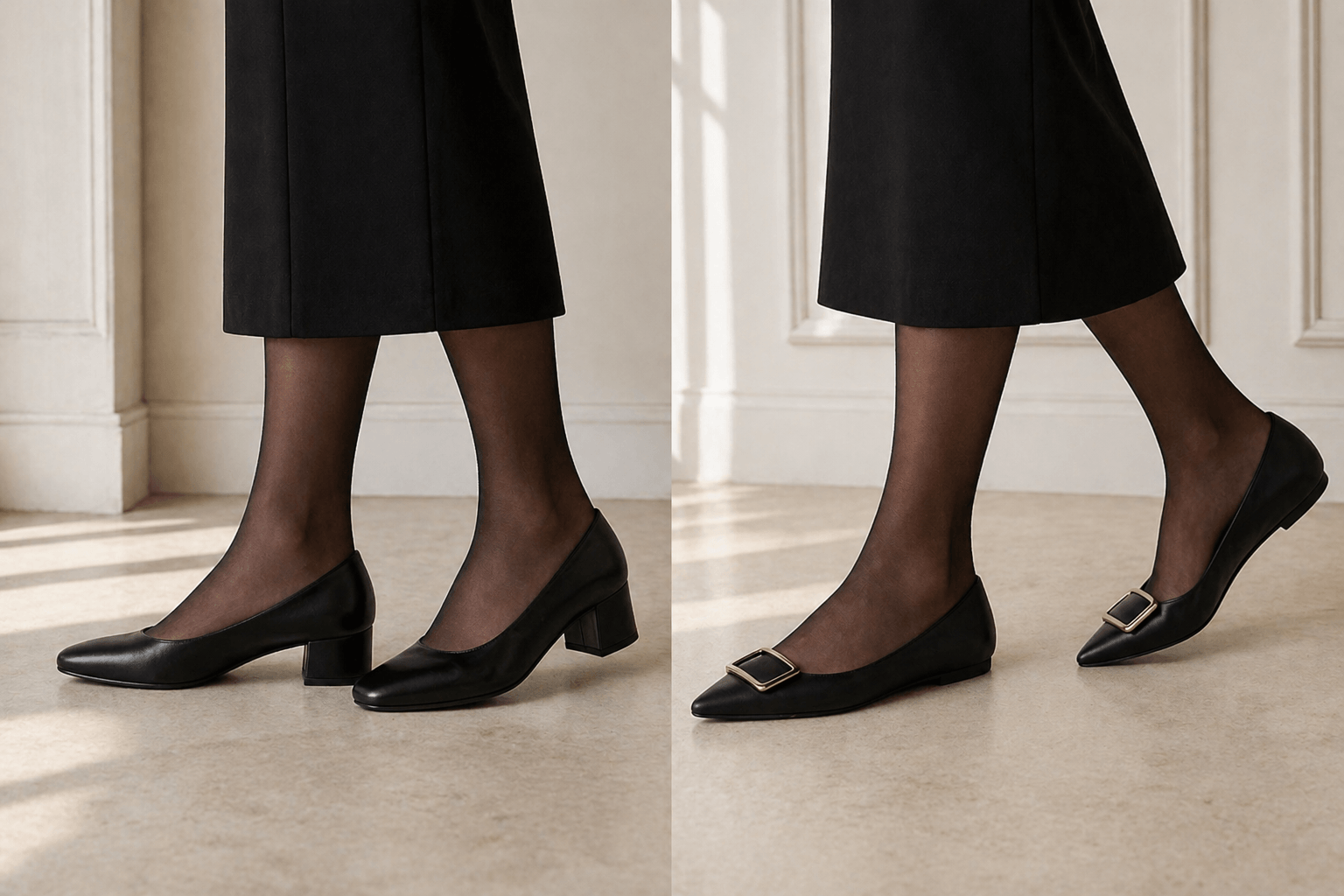
You want something you can actually walk in. Something steady. Something you don’t have to think about once you leave the house.
Low heels work.
A thicker heel is even better, you’re moving, not adjusting.
Flats are just as good.
Loafers, ballet flats, or anything clean that holds its shape.
This isn’t where you need to get creative. It’s where you keep things consistent.
Choose It Before You Need It
Your best interview outfit usually comes from pieces you already feel good in.
Not random. Not rushed.
Just things you chose on purpose.
When you’re shopping, think past the moment.
Would I wear this on a normal workday?
Can I style this more than one way?
Will I reach for it again?
If yes, it stays.
If it only works once, you’ll feel that.
Less, but better. And it actually makes getting dressed easier.
A few well-fitted pieces will take you further than a closet full of maybe items.
And wearing the same pieces different ways isn’t repetitive. That’s the point.
That’s when your wardrobe actually starts working for you.
