Hyaluronic Acid Gets All the Attention—But Glycerin Might Be Better for Dry Skin
Skincare loves a main character, and glycerin is basically the one who can actually sing but never gets the solo.
The spotlight keeps shifting.
One minute it’s niacinamide. Then it’s vitamin C. Right now? It’s Hyaluronic Acid, and if you listen to the internet, you’d think it’s the only reason anyone’s skin looks hydrated.
And to be fair, it does work. It gives that quick, dewy, “my skin is doing something” kind of glow.
But that glow? It’s not the whole story.
Because the ingredients that keep your skin feeling hydrated throughout the day aren’t always the ones getting the most attention.
And honestly, that’s glycerin.
What Hyaluronic Acid Actually Does
Hyaluronic Acid is popular for a reason, it works fast!
It pulls water into the surface of your skin, which is why your face can look smoother, plumper, and more dewy right after you apply it.
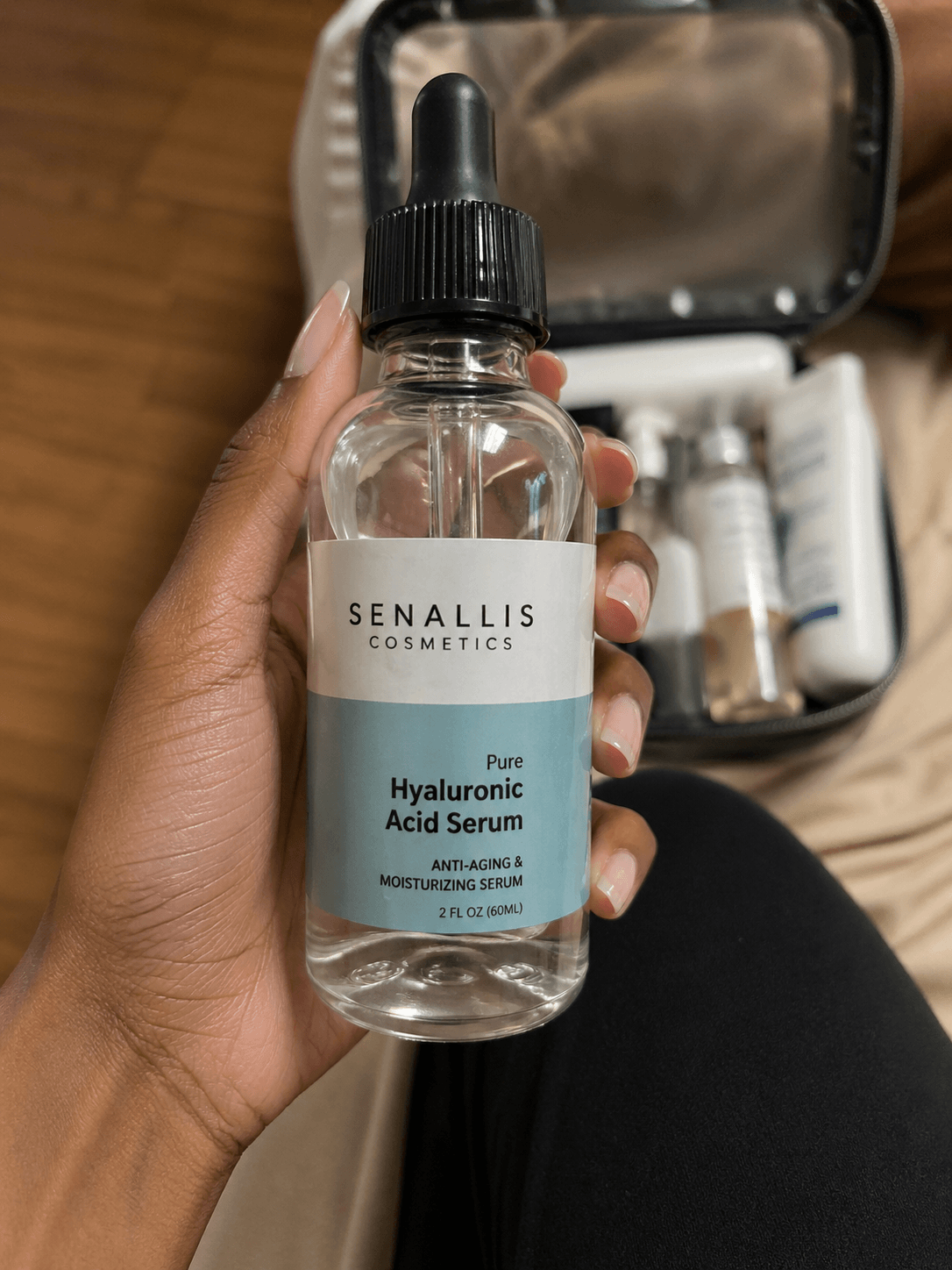
Hyaluronic acid works best on damp skin. Like with a simple serum, such as one from Senallis Cosmetics. Otherwise, it has less moisture to pull from.
That’s how I’d describe it, the instant hydration, the smoother feel, and how quickly it absorbs without feeling heavy.
But it’s not always the full solution, especially for dry skin.
In humid air, it has moisture to pull from, so that hydrated look tends to last longer.
In drier conditions, there’s less to work with so without a moisturizer on top, that hydration can fade more quickly.
That’s usually where the difference comes in. Some people get lasting hydration, while others feel like it wears off sooner, depending on their climate.
Why Glycerin Might Work Better for Dry Skin
I didn’t fully get the hype until I tried it myself.
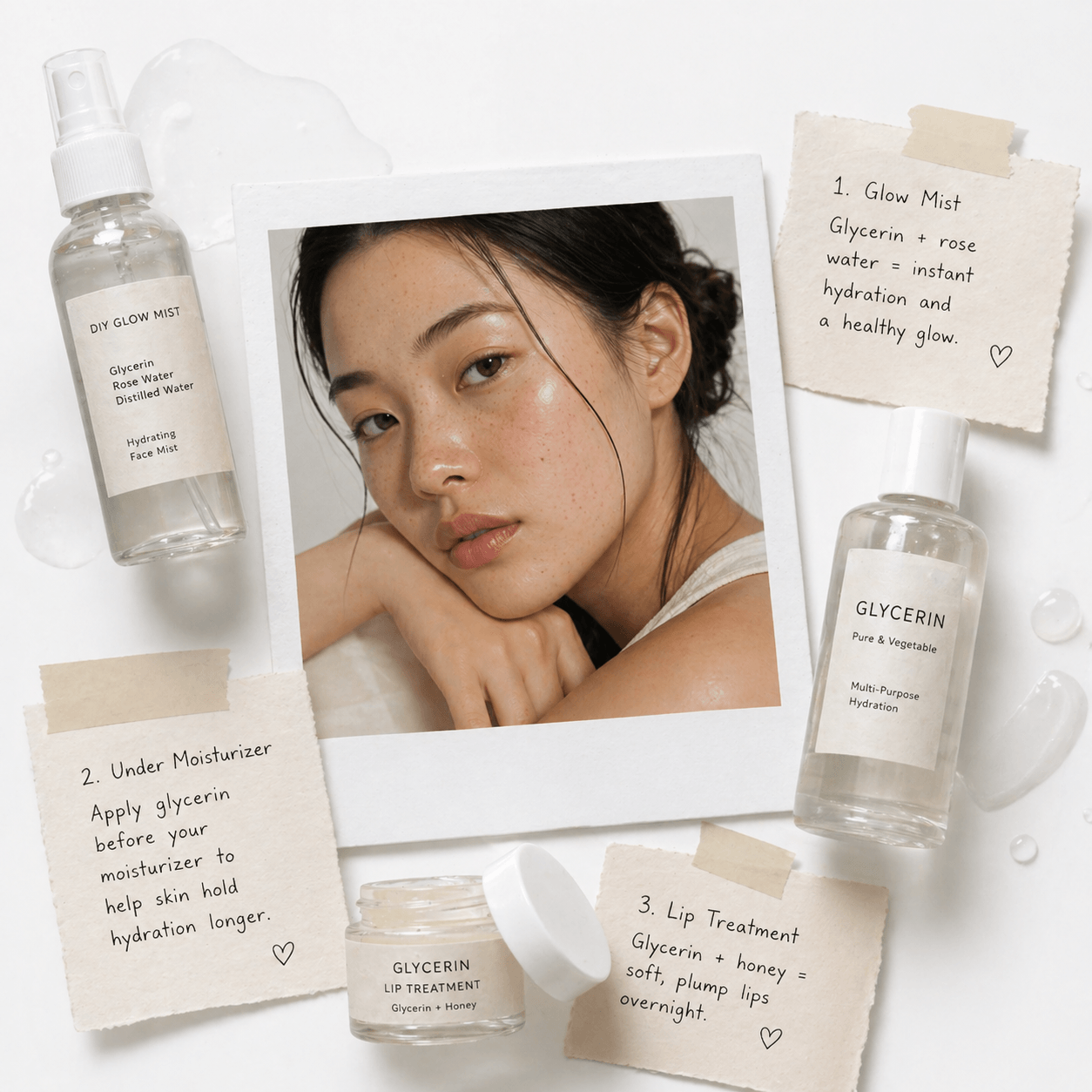
I picked up a basic bottle of Glycerin, mixed it with water in a simple spray bottle, and started using it on damp skin, nothing complicated.
The difference wasn’t dramatic at first. But by the next day, my skin still felt pretty good. Not tight, not dry again by midday. Just hydrated in a way that actually lasted.
That’s when it made sense.
Some products make your skin look hydrated right after you apply them.
Glycerin is one of the few that makes sure your skin stays that way.
It’s also why glycerin shows up in so many dermatologist-recommended formulas, even when it’s not the ingredient being advertised.
How to Use Glycerin Without Overdoing It
Glycerin isn’t something you need to build a routine around, it’s something you sneak in.
The easiest way is to add a drop into what you’re already using. Add your moisturizer or toner to your hand, mix in one to two drops of glycerin, rub your hands together, then apply.
And yes, one to two drops is more than enough.
More doesn’t make it better. It just makes things sticky. Keeping it light gives you the hydration without that heavy, overdone feeling.
If you want something even easier, turn it into a spray.
Mix glycerin with water: thermal, mineral, or rose water and give it a quick shake, and mist it onto damp skin. Then follow with your moisturizer to lock everything in.
It’s low effort, no extra steps, and one of those small tweaks that actually makes your routine feel like it’s working.
The Best Glycerin Skincare Products
If you’d rather skip the mixing and have glycerin built into your products, the right formulas can do the work for you.
Look for it near the top of the ingredient list, ideally within the first five ingredients. That’s how you know the product is actually doing something.
Formulas Where Glycerin Plays a Key Role
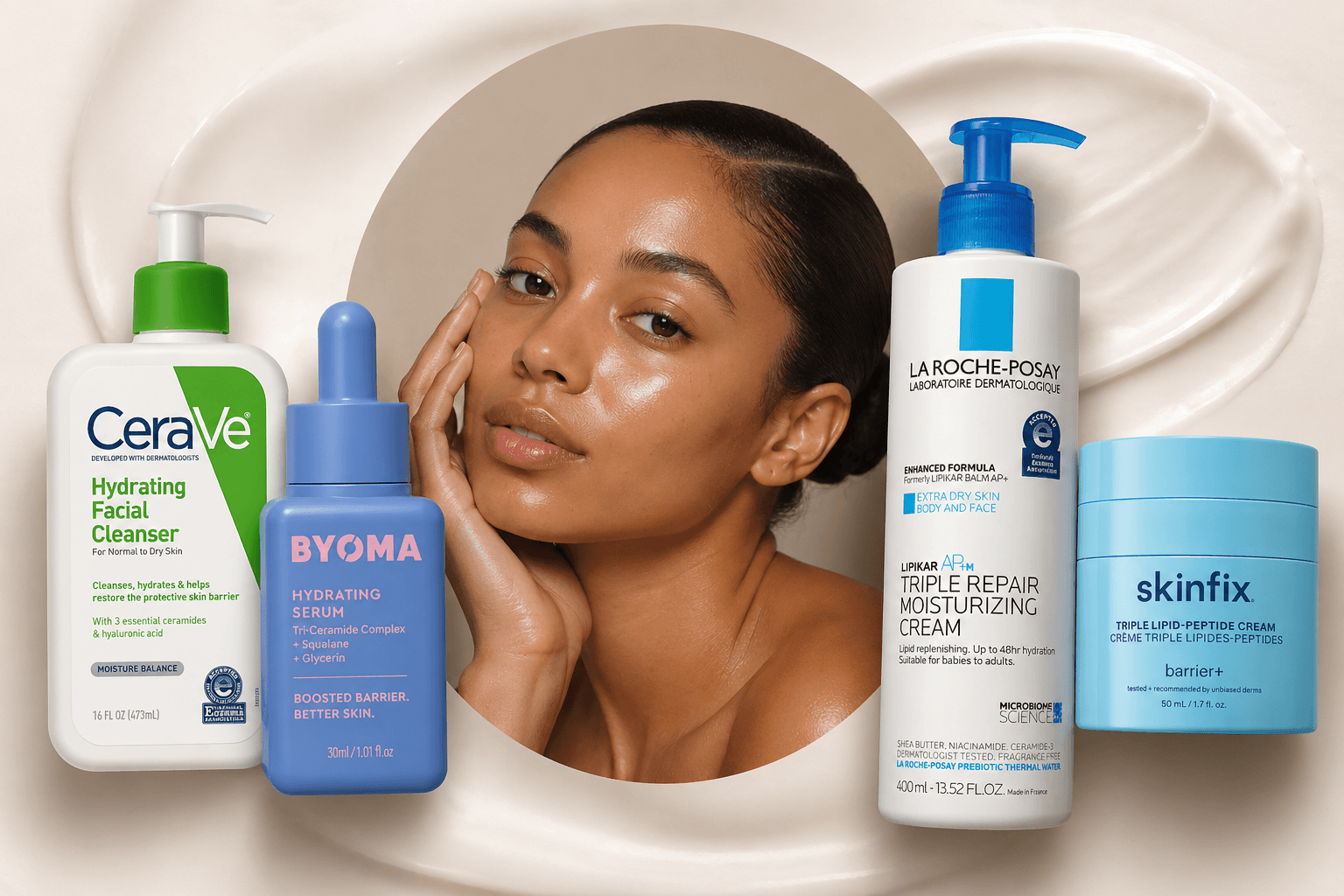
CeraVe Hydrating Facial Cleanser
Cleans without leaving your skin feeling stripped; which is exactly what dry skin doesn’t need.BYOMA Hydrating Serum
Lightweight, simple, and easy to layer when your skin just needs hydration without the extra steps.La Roche-Posay Lipikar Moisturizing Cream
A thicker option that actually feels like it’s doing something; ideal when your skin isn’t holding moisture well.Skinfix Barrier+ Moisturizer
Rich, repair-focused, and better suited for when your skin feels off, reactive, or overworked.
The goal isn’t to add more steps. It’s to make sure the products you’re using are actually doing the job.
Based on your climate and skin type, knowing which ingredients to reach for makes all the difference, so your skin feels soft, looks plump, and stays consistently hydrated.
