Why Is My Foundation Pilling Hours After Applying Makeup?
Your makeup looks smooth when you first apply it. Then a few hours later, you start noticing small pieces forming on the skin.
Foundation begins to peel around the nose, chin, or cheeks. When you try to blend it back in, the makeup rolls instead of smoothing out. It’s not exactly separating, but it doesn’t look smooth anymore either.
If your makeup is pilling hours after applying makeup, it’s usually because layers underneath the skin start shifting throughout the day. Skincare, primer, and foundation can roll together instead of staying smooth.
This usually comes down to how the skin is prepped before makeup, since layering and absorption directly affect how foundation sits on the skin.
Here are the most common reasons foundation pills hours after applying makeup.
Too Many Skincare Layers Under Foundation
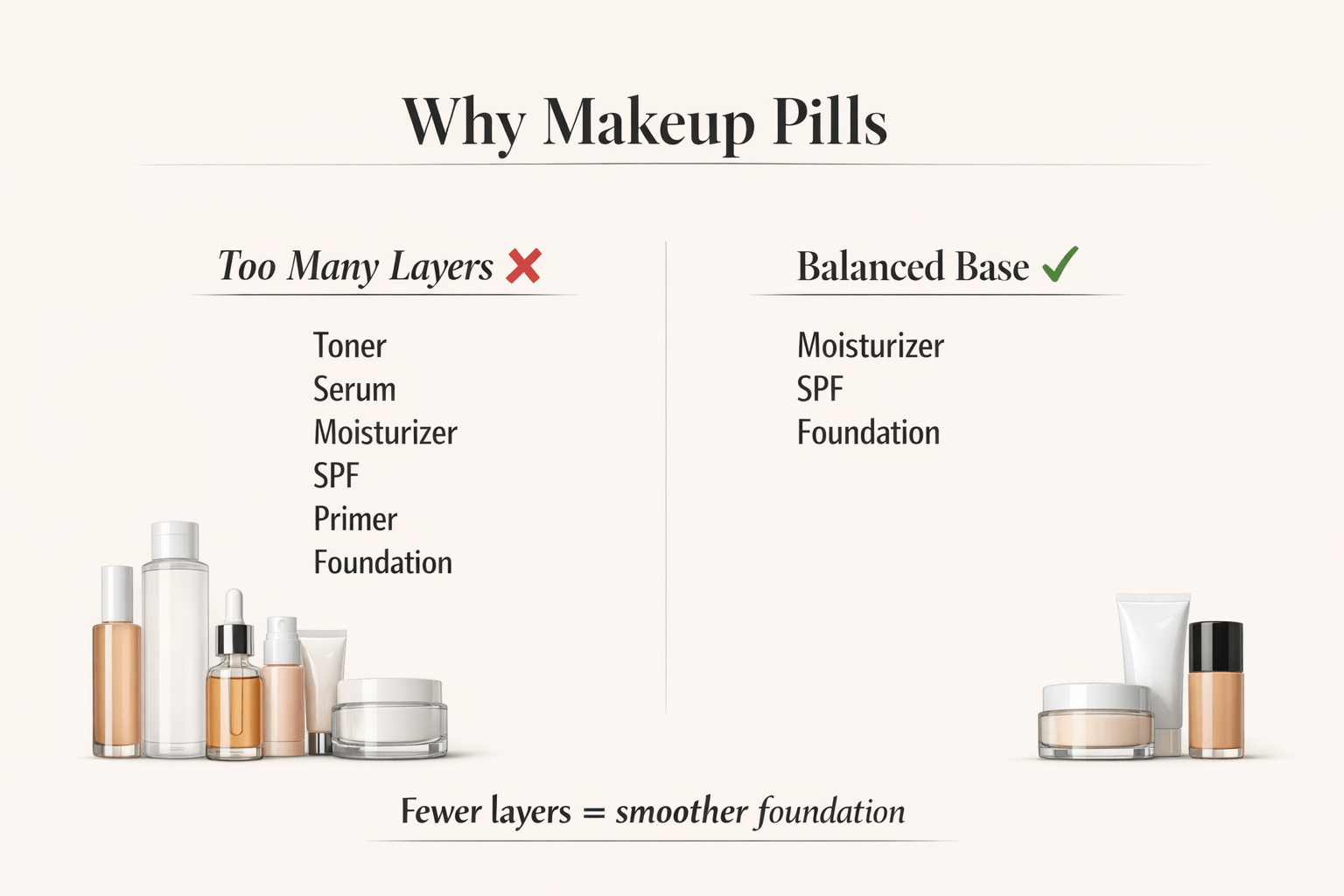
Pilling often happens when too many products are layered under foundation. Toner, serum, moisturizer, SPF, primer, and coverage products can build up on the skin and prevent foundation from sitting evenly.
When foundation is applied over heavy layers, the products do not fully bond. As the skin moves throughout the day, they begin to roll and form small pieces.
Using fewer products, allowing each layer to absorb, and applying thinner foundation helps prevent buildup.
Applying Products In The Wrong Order
Makeup can also pill when products are layered in the wrong order. Applying thicker products too early can cause products to sit on top of each other instead of settling into the skin.
When foundation is applied over uneven layers, it can grab onto the products underneath and start rolling as you blend or as the skin moves.
Applying products from thinnest to thickest helps prevent this. Skincare should go first, followed by moisturizer, SPF, primer if needed, then foundation.
Skincare That Hasn't Fully Absorbed
Some products are more likely to cause pilling, especially when layered under makeup. Hyaluronic acid serums, thicker sunscreens, gripping primers, and rich CC creams can leave residue on the skin.
Foundation can catch on this film instead of blending smoothly. As the makeup sets, the layers begin to separate and roll.
If you suspect one product is causing pilling, remove it for a few days and test again.
Rubbing Instead Of Pressing Foundation
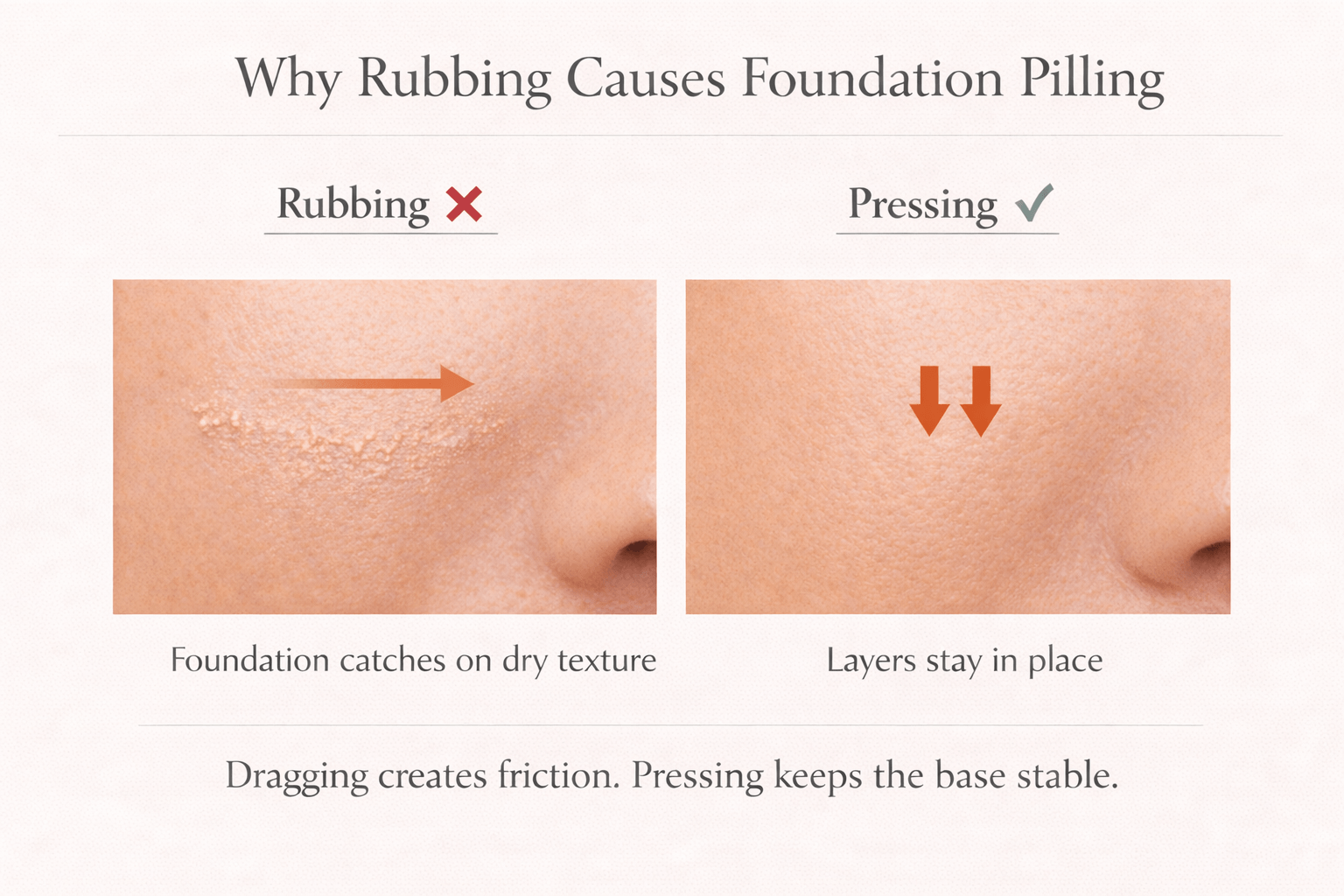
How foundation is applied also affects pilling. Rubbing or swiping product across the skin can move the layers underneath.
When the base shifts, products begin rolling together and forming small pieces.
Pressing foundation into the skin instead of dragging helps keep layers stable. A damp sponge and tapping motion usually creates a smoother finish.
Dry Or Textured Skin Can Cause Pilling
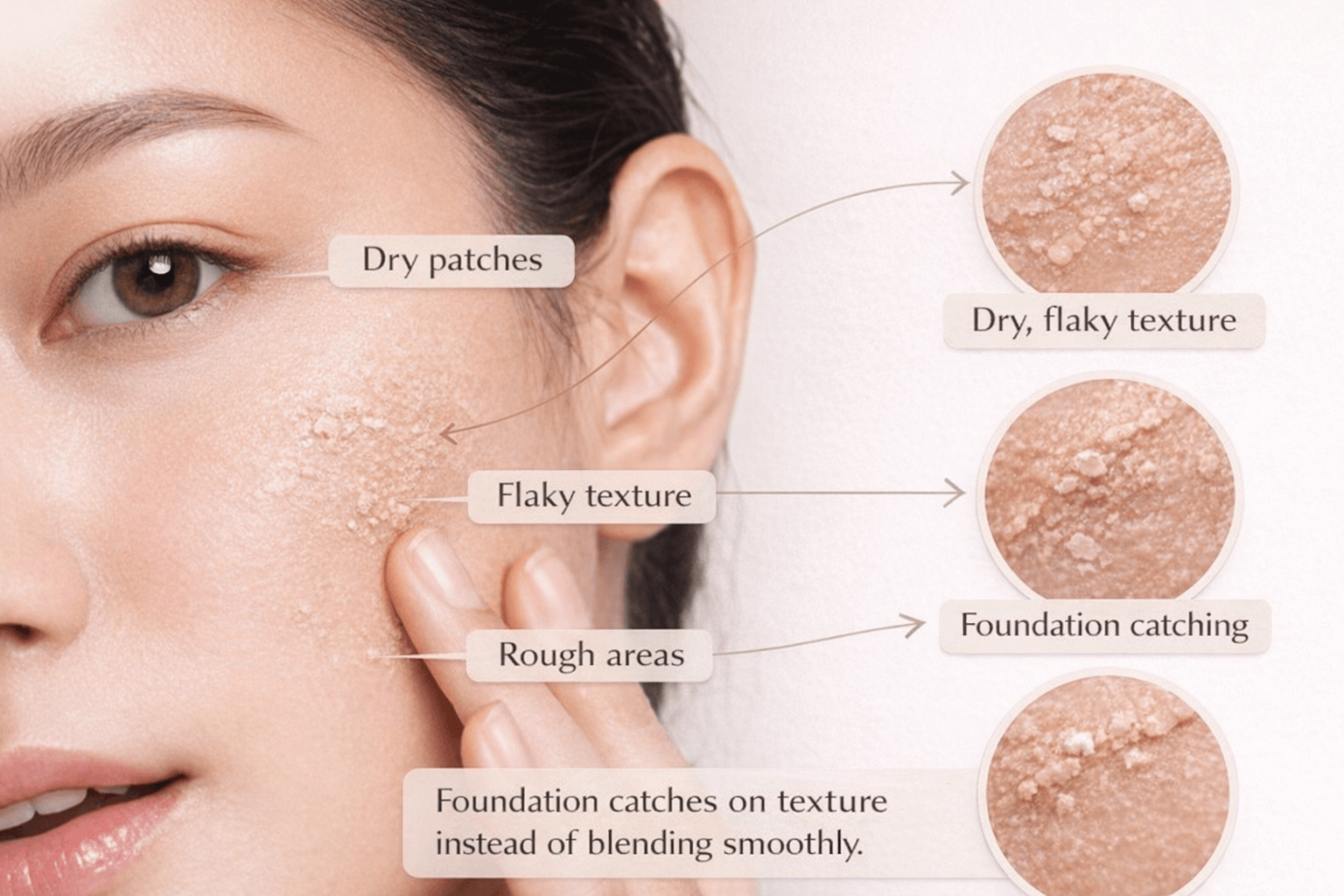
Pilling can also happen when skin is dry, flaky, or uneven. Foundation can catch on texture instead of blending smoothly.
As the skin moves throughout the day, product begins to lift and roll in those areas.
Gentle exfoliation, balanced hydration, and thinner layers of foundation help create a smoother base.
Over-Exfoliated Or Damaged Skin Barrier
Over-exfoliating or using strong actives too often can weaken the skin barrier. When the surface becomes sensitive, rough, or flaky, makeup does not sit evenly.
Foundation may cling to uneven areas and begin rolling as the skin moves. Retinol, acids, and frequent exfoliation came up in your thread as common reasons skin becomes too reactive for makeup to sit well.
Reducing exfoliation and focusing on hydration usually helps. Using fewer actives before makeup can also prevent pilling.
A Few Real-World Fixes To Try First
Before replacing your entire routine, try simplifying what goes under your makeup.
Start with:
one hydrating step instead of multiple serums
moisturizer and sunscreen only
thinner layers of primer and foundation
more time between skincare and makeup
If your foundation still pills, remove one product at a time and test again. Sometimes the issue is not your whole routine. It is one product that does not sit well under makeup.
How To Stop Foundation From Pilling
Small adjustments usually make the biggest difference:
use fewer skincare layers before makeup
allow moisturizer and SPF to fully absorb
apply products from thinnest to thickest
press foundation into the skin instead of rubbing
use thinner layers of foundation
avoid mixing too many textures
gently exfoliate dry or flaky areas
simplify your base products
Foundation pilling usually is not random. It is almost always caused by layering, product texture, or how makeup is applied.
If your makeup is pilling hours after applying makeup, simplifying your skin prep, using thinner layers, and allowing products to absorb usually makes the biggest difference.
