How to Style Ballet Flats: 7 Modern Outfit Formulas That Feel Elevated
Table of Contents
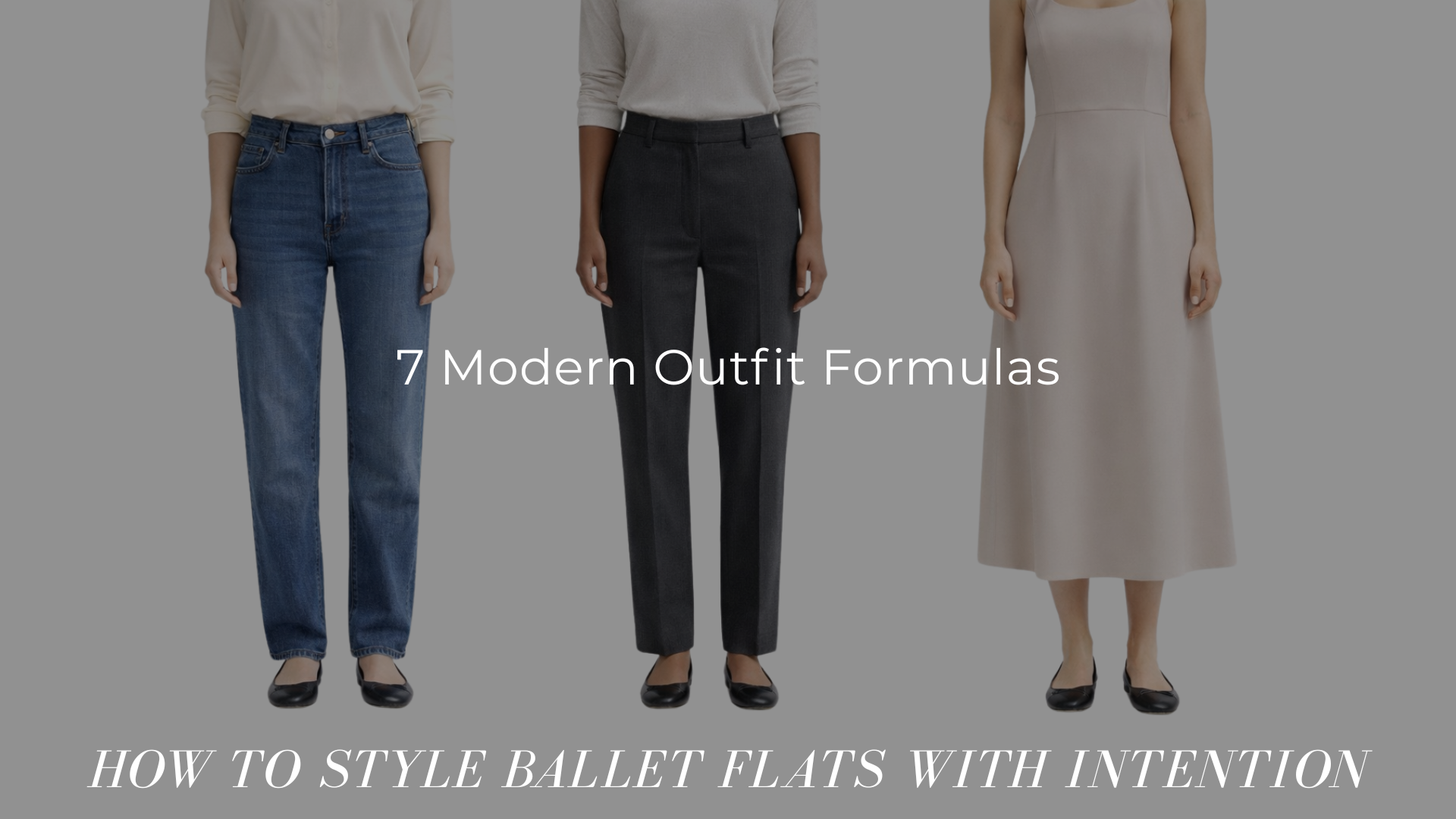
Ballet flats are one of those shoes that can look incredibly polished or unexpectedly underwhelming, depending entirely on how they’re styled.
On some women, they elevate the entire outfit.
On others, they make everything feel softer, flatter, slightly unfinished.
That’s usually where the frustration begins.
If you’ve ever tried on a pair of ballet flats thinking, Why do these look chic on her but slightly frumpy on me? — you’re not alone.
Here’s the good news:
It’s rarely the flats themselves.
It’s proportion.
It’s toe shape.
It’s where the hem of your pant hits.
It’s how structure balances softness.
This guide is about learning how to style ballet flats with your outfit so they actually feel modern, balanced, and elevated.
Once you see it, you can’t unsee it.
And that’s where confidence starts.
If you’d prefer to see these formulas styled visually, I’ve curated 10 modern ballet flats outfits you can shop and recreate here.
1. Ballet Flats With Straight-Leg Jeans (The Most Flattering Combo)
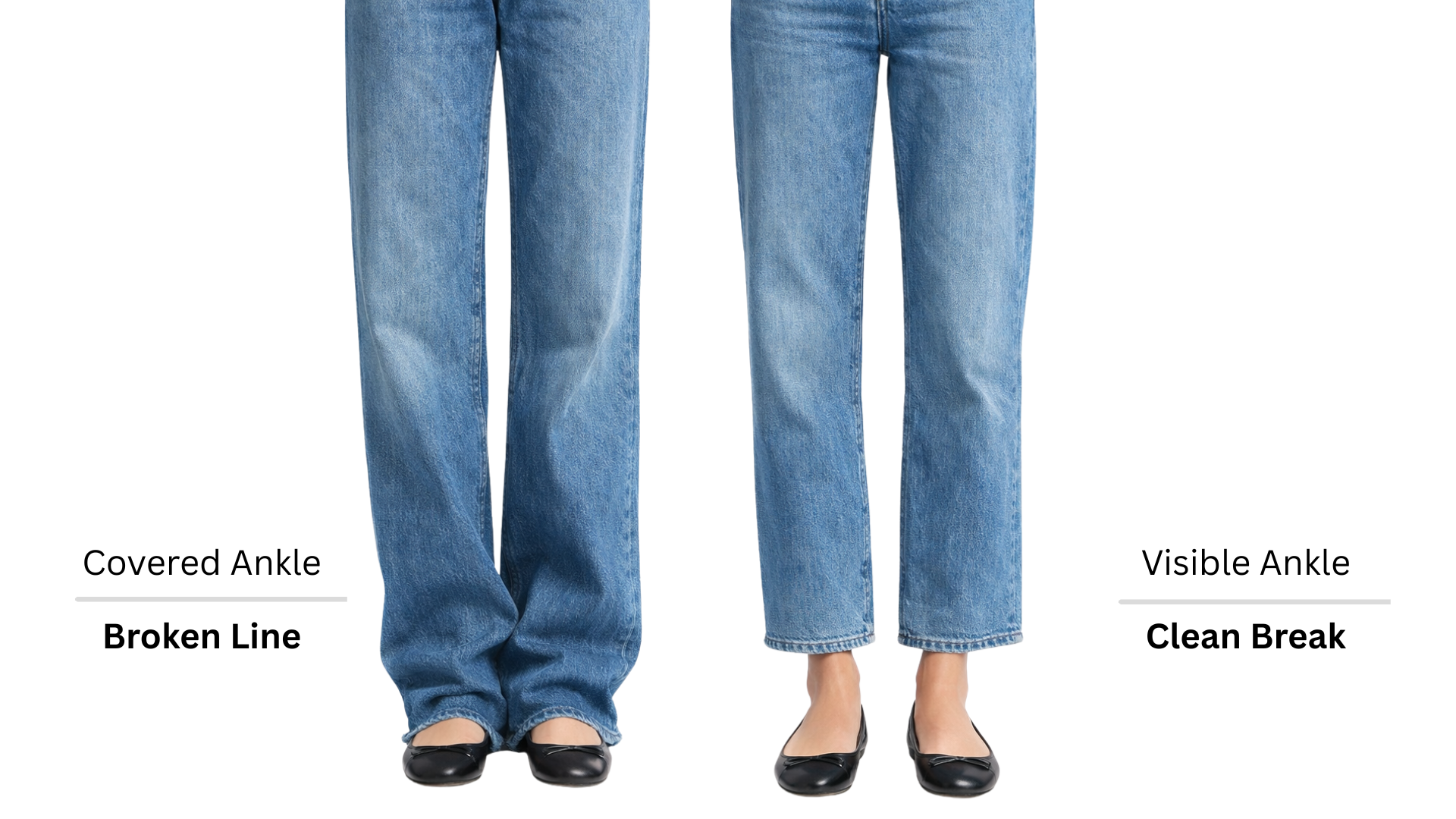
The most flattering way to wear ballet flats with straight-leg jeans is to choose an ankle length hem that clearly reveals the shape of the shoe.
When the hem hits at or slightly above the ankle, it creates a clean visual break and keeps the silhouette defined. When the fabric puddles over the top of the foot, the line shortens and the outfit loses precision.
Here’s what’s actually happening visually:
Flats don’t add height. That means they rely on clean lines to feel intentional. If the jean covers the top of the shoe, the foot visually blends into the leg. When the ankle is visible, the shape resets, and the outfit immediately looks sharper.
You’ve probably tried on two pairs of jeans and felt like one “just works” with flats while the other doesn’t; even though the difference seems small.
That small difference is proportion.
The formula is simple:
An ankle-length hem.
A clean break above the shoe.
A visible, uninterrupted line.
With flats, the hem is the structure.
2. Ballet Flats With Tailored Trousers for a Polished Look
The Core Principle: Let Tailoring Carry the Structure
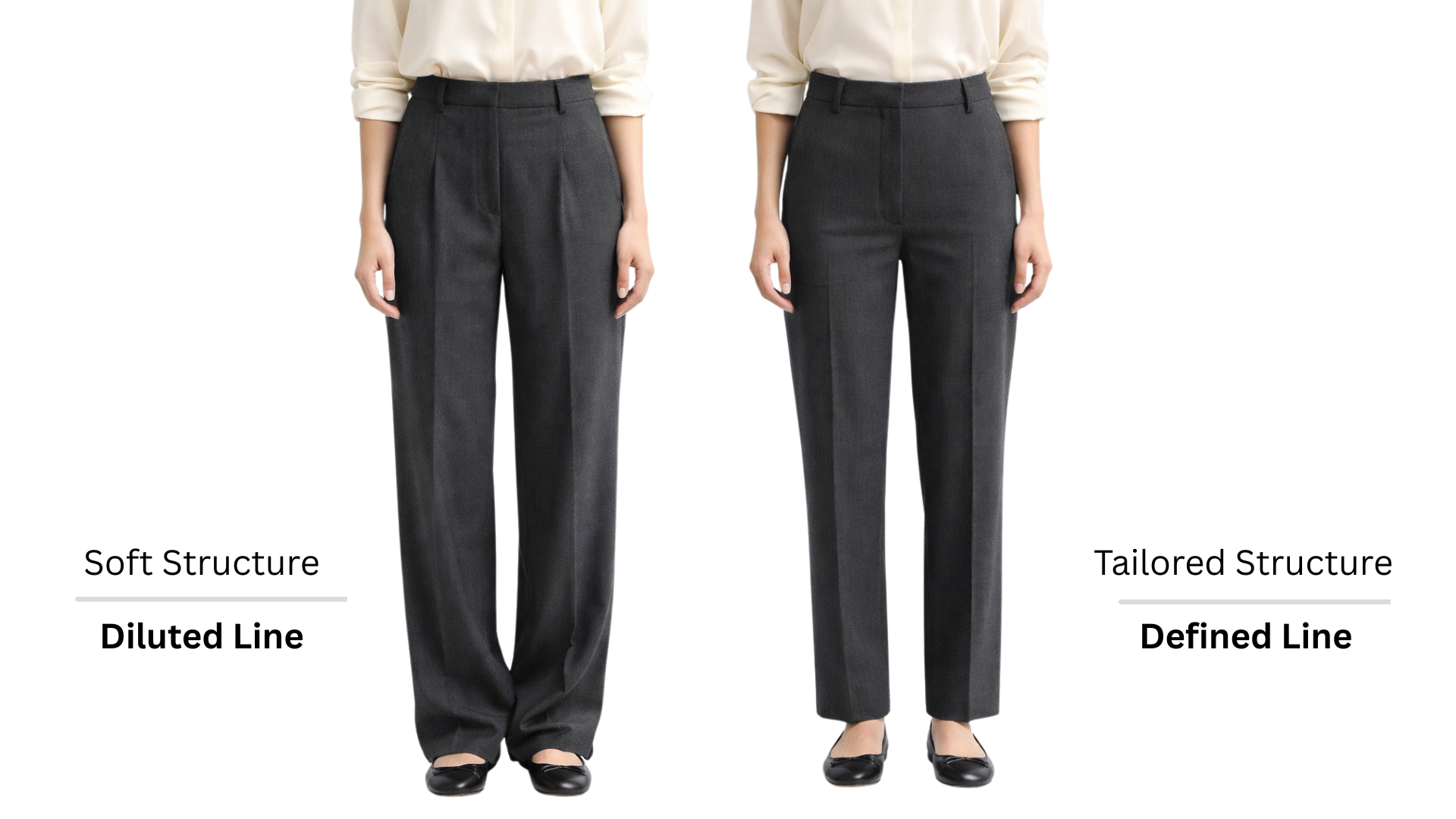
The most polished way to wear ballet flats is with tailored trousers that hold their shape.
Unlike jeans, trousers already carry structure. When that structure is clean and intentional, ballet flats stop reading casual and start reading refined.
Here’s the key:
The trousers must maintain a sharp line from waist to hem.
When they:
• Sit smoothly at the waist
• Fall straight or slightly tapered
• End cleanly at the ankle
They create authority.
When they:
• Pull at the hips
• Collapse at the knee
• Break too long over the shoe
They dilute the effect.
Flats don’t compete with tailoring, they complement it.
Because there’s no heel, the silhouette relies entirely on the precision of the trouser. A crisp hem paired with a low-profile shoe feels modern. A sloppy hem paired with flats feels unfinished.
Where This Works Best
This pairing is especially powerful in situations where you want polish without formality.
A client meeting.
A presentation.
Dinner where heels feel like too much.
You’re not dressing down.
You’re refining.
Fabric Weight Changes Everything
One more detail that matters: fabric weight.
Trousers that have a little structure meaning they don’t cling, collapse, or wrinkle the second you move. That style works better with flats.
When the trousers are thin and drapey, they can start to look soft and unfinished with a flat shoe.
The Formula
Structured trousers.
Clean ankle-length hem.
A ballet flat with defined shape.
If you’re still figuring out how structure works for your proportions, I break it down further in this body type guide.
3. How to Wear Ballet Flats With Dresses Without Losing Structure
The Core Principle: Balance
The key to wearing ballet flats with dresses is balance.
Because flats already soften the silhouette, the dress can’t do all the softening too.
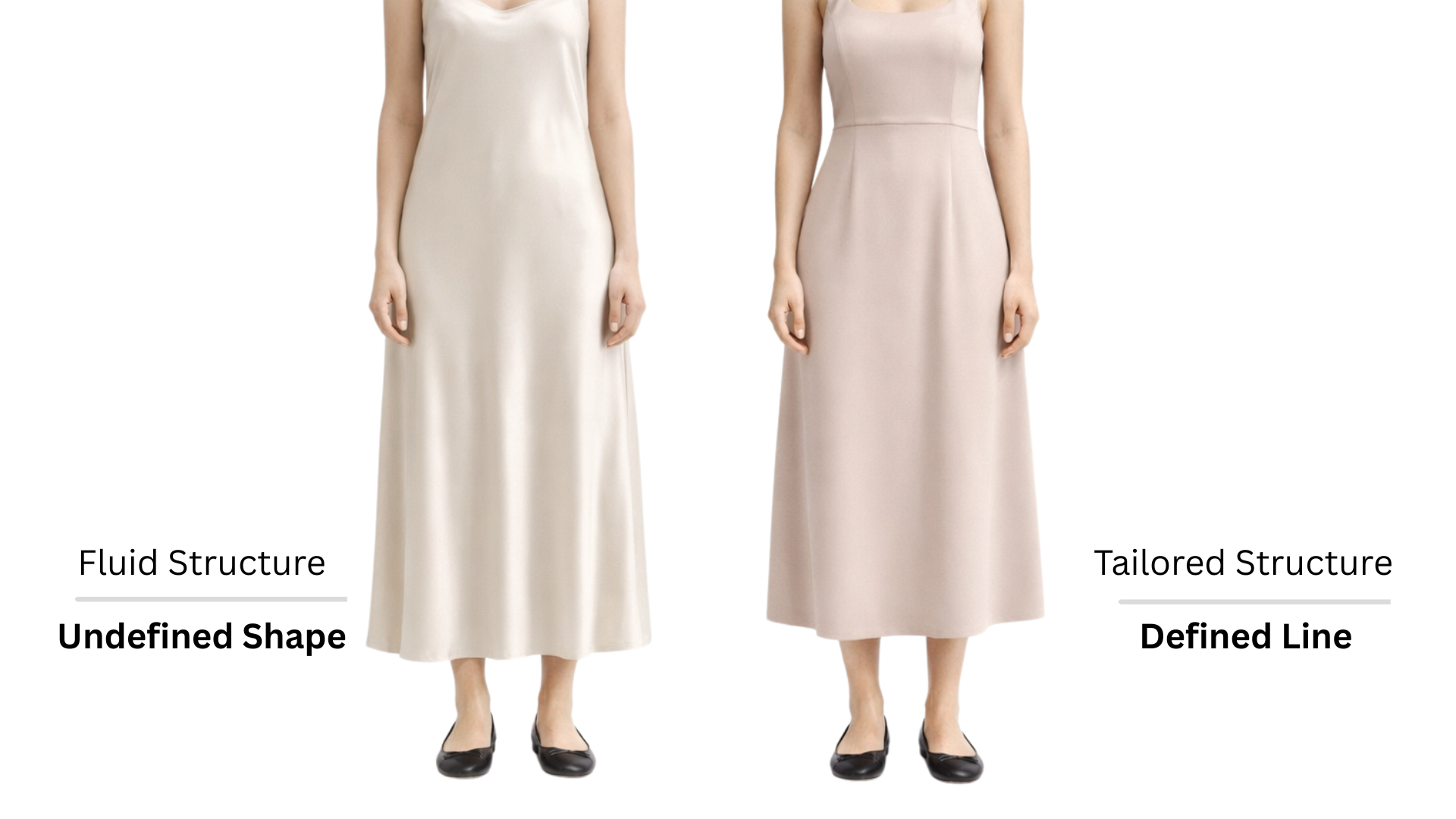
That doesn’t mean you can’t wear fluid fabrics or satin slip dresses. It just means something in the outfit needs to create shape.
Here’s what keeps it modern:
The dress needs at least one element of control.
That might be:
• A defined waist
• A slightly structured fabric
• A clean neckline
• A hem that hits with intention
Hem Placement Matters More Than You Think
Length matters more with flats than with heels.
Since flats don’t add height, the hem becomes critical.
When wearing dresses with ballet flats, aim for a hem that:
• Hits just above the ankle bone
• Or falls slightly below mid-calf with clear waist definition
Avoid lengths that land directly at the widest part of the calf without structure, that’s where the silhouette can start to feel heavy.
Fabric + Shape: Where Structure Comes From
A fluid satin slip dress like a long, draped style can absolutely work with flats. But if it puddles at the foot and the fabric is ultra-soft, the outfit can start to look undefined.
When the hem is precise and the flat has a clean, structured shape, even a drapey dress feels intentional.
On the other hand, a dress with built-in structure such as defined waist and fuller skirt, already carries authority. That allows you more flexibility with the shoe. The structure of the dress anchors the softness of the flat.
This is where proportion becomes conversation, not formula.
If the dress has volume, choose simple flats. If the dress is very minimal or flowy, make sure the hem hits cleanly and the shape doesn’t feel loose.
Think about a brunch, a gallery visit, or a daytime event.
You don’t want heels.
You don’t want stiffness.
You just want intention.
When at least one part of the outfit holds its shape, ballet flats stop looking delicate and start looking deliberate.
Soft doesn’t mean shapeless.
4. Black Ballet Flats Outfit Formula (Year-Round Styling Guide)

Why Black Flats Disappear
Black ballet flats feel safe.
They go with everything.
They never clash.
They rarely look wrong.
But that safety is exactly why they disappear.
When black flats blend into black trousers or dark denim without contrast, the shoe stops contributing to the silhouette. It becomes invisible.
And when the shoe becomes invisible, the outfit loses clarity.
Black absorbs light.
Flats sit low on the foot.
If there’s no break in texture, shape, or hem, the entire lower half can collapse into one uninterrupted block.
That’s when black reads flat instead of refined.
Structure Sharpens Monochrome
In an all-black outfit, silhouette becomes everything.
A slight ankle reveal.
A defined waist.
A crisp hem.
Those small details create visual separation and keep the flats from getting lost.
If the trousers puddle and the fabrics are soft, black flats will blend in and the outfit will feel heavy.
If the lines are clean and the structure is clear, black flats look deliberate.
Minimal doesn’t mean invisible.
In monochrome, structure is what keeps black from collapsing.
If you love black but want something slightly softer with the same polish, chocolate brown is becoming fashion’s new neutral.
Texture Is What Makes Black Feel Expensive
If you’re wearing black ballet flats, texture matters more than color.
Because everything is black, the difference has to come from somewhere.
Think about how different fabrics reflect light.
A soft cotton top absorbs light.
A smooth leather flat reflects it.
Structured trousers hold their shape differently than a slouchy knit.
Even though the pieces are the same color, they don’t behave the same way.
That contrast is what creates depth.
When everything is soft and matte, black can look flat.
When one piece is structured, slightly polished, or holds its shape, the outfit feels intentional.
You don’t need to add color to make black interesting.
You need contrast in texture and structure.
5. Why Pointed Toe Ballet Flats Sharpen the Silhouette

Why Toe Shape Matters More in Flats
If ballet flats ever make your legs look less elongated, the toe shape is usually the reason.
Flats don’t add height, so the shape at the front of the shoe becomes more important than most people realize.
A rounded toe visually stops the eye. It creates a soft curve at the front of the foot, which can shorten the appearance of the leg line when paired with flats.
A pointed toe does the opposite.
Even a subtle point extends the line forward. The eye continues past the toes instead of stopping at a curve.
What’s Happening Visually
A rounded toe creates a visual pause.
A pointed toe creates a visual extension.
That extension doesn’t change your body.
It changes how long your silhouette reads.
If you’re petite, that forward line helps create length.
If you’re tall and wearing flats intentionally, it helps maintain your vertical presence without adding height.
That’s the difference.
When Round Flats Still Work
Pointed flats are more forgiving because they contribute to elongation.
Round flats aren’t wrong, they just rely more heavily on everything else being precise.
Hem clarity.
Structure.
Balance.
Toe shape doesn’t determine your proportions.
It influences how they’re framed.
6. How to Wear Ballet Flats With Socks Without Looking Dated

This Isn’t a Trend. It’s a Styling Test.
Ballet flats with socks only look dated when they’re thrown on without intention.
When they’re styled correctly, they look elevated. Directional. Expensive in a quiet way.
This pairing isn’t about nostalgia.
It’s about control.
Socks break the leg line. That means everything around them has to be deliberate.
When it’s intentional, it reads like personal style.
When it’s random, it reads like you got dressed in the dark.
Rule One: The Sock Must Look Chosen
This is where most people get it wrong.
Avoid:
• Thick athletic socks
• Slouchy fabric
• Random logos
• An in-between length that looks accidental
Instead, choose:
• A thin crew sock that hits mid-calf cleanly
• A sheer ankle sock with structure
• A ribbed sock that holds its shape
The sock should look like it belongs there.
Not like you forgot to take it off.
Rule Two: The Rest of the Outfit Must Be Sharp
Because socks soften the lower half, something else has to hold structure.
That might be:
• Tailored shorts
• Straight-leg trousers
• A structured blazer
• A crisp button-down
When the top half carries authority, the socks feel styled.
If everything is oversized and soft, the look collapses.
Rule Three: Keep the Color Intentional
Monochrome socks (black with black flats, brown with brown flats) feel refined.
High-contrast socks (white with black flats) feel more editorial.
Both can work, but they must look deliberate.
Unexpected color = statement.
Statements work best when everything else is intentional
Keeping the color intentional = chic.
When This Looks Its Best
Coffee runs.
Creative work environments.
Weekend city looks.
Travel days where comfort meets intention.
This is the difference between basic and styled.
It’s not about being trendy.
It’s about understanding proportion.
7. How to Wear Ballet Flats to Work Without Looking Casual

Ballet flats absolutely work in professional settings.
But when the shoe is flat, the rest of the outfit has to carry the authority.
That’s the shift.
If heels usually give your outfit structure, flats require you to build that structure elsewhere.
For a polished office look:
• Add a structured blazer
• Choose tailored trousers or a defined skirt
• Keep the hem clean and intentional
• Let accessories stay minimal
Flats shouldn’t compete for attention at work. They should support a sharp silhouette.
Think: clarity over height.
Professional doesn’t require heels. It requires structure.
What Happens When Flats Are Too Loose
When a flat is too loose:
• You grip with your toes
• Your stride shortens
• The shoe collapses under pressure
And when the shoe collapses, the outfit follows.
Even subtle instability can make a look feel less precise.
Flats should support your movement, not interrupt it.
How to Wear Ballet Flats With Straps Without Looking Dated
Strap ballet flats often called Mary Janes, add a horizontal line across the top of the foot.
That detail changes the silhouette.
Because the strap visually breaks the line of the leg, hem placement becomes even more important.
To keep strap flats looking modern:
• Choose a clean ankle-length hem
• Avoid fabric pooling over the shoe
• Keep the rest of the outfit structured
The strap itself isn’t what makes the shoe feel youthful.
Unbalanced proportions are.
When the hem is clear and the silhouette is controlled, strap flats look intentional — not nostalgic.
Are Ballet Flats Comfortable for All-Day Walking?
They can be.
But comfort and construction go together.
Look for:
• Light padding
• Subtle arch contour
• A slightly thicker sole
• Quality lining that holds shape
A paper-thin sole may look delicate, but it won’t support you.
Modern flats balance flexibility with structure.
If it bends in half with no resistance, it won’t carry the outfit well either.
3 Signs Your Ballet Flats Look Dated
Let’s keep this direct.
• The sole is paper-thin and floppy
• The toe is overly rounded with no shape
• Your hem swallows the shoe entirely
None of these are dramatic mistakes.
They’re subtle.
But subtle shifts are what separate modern from outdated.
Clarity is the difference.
The Mirror Test
Before you walk out the door, pause for a second.
Stand in front of the mirror and ask:
• Is the hem clean?
• Does the silhouette feel balanced?
• Is the toe shape supporting the line?
• Does the outfit feel complete before I start adding more?
If yes, it’s working!
If something feels slightly off, it’s usually proportion.
Not the shoe.
