How to Style Jeans: 10 Chic Ways That Go Beyond Blue
Table of Contents

I used to think I was tired of denim.
Especially blue denim.
It started to feel repetitive. Predictable. Like every outfit formula had already been done: jeans, knit, sneaker, repeat!
For a while, I defaulted to leggings and soft basics because they felt effortless. But as my schedule shifted more meetings, more structured environments, and more polished settings. I realized something important:
Denim wasn’t the problem.
The styling was.
Jeans are not casual by default. They respond to proportion, structure, and contrast. When they look “off,” it’s rarely the wash. It’s the silhouette decisions around them.
If you want to understand silhouette more deeply, start with How to Dress for Your Body Type (A Proportion-First Guide That Actually Makes Sense).
If you’ve been wondering how to style jeans in a way that feels modern, refined, intentional, and not repetitive. Then this guide breaks it down step by step.
Before we talk about outfits, we need to talk about fit.
Before You Style Them: How Jeans Should Actually Fit
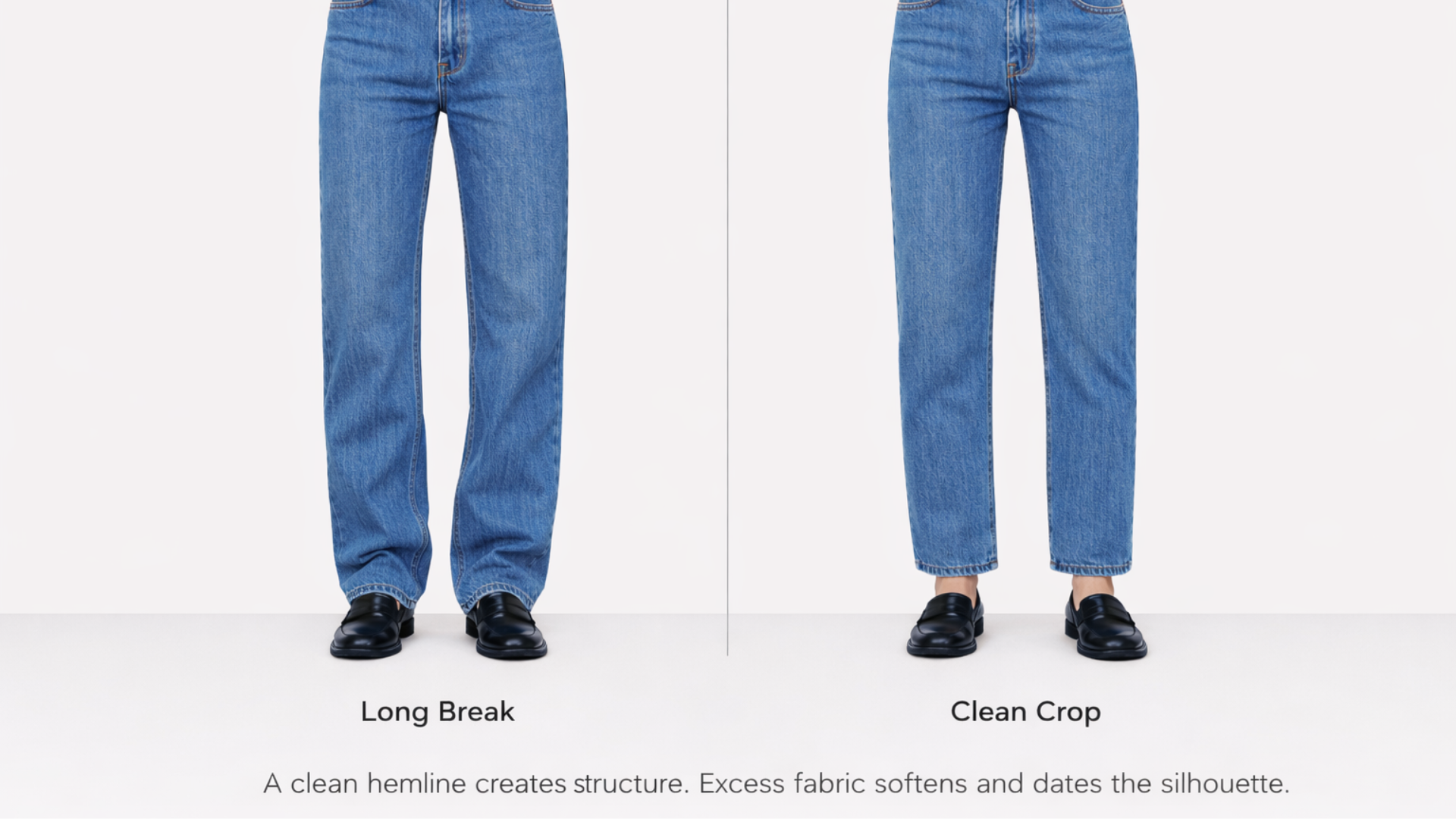
Length: The Most Overlooked Detail
Length is what modernizes denim.
Straight leg: should create a clean break or slight stack, not heavy pooling.
Wide leg: should skim the shoe, not swallow it.
Flare: should nearly graze the floor when worn with a heel.
Cropped: should expose ankle intentionally, not accidentally.
Too short makes the leg look cut off.
Too long makes the silhouette look careless.
When you understand how long jeans should be, half of styling confusion honestly disappears.
Rise: Mid vs High (And Why It Changes Everything)
Rise determines visual balance.
A high rise jean visually shortens the torso and lengthens the legs. That’s why it often reads more intentional and structured. It gives you a defined starting point at the waist.
Mid-rise can work beautifully, but it requires more precision on top; especially with tucks and proportions. This helps to avoid looking visually flat.
If the waist isn’t defined somewhere, the entire silhouette can collapse.
When jeans feel sloppy it’s often a rise issue, not a trend issue.
This is the same waist definition principle I break down further in The 3-3-3 Rule: A Wardrobe Formula That Brings Structure to Your Closet.
Fabric Weight & Structure
Denim with little to no stretch holds its shape and creates a sharper silhouette. Stretch denim molds to the body, which can look softer.
Thin, overly soft denim collapses easily, especially in wide or relaxed cuts. Raw or dry denim tends to look sharper because it maintains line.
What Jeans Are in Style Now (And Why)
If you search what jeans are in style now, you’ll see trend lists.
But trends don’t matter as much as structure.
Straight leg jeans are current because they create a clean, neutral line. That’s why vintage jeans can live forever.
Wide leg denim feels modern because it introduces architectural proportion.
Dark wash reads polished because the color minimizes visual distraction.
Modern denim looks cleaner. Minimal fading, subtle hems, and fewer decorative details keep the silhouette sharp instead of busy.
What’s “in style” right now isn’t about embellishment. It’s about clarity.
Modern denim emphasizes silhouette over decoration.
Straight Leg Jeans: The Neutral That Reflects Everything Back
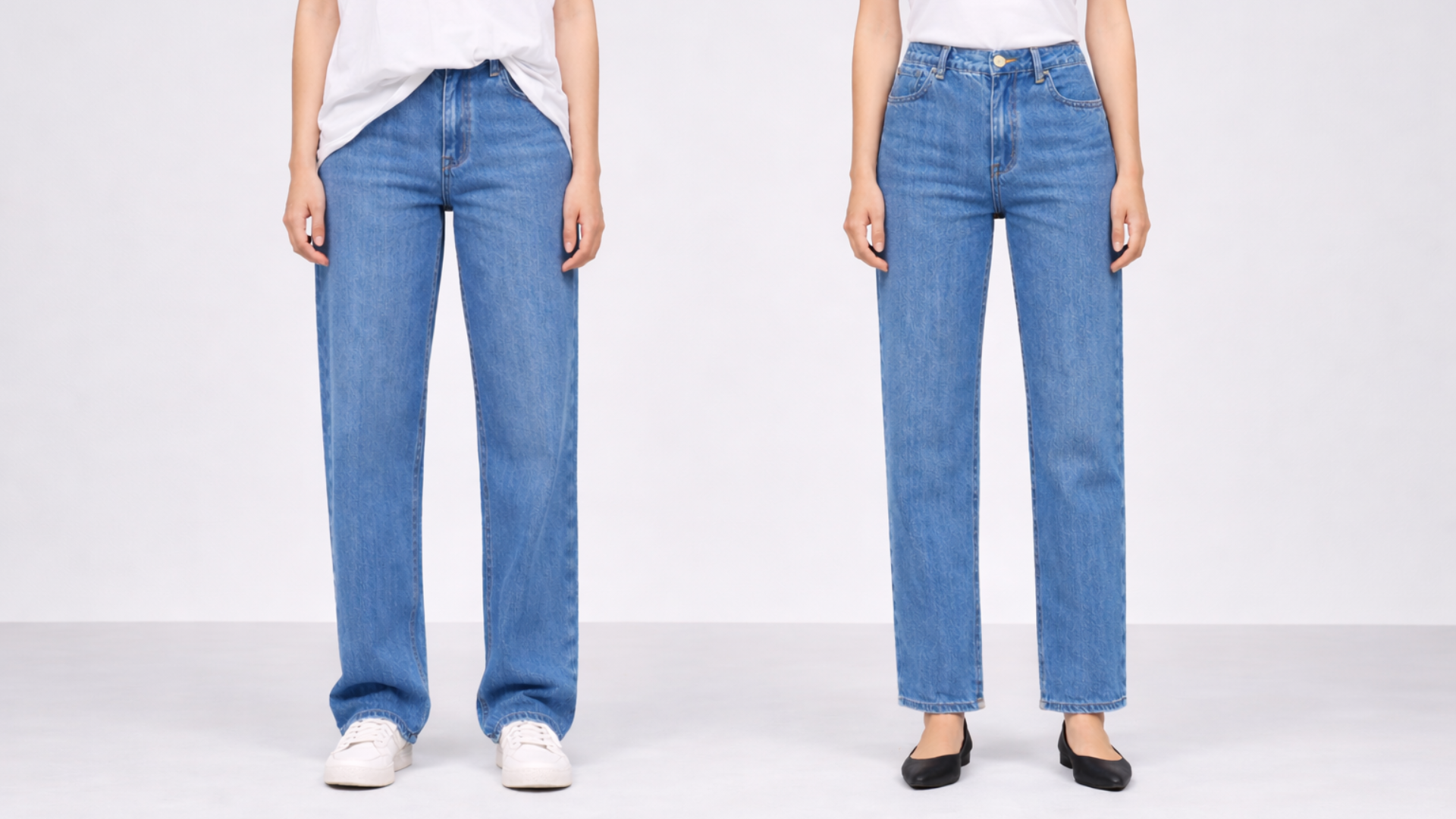
Relaxed Proportion vs Controlled Proportion
Straight leg denim works because it doesn’t compete.
That neutrality is its power, but also its risk.
The most common mistake when styling straight leg jeans is,
Choosing a length too long for the outfit idea
Pairing them with something equally relaxed: oversized tee, slouchy knit, flat sneaker.
The result feels default.
Why it fails:
Straight leg denim creates a simple vertical line. If the top is also undefined, there’s no anchor point. The silhouette reads flat.
The correction:
Introduce structure somewhere.
That could mean:
Defining the waist
Adding a cropped blazer
Choosing a pointed shoe
Carrying a structured bag
Straight leg jeans don’t elevate an outfit by themselves. They amplify what you pair them with.
If you want real examples of this in action, explore 10 Jeans Outfits That Prove Blue Was Never the Limit.
Black Jeans Done Right: Polish Without Overstyling
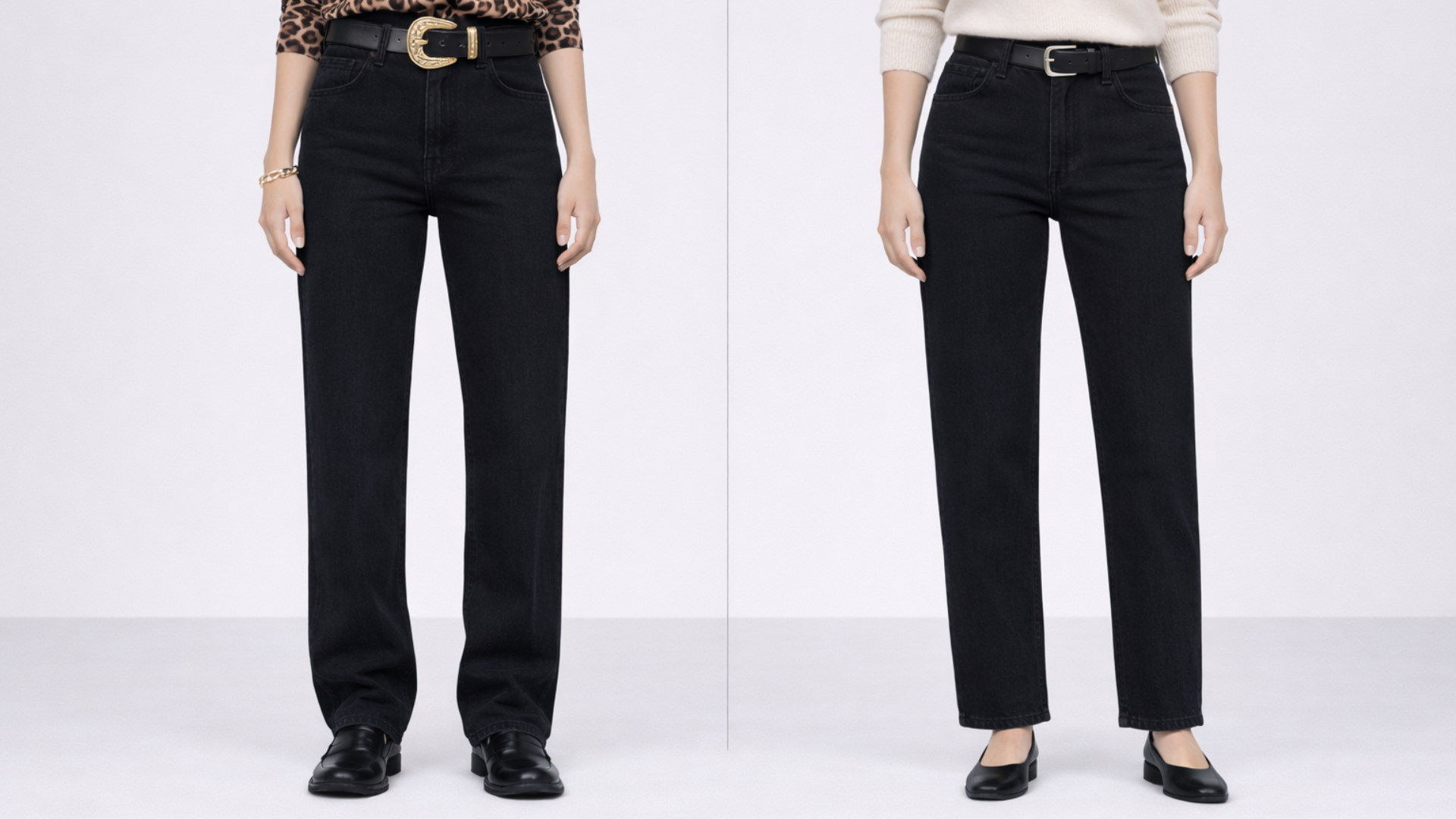
Overstyled vs Intentional Restraint
Black denim already leans sleek.
If you’re wondering what to wear with black jeans, the answer isn’t “more.” It’s restraint.
Black creates contrast automatically. That means texture becomes more important than layering.
Common mistake:
Over-accessorizing. Statement belt, bold necklace, dramatic shoe all at once.
Why it fails:
Black denim is visually strong. Adding too many focal points competes with that strength.
The correction:
Let texture do the work.
Satin blouse
Tailored blazer
Leather belt
Pointed ankle boot
Coated black jeans add subtle sheen, making them ideal for dinner, evenings, or elevated casual work settings.
Black denim doesn’t need drama. It needs control.
For a deeper breakdown of visual restraint, read How to Wear Chocolate Brown (So It Works Like a Neutral).
Wide Leg Denim Without the Bulk
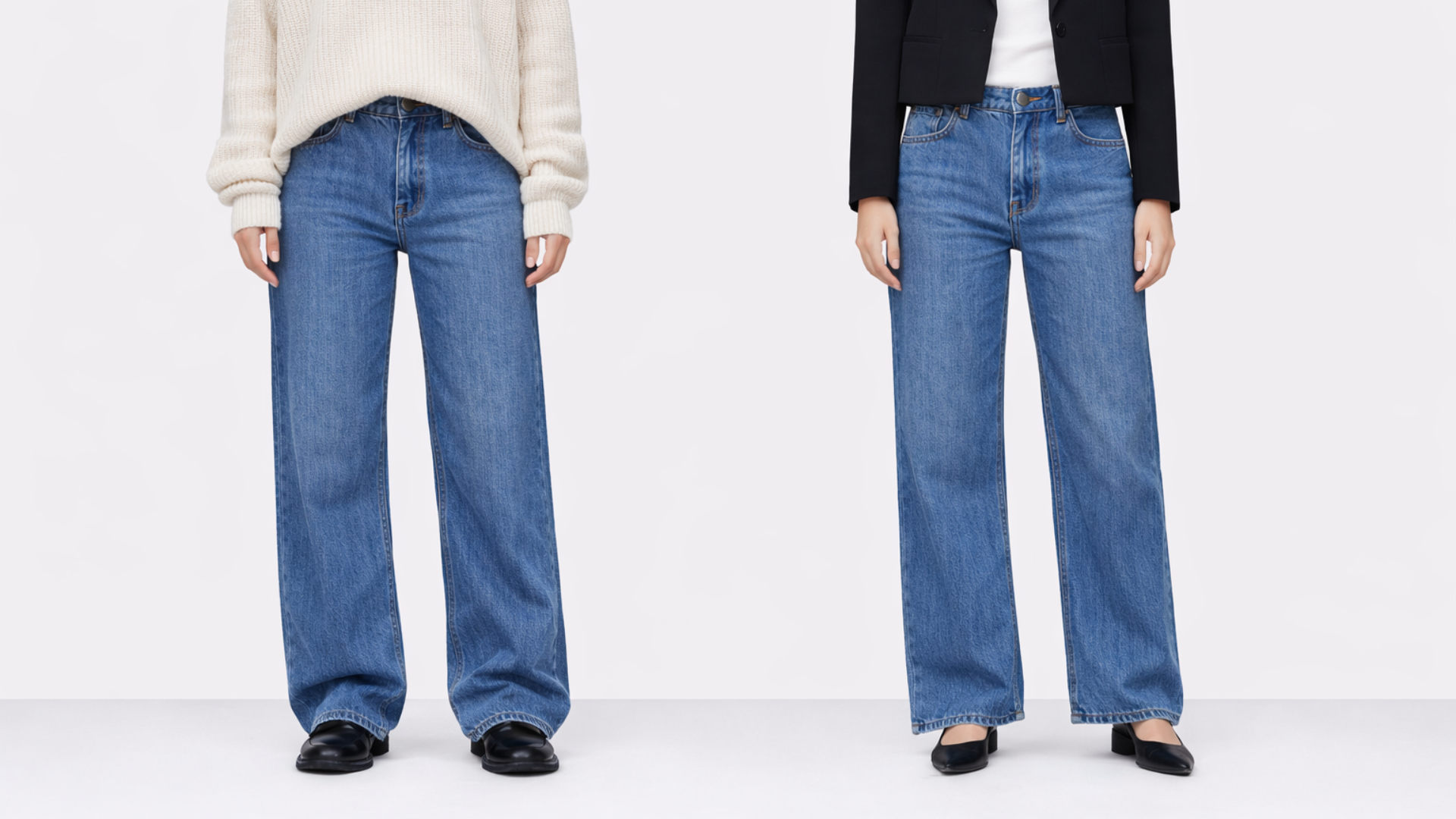
Volume Everywhere vs Balanced Volume
Wide leg jeans command space.
That isn’t the problem.
The problem is adding volume everywhere else.
If you’re deciding between straight leg and wide leg denim, understand this:
Wide leg adds horizontal width. The rest of the outfit must create vertical emphasis.
Common mistake:
Wide leg + oversized sweater + chunky shoe.
Why it fails:
Volume below plus volume above shortens and widens the body visually.
The correction:
Volume below → structure above
Soft fabric → sharp shoe
Relaxed cut → defined waist
When balanced, wide leg denim feels architectural and intentional.
You’ll see this same volume-balancing principle applied in How to Wear Loafers Formally and Casually (Including Chunky Loafers).
Bootcut & Flare: Length Is the Modernizer
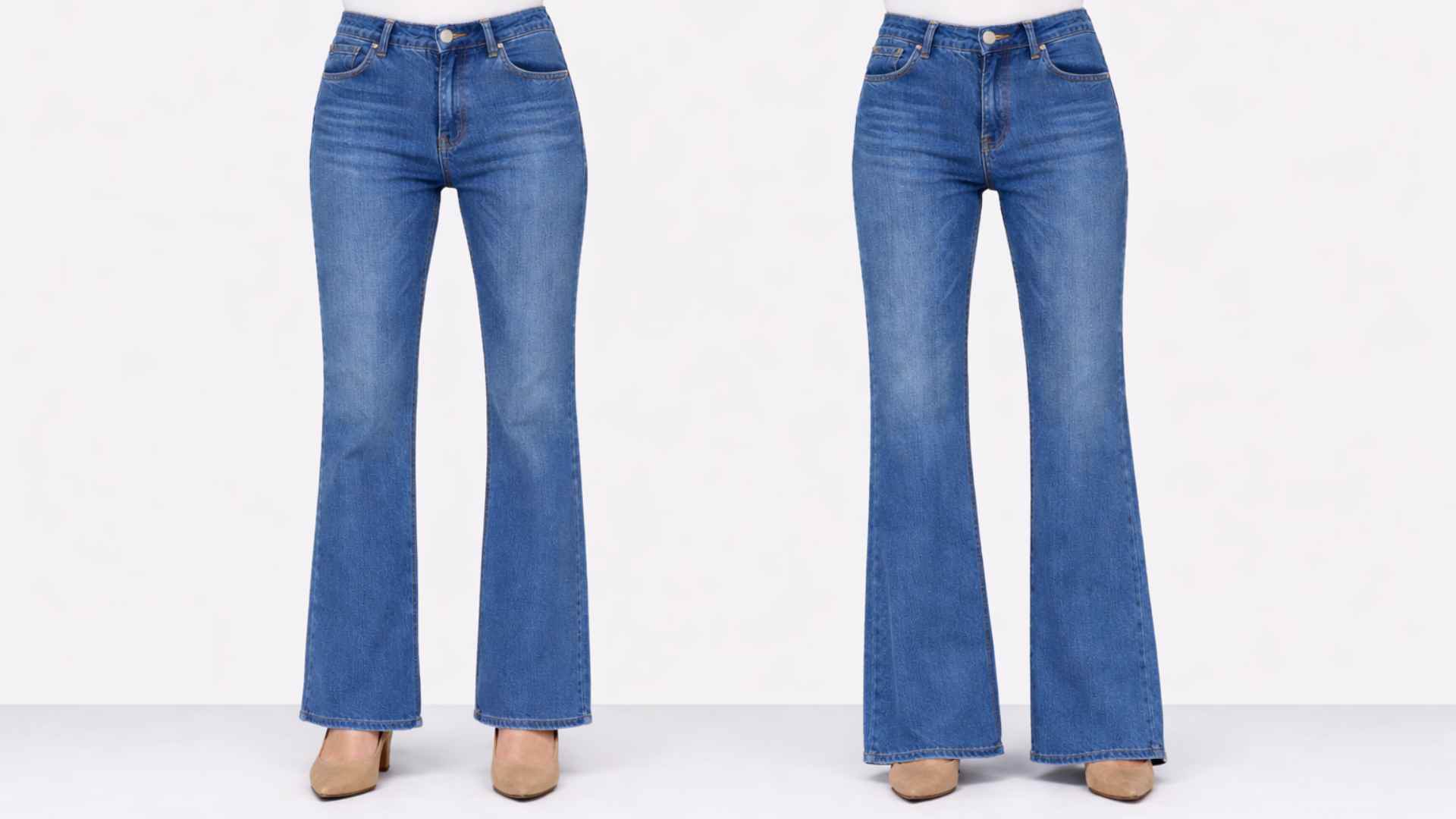
Cropped Flare vs Elongated Flare
Flare denim is back, but it’s refined!
The difference between dated and modern flare often comes down to one thing: length.
How long should flare jeans be?
When worn with a heel, they should nearly skim the floor. That subtle elongation creates drama without exaggeration.
Cropped flares require sharper shoes, pointed toes and sleek boots in order to avoid looking nostalgic.
Distressed, overly faded flares feel less current. Dark washes and clean finishes feel elevated.
Flare doesn’t need embellishment.
It needs precision.
Jeans and a Blazer: The Elevated Everyday Formula
Tailoring and denim create tension.
That tension is what makes this combination work for work, dinners, travel, and meetings.
The blazer sharpens the silhouette.
The jeans soften it.
Key details:
Cropped blazers emphasize waist.
Longer blazers elongate.
Structured shoulders add authority.
Single-button blazers define shape more clearly than double-breasted in casual settings.
If you want to know how to dress up jeans for dinner or business casual environments, start here.
Business casual doesn’t mean stiff.
It means composed.
Wearing Jeans With Boots Without Looking Bulky
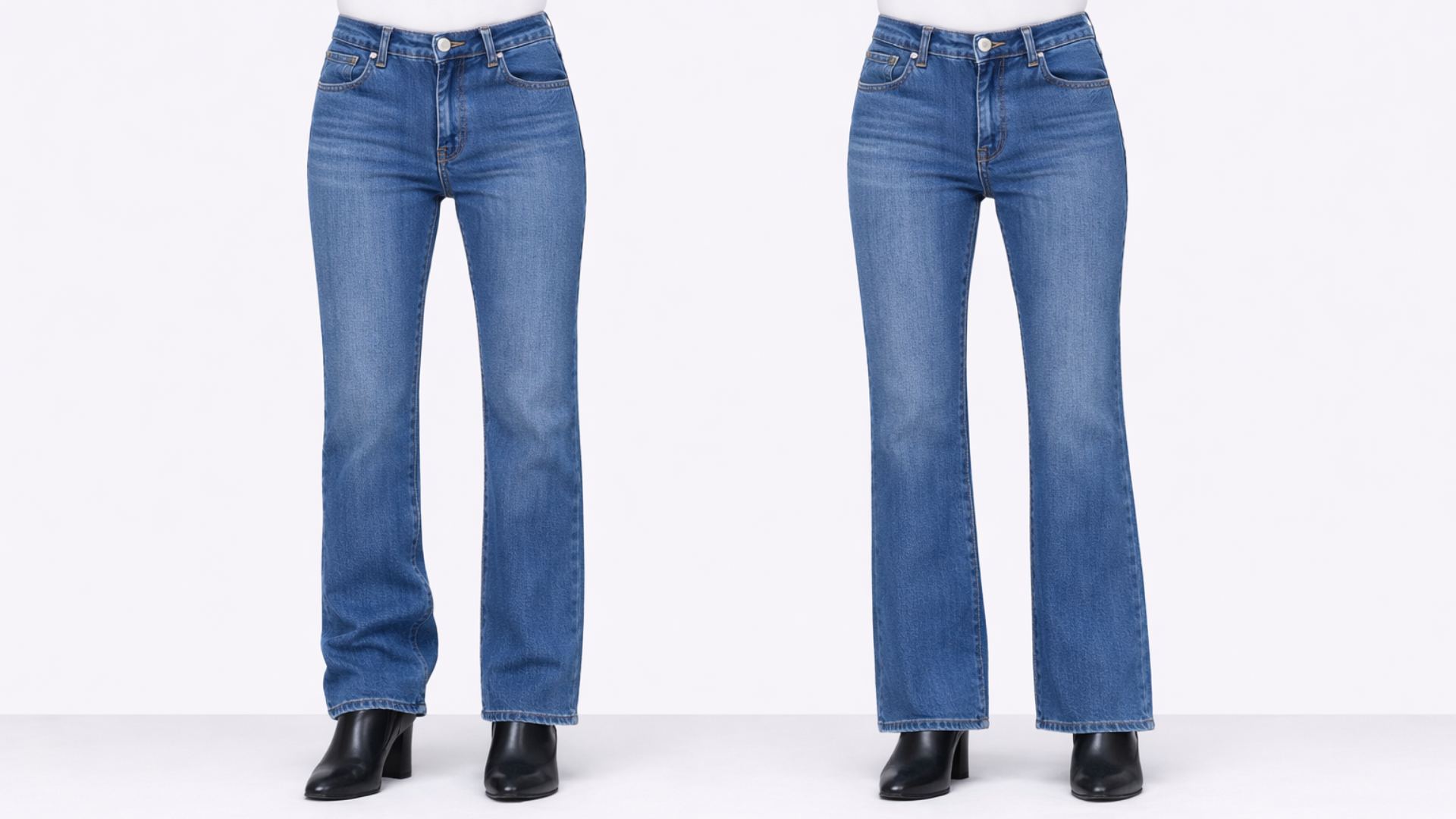
Stacked Bulk vs Clean Line
How to wear jeans with boots depends entirely on cut.
Straight leg + ankle boots:
Allow a small break or slight crop. Avoid heavy stacking.
Wide leg + boots:
Choose sleek shafts. Bulky boots add too much weight.
Slim jeans + chunky boots:
This can work, but balance the top half.
The most common mistake:
Letting fabric bunch at the ankle.
Stacking creates visual heaviness.
A clean line always feels more modern than excess volume.
If footwear proportion is still tricky, I go deeper in How to Style Ballet Flats: 7 Modern Outfit Formulas That Feel Elevated.
Cream, White, and Dark Wash: Using Tone Strategically
Cream and white jeans instantly elevate an outfit.
Why?
They soften contrast.
Pair cream denim with:
Camel
Chocolate brown
Charcoal
Black
When you wear cream or white denim, the outfit can look flat if everything is the same smooth texture. Adding richer materials like suede, wool, or leather makes the outfit look layered and intentional instead of plain.
Dark wash denim offers polish similar to black but with softer edges.
White denim isn’t seasonal.
It’s strategic.
Dressing Up a T-Shirt and Jeans Without Looking Understyled
This combination often fails because it’s under-anchored.
T-shirt and jeans become elevated when three upgrades happen:
Define the waist.
Upgrade the shoe.
Add structure.
A belt shifts proportion.
A pointed heel elongates.
A cropped blazer reframes the silhouette.
You don’t need more pieces.
You need sharper ones.
Relaxed, Baggy & Modern Slouch
Baggy jeans don’t have to look careless.
The key is defining at least one area of the body.
That could be:
Tucked top
Cropped knit
Tailored jacket
Structured bag
Controlled slouch feels intentional.
Uncontrolled volume feels unfinished.
The Denim Proportion Checklist
Before buying new jeans, pause and ask:
Is the waist defined somewhere?
Does the hem create a clean break?
Does the shoe balance the leg opening?
Is there structure if the denim is relaxed?
Are you stacking volume everywhere?
Would tailoring sharpen the silhouette?
Most denim styling problems aren’t about trends.
They’re about proportion.
Denim was never the problem.
Repetition was.
When you understand how to style jeans through structure, length, and balance, even the pairs you already own feel new.
You don’t need ten new styles.
You need one intentional adjustment.
Jeans aren’t casual.
They’re responsive.
And once you see that, everything changes.
Keep Building Your Denim Strategy
If you’re refining how jeans fit into your wardrobe, go next to:
• How to Dress for Your Body Type
• The 3-3-3 Rule: A Wardrobe Formula That Brings Structure to Your Closet
• How to Wear Loafers Formally and Casually (Including Chunky Loafers)
• How to Style Ballet Flats: 7 Modern Outfit Formulas That Feel Elevated
