The 3-3-3 Rule: A Wardrobe Formula That Brings Structure to Your Closet
Table of Contents
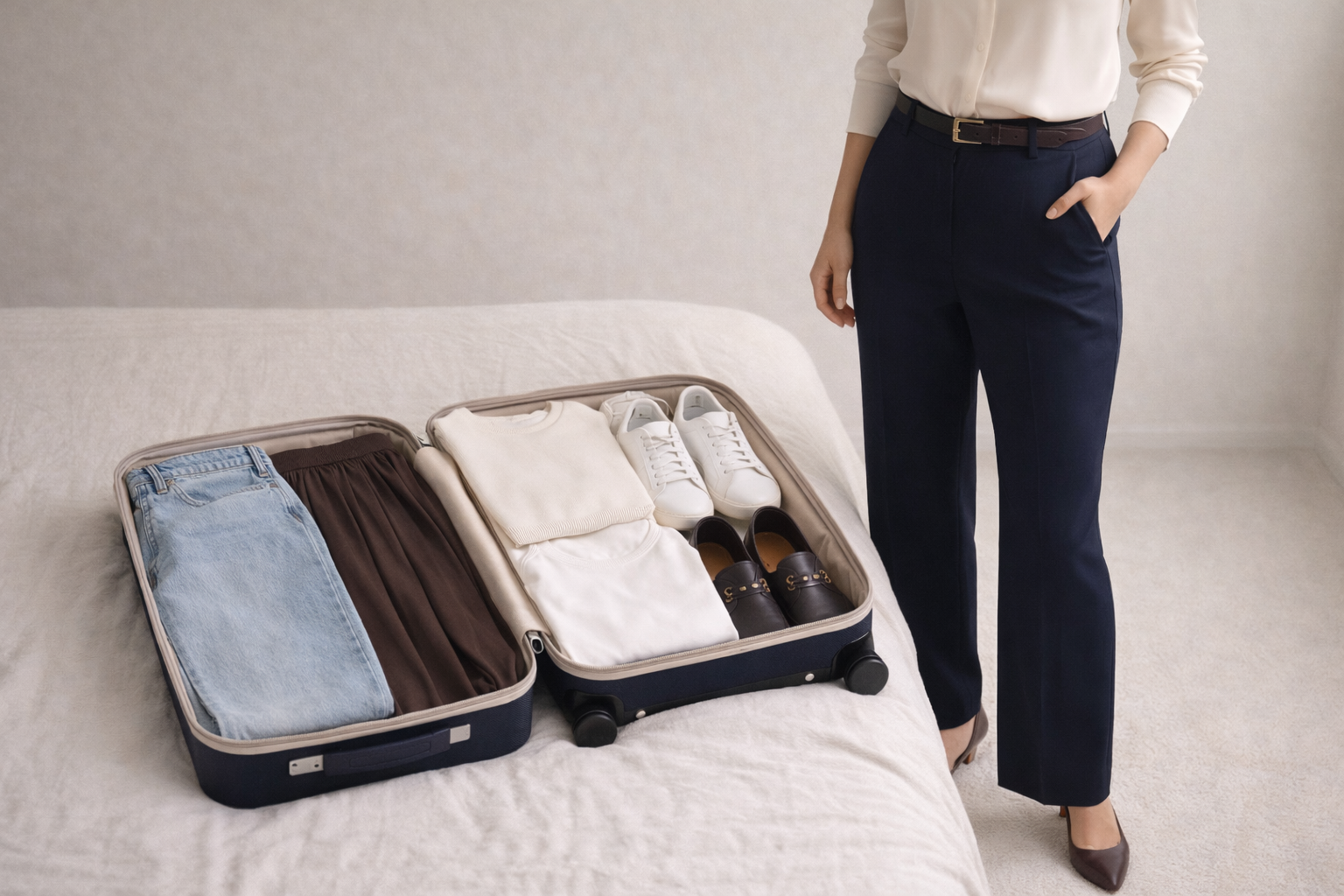
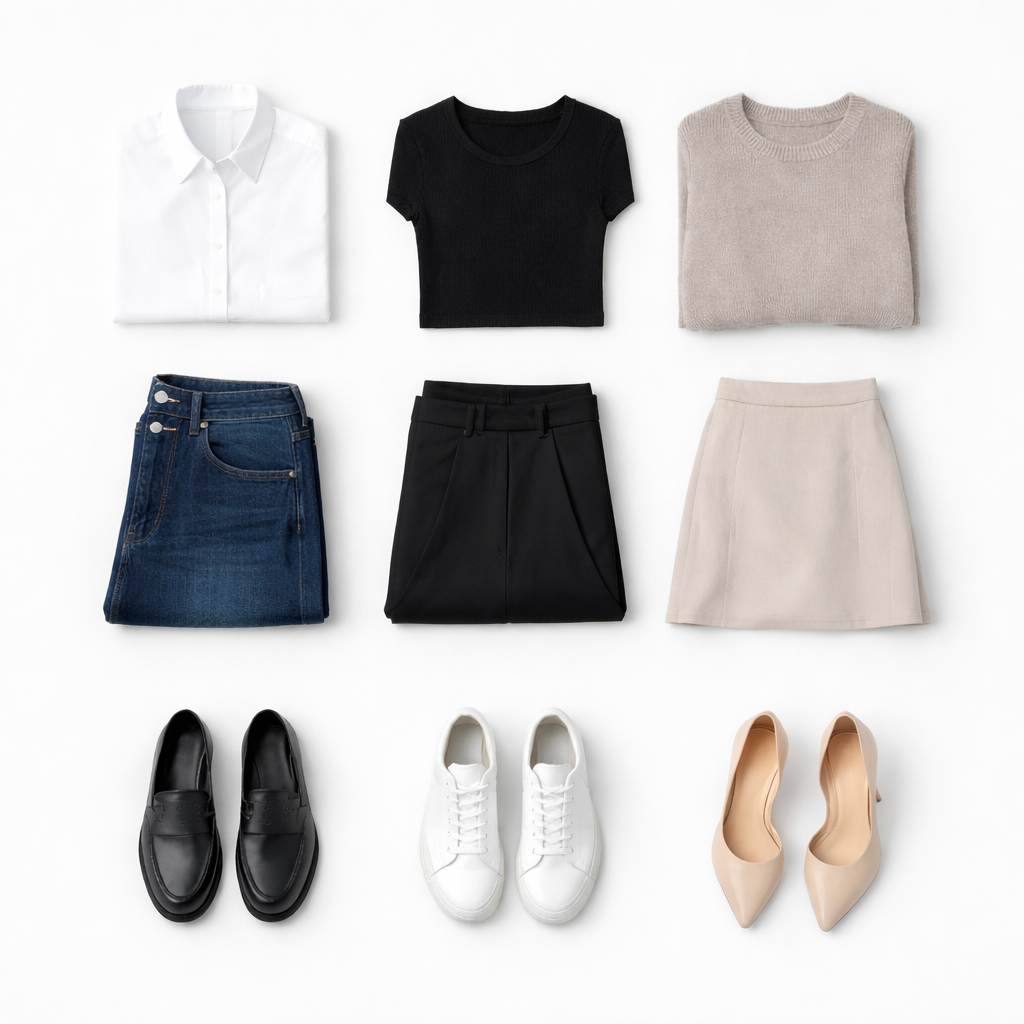
The 3-3-3 rule is a wardrobe formula built around one simple constraint: three tops, three bottoms, and three pairs of shoes. From those nine pieces, you create a small but functional outfit rotation.
It’s important to clarify what this means.
The 3-3-3 rule is not suggesting that you should only own nine pieces of clothing. It is not asking you to permanently reduce your wardrobe. And it is not a long-term minimalist commitment.
It is a rotation exercise.
You are choosing nine pieces from your existing wardrobe and placing them into active use. Everything else stays where it is. Nothing has to be donated, boxed, or eliminated.
The 3-3-3 rule limits what you wear, not what you own.
That distinction matters.
Unlike broader minimalist challenges that focus on owning less overall, the 3-3-3 rule focuses on how your clothes work together. It is not about restriction. It is about clarity.
When you reduce your wardrobe to a tight rotation, you begin to see how your pieces behave. Which tops layer cleanly. Which bottoms anchor. Which shoes shift the tone of an outfit.
At its core, the 3-3-3 rule forces your closet to operate as a system instead of a collection.
If you want to understand how proportion actually affects that system, start with How to Dress for Your Body Type.
Why the 3-3-3 Rule Feels So Appealing Right Now
Most people are not short on clothing. They are short on cohesion.
You open your closet and see wide leg trousers, straight leg jeans, a silk tank, a relaxed tee, a structured blazer, sneakers, loafers, maybe a pair of pointed-toe heels. There are options. But when you start combining them, something feels slightly off.
That friction adds up.
Trends move quickly. Social media feeds show endless outfit combinations. Your closet keeps growing, but your outfit confidence does not always follow.
The appeal of the 3-3-3 rule isn’t just minimalism. It’s relief from decision fatigue. It offers a boundary without demanding a total lifestyle overhaul. It narrows your field of choice just enough to make patterns visible.
When your options shrink, your awareness increases.
And because this is a temporary structure, not a permanent reduction, it feels approachable. You are not committing to less. You are committing to observation.
Why the 3-3-3 Method Actually Works (From a Style Perspective)
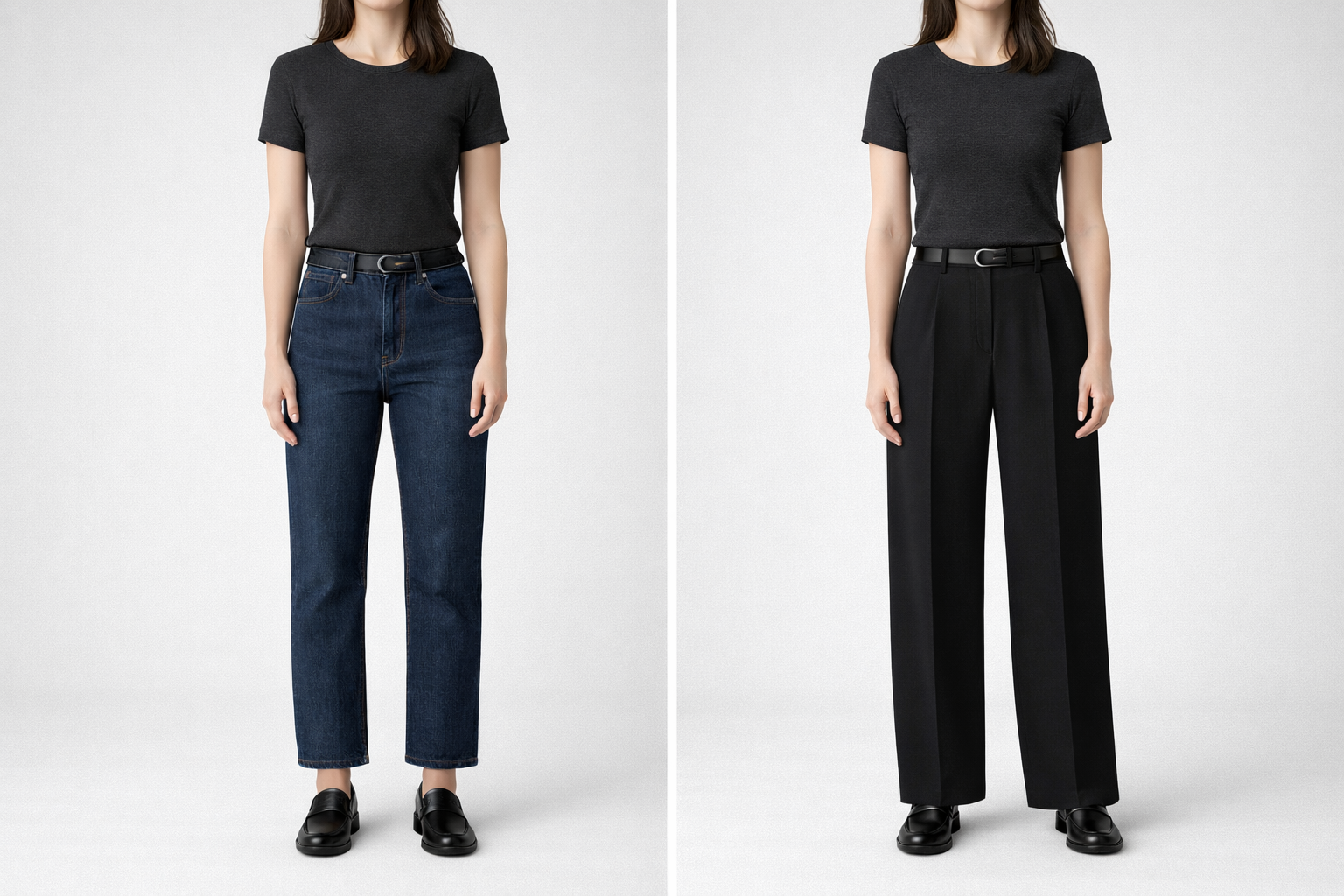
The 3-3-3 method works because repetition exposes structure.
When you rotate the same three bottoms for example, a high rise straight leg jean, a wide leg tailored trouser, and a barrel pant; you begin to notice how each one shifts the balance of an outfit.
A high-rise straight leg defines the waist consistently.
A wide-leg trouser distributes weight outward and downward.
A barrel silhouette introduces volume at the hip.
That contrast teaches you proportion faster than a closet full of variety ever could.
The same applies to tops.
You’ll see this clearly applied in How to Style Jeans: 10 Chic Ways That Go Beyond Blue.
A fitted ribbed tee behaves differently than a silk tank. A crisp white button-down introduces structure that a slouchy knit cannot. When you only have three tops in rotation, you quickly see which ones balance your bottoms and which ones compete.
Shoes reveal even more.
A clean white sneaker softens nearly everything.
A structured black loafer adds visual weight at the base.
A pointed-toe heel elongates the line immediately.
When you are working inside the 3-3-3 rule, you can’t hide imbalance behind excess. The structure or lack of it, becomes obvious.
That visibility is what makes the method powerful.
If you want to see how shoe choice shifts tone in real outfits, read How to Wear Loafers: 8 Modern Outfits.
Why the 3-3-3 Rule Fails for Some People
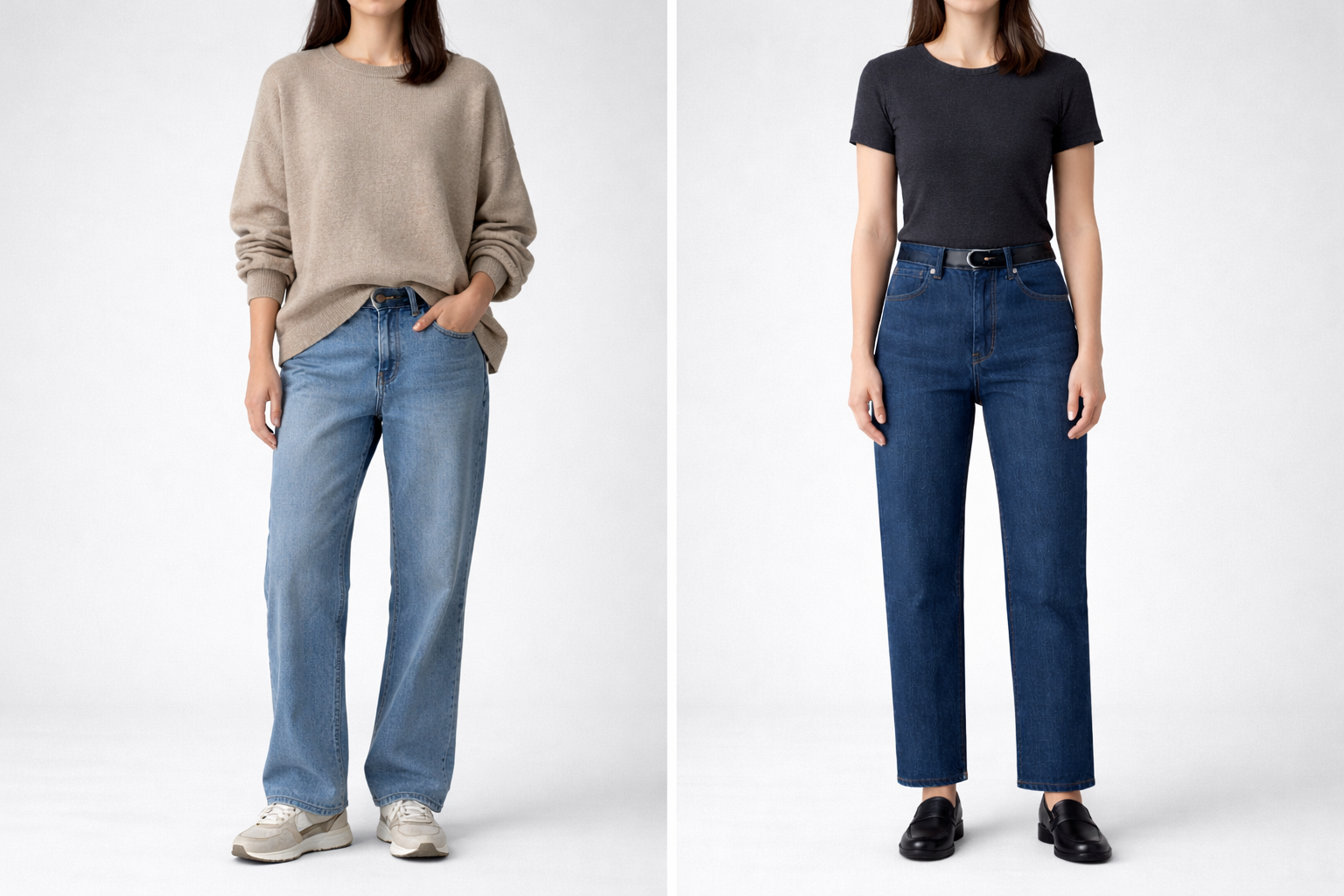
The 3-3-3 rule does not fail because nine pieces are too few. It fails when the nine pieces lack contrast, range, or structural balance.
If every top is relaxed and every bottom is loose, the outfits will feel heavy.
If your bottoms start at different rises, the proportions will shift unpredictably.
If all nine pieces sit in the same mid-tone color family, nothing will anchor the eye.
If your three shoes all carry the same level of formality, your rotation will feel narrow.
When the method feels restrictive, it is usually revealing something: your pieces are not multiplying. They are repeating.
It’s not a flaw. It’s a signal.
How to Choose 3 Tops, 3 Bottoms, and 3 Shoes Strategically
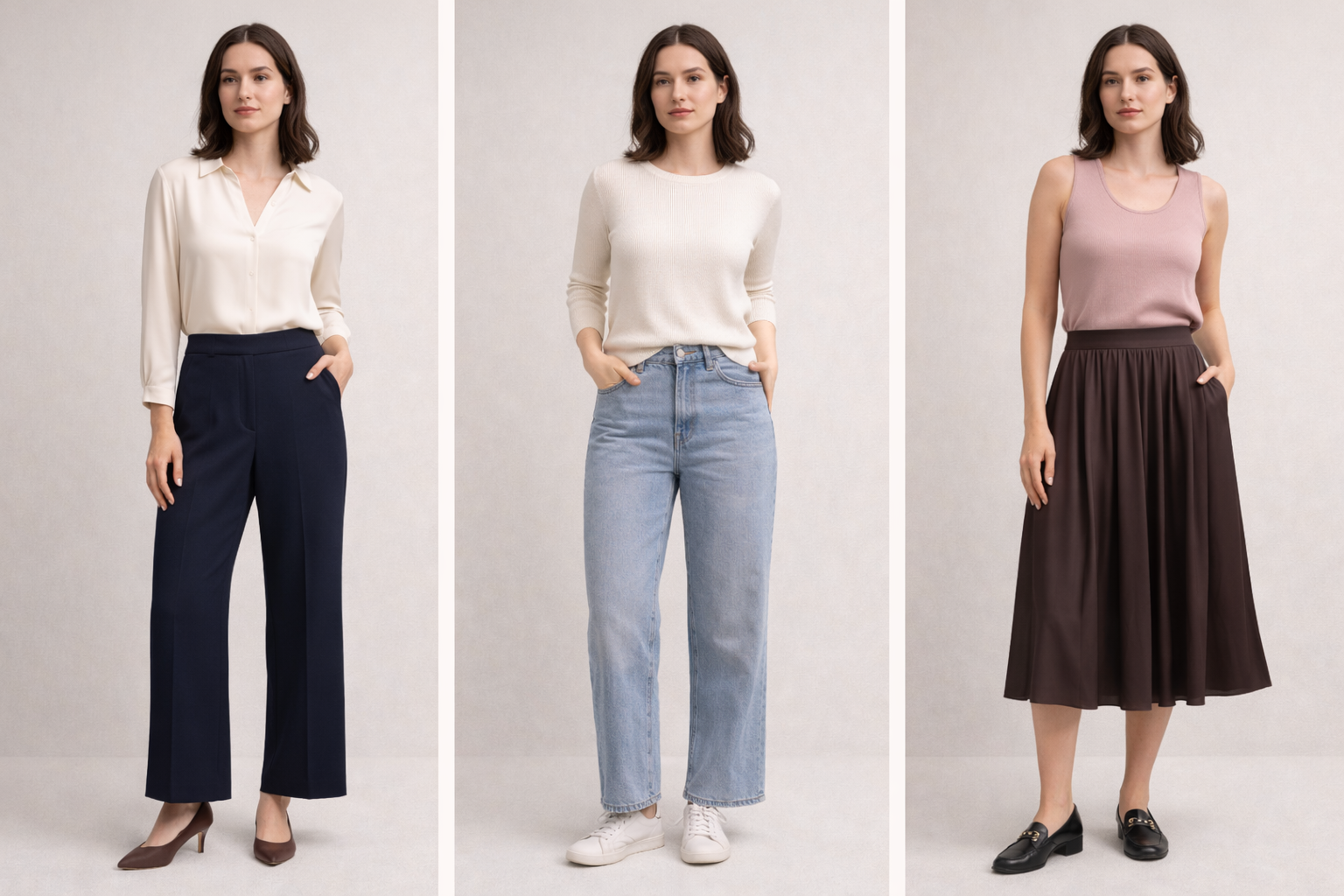
If you want the 3-3-3 rule to function as a true wardrobe system, selection matters more than restriction.
Start with bottoms.
Choose:
One anchor bottom (for example, a dark high-rise straight-leg or tailored trouser).
One relaxed option (such as a clean wide-leg or softly structured barrel jean).
One dimensional piece (perhaps a textured skirt or a lighter-wash denim).
These should not be three versions of the same silhouette. They should multiply differently.
For tops, think in structure.
Choose:
One fitted base layer (a ribbed tee or sleek bodysuit).
One structured option (a button-down or tailored vest).
One softer piece (a silk tank, knit shell, or relaxed blouse).
Each top should behave differently when paired with the same bottom.
Shoes control tone.
Choose:
One sharp option (a pointed-toe heel or structured loafer).
One casual option (minimal sneakers or flat sandals).
One transitional style (a slingback, sleek ankle boot, or refined ballet flat).
The goal is not trend variety. It is tonal flexibility.
When your nine pieces vary in structure, rise, and visual weight, your outfit combinations expand naturally.
This is why the 3-3-3 rule works best as a temporary reset or training tool. It teaches you which pieces multiply, and which stall.
How the 3-3-3 Rule Applies to Travel and Packing Light
The 3-3-3 rule also works well in travel settings because it shifts your focus from packing more pieces to packing pieces that relate.
Many people pack for a weekend by counting items. Five tops. Four bottoms. Three pairs of shoes. On paper, that sounds prepared. In practice, those pieces don’t always combine easily, which is why a suitcase can feel full and still feel limiting.
The difference is cohesion.
When your wardrobe already functions as a small system, packing becomes clearer. You already know how your high-rise trousers behave with a silk tank or a structured button-down. You know how loafers change the tone compared to sneakers. That familiarity reduces the urge to add extra options “just in case.”
Keep This Checklist In Mind When Packing
Choose one bottom that anchors every top. A high-rise straight leg or tailored trouser usually does this best.
Choose one top that sharpens the rotation. A crisp button-down, structured vest, or clean knit can elevate even your most relaxed bottom.
Choose one shoe that walks all day but still holds shape. A sleek sneaker, structured loafer, or refined flat works better than something overly soft or purely athletic.
The goal is not variety. It is tonal flexibility. Each piece should be able to dress slightly up or slightly down depending on what you pair it with.
That is what makes a carry-on feel sufficient instead of limited.
The same principle applies to color control. If you’re building a cohesive palette, you might like How to Wear Chocolate Brown (So It Works Like a Neutral).
Is the 3-3-3 Rule Right for You?
The 3-3-3 rule is helpful when you feel like you have clothes, but you still don’t know what to wear.
If you open your closet and see options but struggle to put outfits together quickly, this method can help you understand why.
It works by slowing things down.
Instead of reaching for something new every day, you wear the same nine pieces on purpose for a short period of time. You start to notice what fits well, what pairs easily, and what feels slightly off.
If you are in a season where you’re experimenting with bold trends or completely changing your style, the rule may feel restrictive. That doesn’t mean it’s wrong. It just means you may not need structure right now.
The 3-3-3 rule works best as a temporary exercise.
You might try it for two weeks when getting dressed feels frustrating.
You might rotate nine pieces for a month to see which ones you actually enjoy wearing.
You might use the idea when packing for a trip so your suitcase feels simple and intentional.
It does not require you to give anything away.
It limits what you wear for a short time, not what you own.
When you narrow your choices, patterns become easier to see. You begin to understand which pieces truly work together and which ones only look good on their own.
That understanding stays with you.
And once you see it, getting dressed feels clearer.
Continue Building Your Wardrobe System
If the 3-3-3 rule helped you see structure more clearly, go deeper with:
• How to Dress for Your Body Type
• How to Style Jeans: 10 Chic Ways That Go Beyond Blue
• How to Style Ballet Flats: 7 Modern Outfit Formulas That Feel Elevated
• 10 Jeans Outfits That Prove Blue Was Never the Limit
