How to Wear Loafers Formally and Casually (Including Chunky Loafers)
Table of Contents
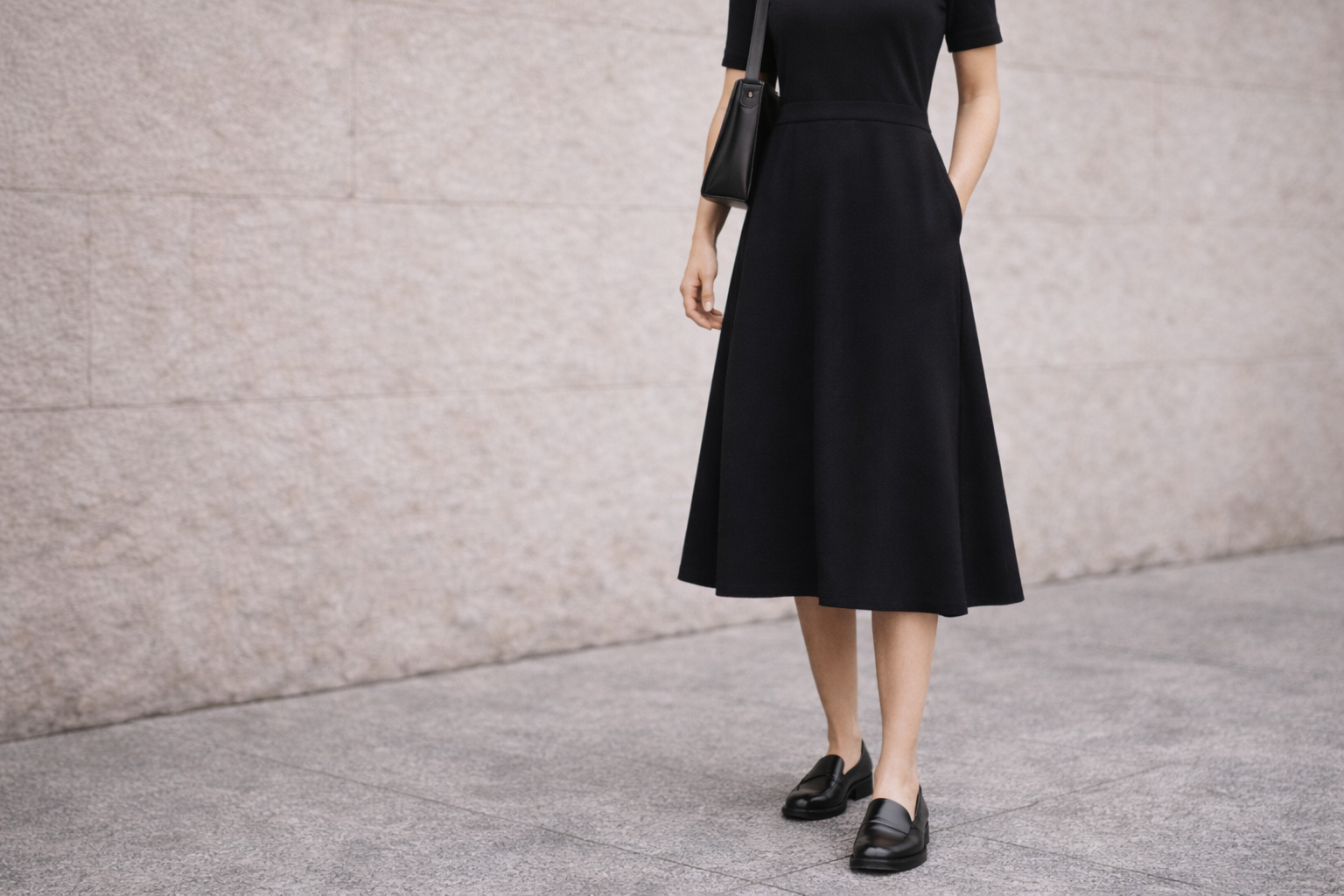
Some shoes cycle in and out of relevance.
Loafers don’t.
They’ve been around for nearly a century. Originally inspired by Norwegian slip-ons, later refined into the American penny loafer, and eventually reimagined in everything from sleek leather to chunky platforms and high shine patent finishes.
They’ve evolved.
They’ve adapted.
They’ve taken on personality.
And yet…
Loafers are one of those shoes that can look incredibly sharp or slightly off, depending entirely on how they’re styled.
You see them online and purchase them immediately.
They look polished.
Directional.
Like they’ll sharpen everything in your closet.
Then you try them on.
And something feels slightly heavy.
Or flat.
Or unfinished.
Sometimes even… awkward.
That moment isn’t about taste.
It’s about proportion.
It’s about visual weight.
It’s about how the overall shape around the shoe either supports it, or competes with it.
This guide isn’t about toning anything down.
It’s about understanding how to style loafers in a way that feels modern, balanced, and intentional.
If flats feel tricky in general, you’ll benefit from How to Style Ballet Flats: 7 Modern Outfit Formulas That Feel Elevated.
Whether you’re wearing penny loafers, chunky loafers, patent styles, or heeled versions, the foundation is the same.
Why Loafers Sometimes Look Dated (Even When They’re Not)
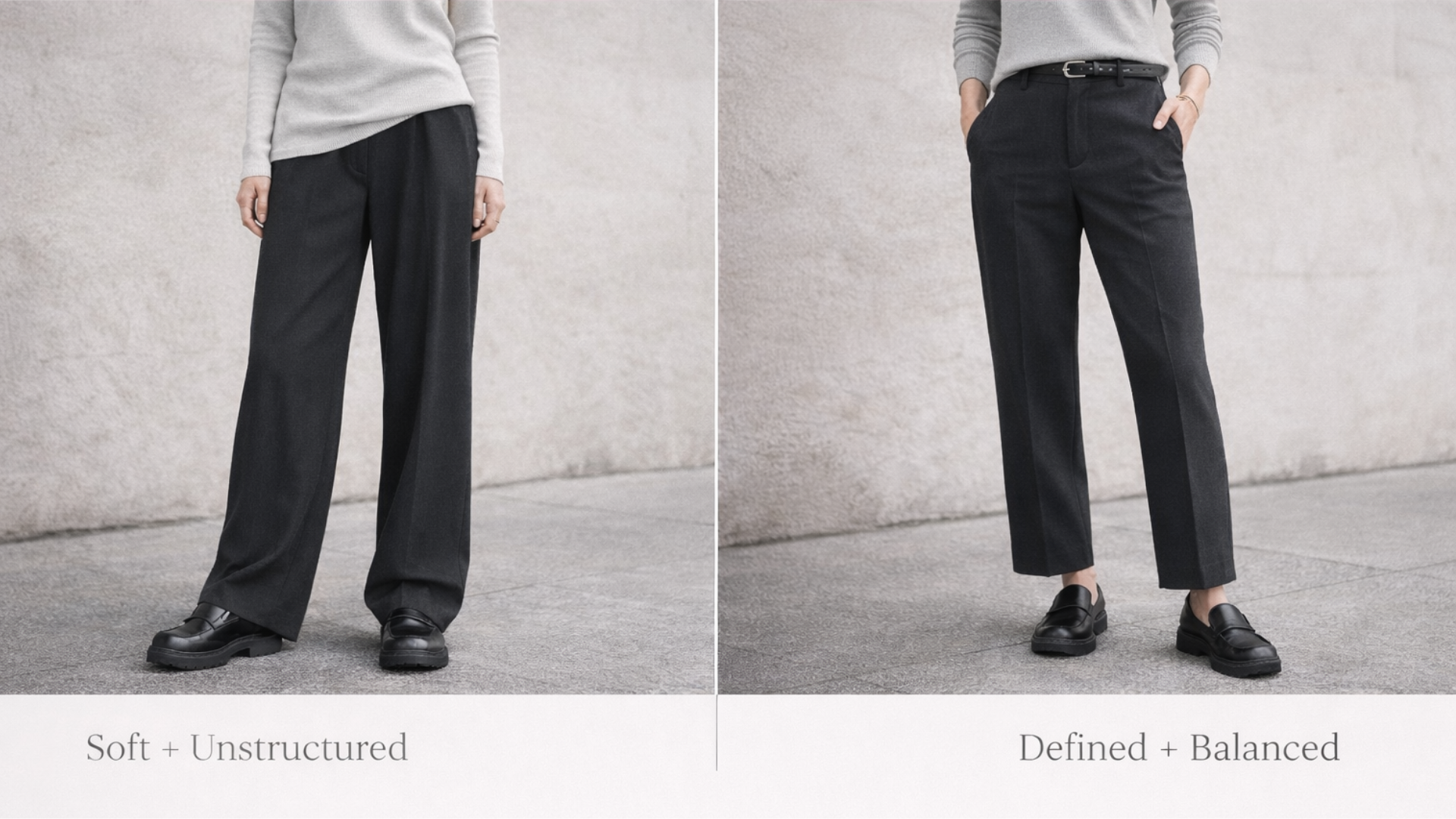
Same outfit. Only the shape changes.
A defined waist and clean hem keep the outfit looking intentional instead of weighed down.
Before we talk about outfits, we need to talk about why loafers can feel “off.”
Visual Weight Mismatch
Every shoe carries visual weight.
Chunky loafers have higher visual weight because they take up more space at the bottom of your outfit. The thicker sole, added height, and extra bulk naturally draw the eye downward and anchor the silhouette.
Slim leather penny loafers, on the other hand, have a thinner sole and cleaner lines, so they create a lighter, less dominant finish at the foot. Neither is better, they just behave differently.
The key is making sure the rest of your outfit balances the weight of the shoe instead of competing with it.
If you pair a heavy sole with:
Wide-leg pants
Oversized knits
No waist definition
The bottom half becomes visually dense. The silhouette compresses instead of elongates.
It’s not that chunky loafers are wrong.
It’s that nothing is counterbalancing them.
Hem Placement at the Widest Point
Loafers sit low on the foot.
If your pant hem lands right where your foot meets your ankle and covers most of the shoe, the leg line visually stops there.
That break can make the lower half feel shorter or heavier, especially when the fabric bunches.
With loafers and jeans, structure at the ankle changes everything.
A clean, intentional break creates clarity.
Pooling or excess fabric creates visual density.
The solution is simple: let the shape of the loafer be visible.
Aim for a hem that either:
Ends just above the shoe, or
Skims the top without covering it entirely.
When the shoe is visible, the line continues.
When it’s swallowed, the silhouette compresses.
That small adjustment is often the difference between “something feels off” and “this works.”
But hem placement isn’t the only factor.
If hems are your main issue, you’ll see the same principle applied in How to Style Jeans: 10 Chic Ways That Go Beyond Blue.
How to Style Chunky Loafers Without Looking Heavy
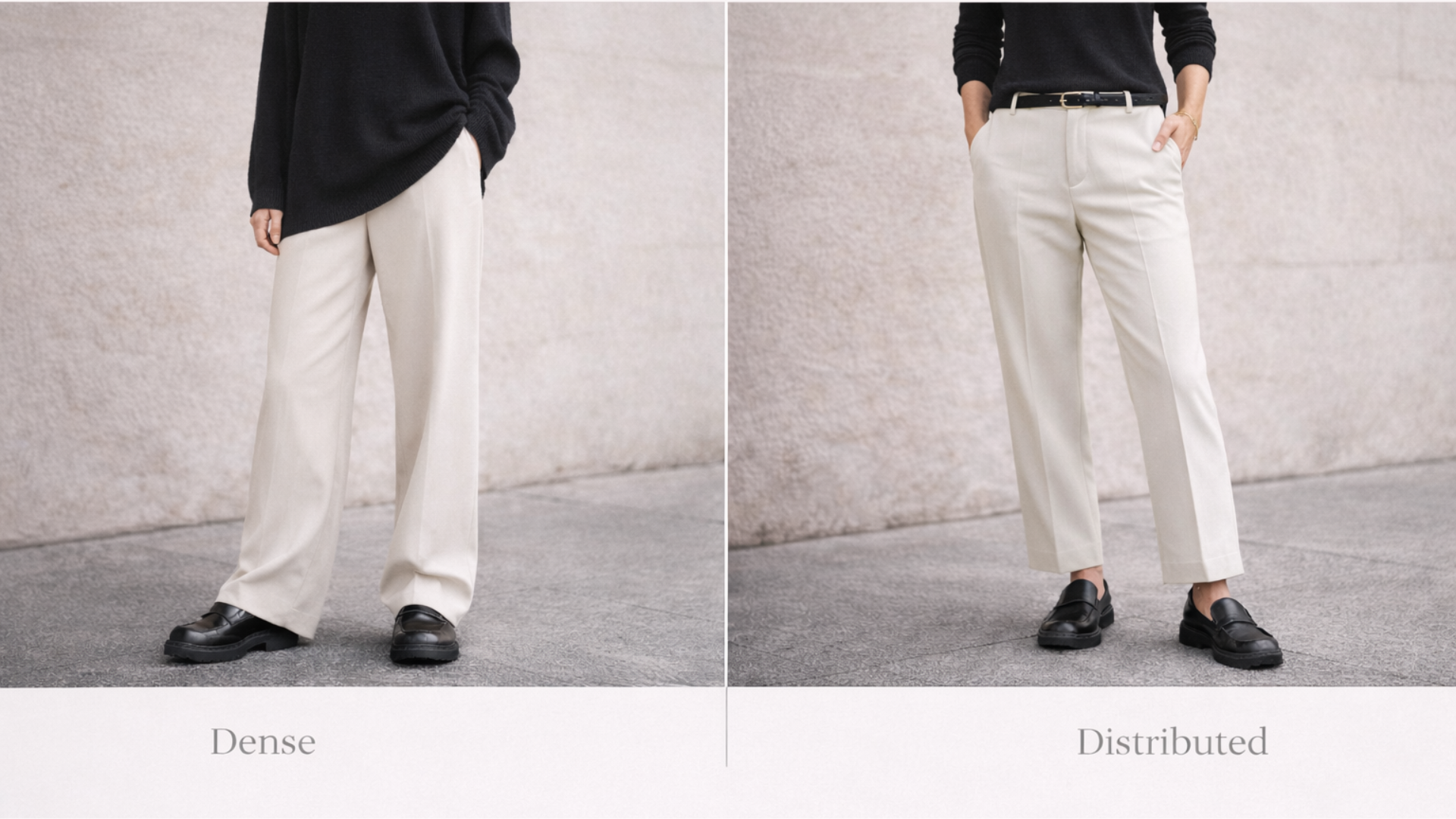
Same shoe. Same base pieces.
On the right, the visual weight is spread out: lighter fabric below, clean ankle, defined waist. This way the loafers don’t overpower the outfit.
Chunky loafers aren’t the problem.
The way they’re balanced is.
Chunky soles naturally take up more space at the bottom of your outfit. That’s not bad. It just means the rest of what you’re wearing has to meet them halfway.
If the shoe feels “too much” when you put it on, it’s usually not the loafer.
It’s the proportions.
Here’s what actually makes them work.
1. Don’t Pair Bulk With Delicate Everything
If the shoe is thick and structured, avoid pairing it with super tight, clingy bottoms and nothing else.
That contrast can make your feet feel heavier than they are.
Instead, give the outfit a little presence:
• Straight-leg jeans
• Relaxed trousers
• A slightly oversized blazer
• A structured mini skirt
You’re not trying to overpower the shoe.
You’re just making sure it doesn’t look alone.
2. Let the Ankle Breathe
Chunky loafers already have weight. When your jeans puddle over them, the bottom of the outfit can start to feel dense.
Try this instead:
• A hem that hits just above the shoe
• Or one that skims the top without covering it
Seeing a bit of the loafer keeps the line clean.
When it’s swallowed, everything feels heavier.
That tiny adjustment changes everything.
3. Add Structure Somewhere
Loafers don’t add height. Chunky loafers don’t either — they add presence.
So something else in the outfit needs to feel intentional.
That might look like:
• A defined waist
• A tucked knit
• A cropped or structured blazer
• A belt
• Fabric that holds its shape
Chunky footwear needs something above it that draws the eye upward.
If everything is loose and oversized, the silhouette can turn into one continuous block.
When something at the waist, shoulders, or in the fabric holds shape, the loafers stop feeling random and start feeling styled.
Crisp cotton, structured linen, clean denim, and tailored wool all help balance the visual weight of a heavier sole.
You don’t need to overpower the shoe.
You just need to meet it halfway.
If you want a quick closet reset that makes these combos easier, try The 3-3-3 Rule: A Wardrobe Formula That Brings Structure to Your Closet.
4. Lighten the Look With Contrast
If chunky loafers ever feel overwhelming, it’s often because everything else is dark and heavy too.
Try:
• Cream trousers
• Bare legs with a mini dress
• Light wash denim
• A soft neutral palette
The contrast keeps the loafers feeling modern instead of bulky.
How to Wear Loafers With Jeans
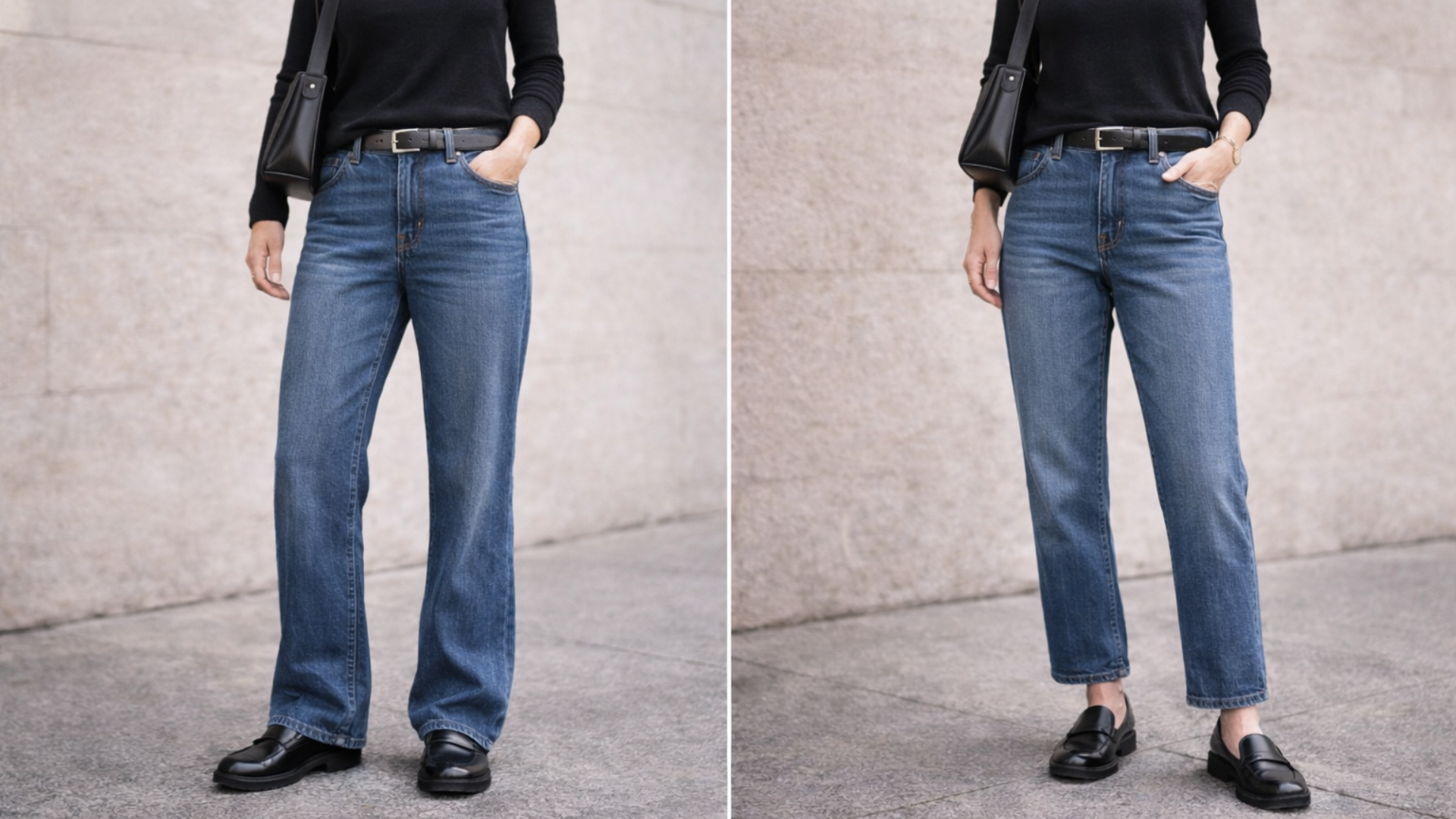
The only difference is the hem.
When the jean stacks over the loafer, the line stops. When the ankle is visible, the shoe is framed, and the outfit looks sharper instantly.
This is usually where things go wrong.
You buy the loafers.
You love the loafers.
Then you put them on with your favorite pair of jeans, and something feels… off.
It’s not the shoe.
It’s the cut of the denim.
For a deeper denim breakdown, go to How to Style Jeans: 10 Chic Ways That Go Beyond Blue.
Straight-Leg Jeans + Loafers
This is the cleanest combination.
A straight leg creates a vertical line.
Loafers ground it.
Aim for:
An ankle-length hem
A clean break
No heavy stacking
This is one of the easiest ways to style loafers casually without looking underdressed.
Wide-Leg Jeans + Loafers
This is where proportion becomes critical.
If the jeans are wide and long, they can swallow the shoe.
Solutions:
Slight crop
Higher rise
Structured top
Wide-leg denim works best with slimmer loafers or slightly elevated soles.
Cropped Jeans + Loafers
Cropped hems expose the ankle.
And that little bit of separation? It changes everything.
Instead of the jeans swallowing the shoe, the loafers get their own moment. The outfit feels lighter. Cleaner. More put together.
That’s where the sophistication comes from.
This is why cropped straight-leg or ankle-length jeans work so well with loafers.
You’re not trying to show skin.
You’re creating space.
And space is what gives the outfit that elevated, effortless energy.
If you’ve ever put on loafers with jeans and felt slightly “off,” check the hem first. Often, that’s the adjustment that takes the look from flat to refined.
How to Wear Loafers With Dresses
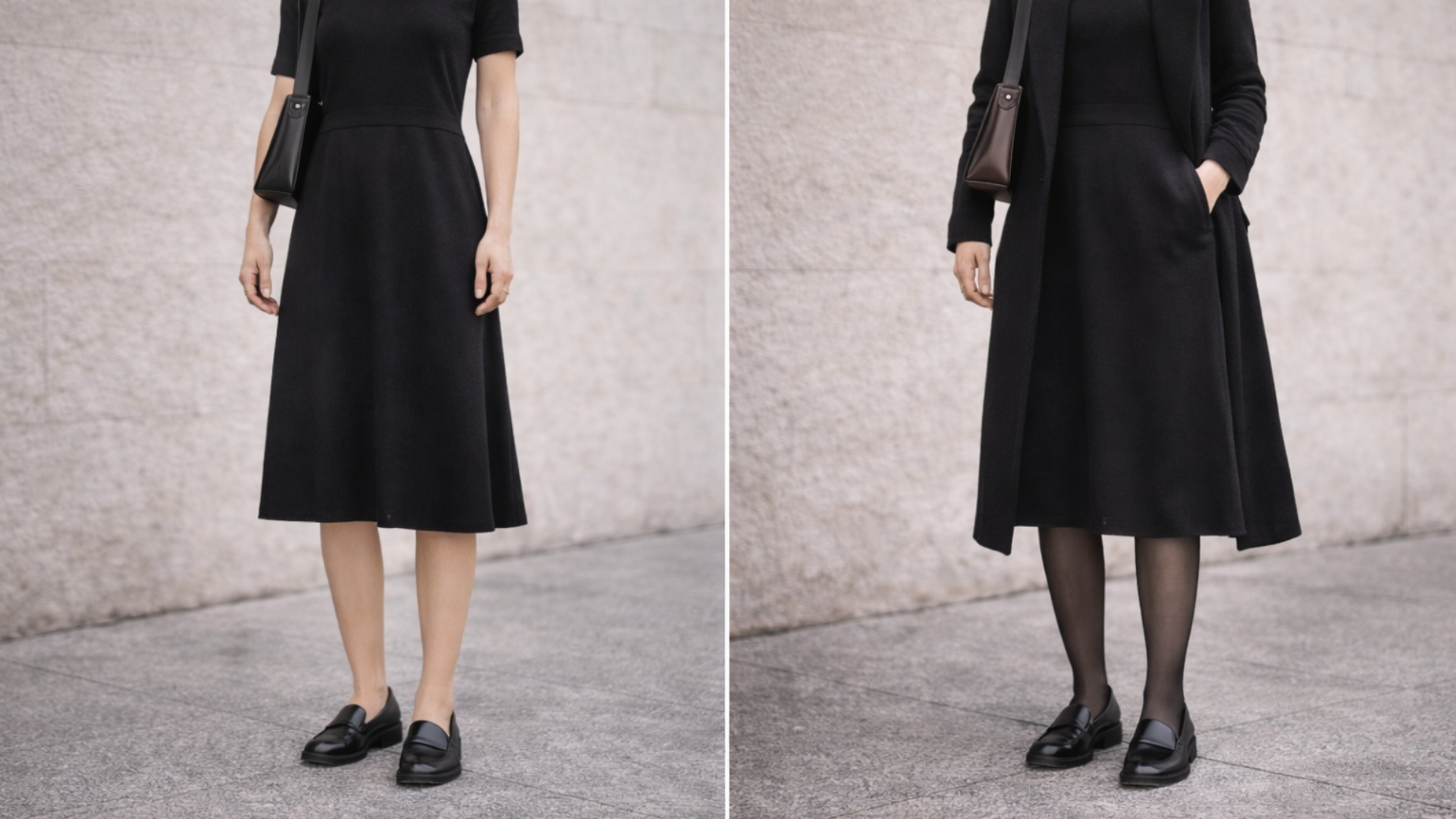
Same dress. Same loafers.
Summer keeps the silhouette light and open. Fall adds weight through layers and tights. This is how you ground the look without changing the shoe.
Loafers and dresses work because they offset each other.
The dress brings ease.
The loafer brings grounding.
When they complement each other instead of competing, the outfit just clicks.
Midi Dresses: The Easiest Elevated Pairing
If you’re unsure where to start, start here.
Midi dresses fall below the knee but above the ankle. That space naturally allows the loafer to be seen without overpowering the look.
Why this works:
The hem doesn’t crowd the shoe.
The shoe doesn’t dominate the outfit.
For this pairing to feel polished:
• Look for a dress that has some shape through the waist.
• Skip anything so long or flowy that it drapes over the top of the loafer.
This is one of the easiest ways to wear loafers with a dress and look put together without trying too hard.
Mini Dresses: Playful but Grown
Mini dresses with loafers can feel fresh, but styling makes the difference.
If nothing else in the outfit feels intentional, it can lean costume-y. If something adds polish, it feels modern.
To sharpen it up:
• Add a blazer or structured outer layer.
• Choose socks that look deliberate (sheer or fine ribbed, not sporty).
• Carry a bag with shape to ground the look.
The shorter hem keeps things light.
The loafer keeps it grounded.
That contrast is what makes it interesting.
Maxi Dresses: Keep the Shoe in the Conversation
Maxi dresses are beautiful, but they can hide the shoe completely.
If the loafers disappear under fabric, the outfit can start to feel heavy.
Instead:
• Choose a maxi that just touches the top of the loafer.
• Avoid hems that drag or puddle.
You don’t need to show much ankle.
You just want the loafers to stay part of the outfit , not an afterthought.
This works especially well for creative offices, dinners, or daytime events where you want softness without looking undone.
What Actually Makes This Look Chic
It’s not about height.
It’s not about trends.
It’s about how the pieces relate to each other.
When the dress has some definition and the loafers hold their own, the outfit feels cohesive.
When everything is loose and unshaped, it can feel unfinished.
That’s the shift.
Loafers with dresses look sophisticated when they feel considered, not random.
If you want the bigger proportion framework behind this, start with How to Dress for Your Body Type (A Proportion-First Guide That Actually Makes Sense).
How to Wear Loafers in Summer vs Fall
The dress + loafer formula doesn’t change with the season.
But the weight of the outfit should.
Summer: Lighten Everything Except the Structure
In summer, loafers can feel heavy if the rest of the outfit doesn’t breathe.
To keep it warm-weather appropriate:
• Choose lighter fabrics (cotton poplin, linen blends, soft structured knits)
• Keep legs bare or opt for sheer socks instead of thick ribbed styles
• Lean into lighter tones: cream, tan, soft brown, even patent for polish
A midi shirt dress with bare legs and sleek loafers? Effortless.
A structured mini dress with thin ankle socks? Playful but intentional.
In summer, it’s less about layering and more about clarity.
Fall: Add Weight With Purpose
In fall, loafers feel more natural because the season already carries visual weight.
This is where you can lean into:
• Wool or heavier cotton dresses
• Ribbed socks or tights
• Blazers, trench coats, and knit layers
• Deeper tones like burgundy, espresso, forest green
A midi knit dress + loafers + structured coat instantly reads polished.
A mini skirt + tights + lug sole loafers feels directional, not school uniform when the layers are tailored.
In fall, you’re not trying to lighten the look.
You’re trying to distribute the weight evenly.
The Real Difference
Summer loafers should feel breathable.
Fall loafers should feel grounded.
Same shoe.
Different balance.
That’s the part most people miss.
Color helps here too. If you’re wearing loafers with browns and neutrals a lot, you’ll like How to Wear Chocolate Brown (So It Works Like a Neutral).
FAQ: Wearing Loafers
Are loafers business casual?
Yes. Loafers are considered business casual when paired with tailored trousers, structured dresses, or blazers. The polish comes from the outfit, not the heel height.
Can you wear loafers in summer?
Absolutely. Choose lighter fabrics, breathable materials, and clean hems to keep loafers from feeling heavy in warm weather.
Do loafers go with jeans?
Yes. When the hem and cut are right. Straight leg or ankle-length jeans pair best because they allow the shoe to stay visible.
How do you style chunky loafers without looking heavy?
Balance the visual weight. Add structure above, keep the ankle clean, and avoid pairing bulk with ultra-tight bottoms.
Related reading (if you want to keep building outfits around loafers):
